




Hematologic Oncology
Latest News
Advertisement
Latest Videos























































Advertisement
More News

The initiation of the phase 3 ENHANCE trial looks to build on the generally early response to azacitidine with the addition of magrolimab, a first-in-class monoclonal antibody, for patients with intermediate-, high-, and very high–risk myelodysplastic syndrome.

Harry Paul Erba, MD, PhD, spotlights practice-changing data that emerged in recent years in hematologic malignancies and speaks to remaining questions, particularly with CAR T-cell therapy, in each paradigm.

The allogeneic CD19-targeted CAR T-cell therapy CTX110 was found to elicit encouraging responses with favorable tolerability in patients with relapsed or refractory B-cell malignancies, according to data from the phase 1 CARBON trial.

Across the paradigms of leukemias and lymphomas, novel therapies—such as BTK inhibitors, PI3K inhibitors, time-limited therapies, and even CAR T-cell therapies—have transformed the treatment of patients and prolonged survival without the need for chemotherapy.

Bijal Shah, MD, MS, discusses the FDA approval of brexucabtagne autoleucel in relapsed/refractory B-cell acute lymphoblastic leukemia.
Despite early induced efficacy first- and second-generation tyrosine kinase inhibitors have limited efficacy for patients with chronic myeloid leukemia.
Updated data from the phase 3 ASCERTAIN trial demonstrated that the oral, fixed-duration combination of decitabine and cedazuridine induced a median overall survival of 31.7 months in patients with intermediate- and high-risk myelodysplastic syndrome, including chronic myelomonocytic leukemia.
Data from the phase 2 ROCKstar trial demonstrated that belumosudil induced clinically meaningful, durable responses in patients with chronic graft-vs-host disease, irrespective of previous treatment received, severity of disease, and number of organs involved.

The FDA has approved ruxolitinib for the treatment of chronic graft-versus-host disease following failure of 1 or 2 lines of systemic therapy in adult and pediatric patients aged 12 years and older.

Meghan Thompson, MD, discusses the results of the phase 1/2 BRUIN study in patients with Richter transformation.
The triplet combination of umbralisib, ublituximab, and pembrolizumab demonstrated durable responses with a tolerable safety profile in patients with relapsed/refractory chronic lymphocytic leukemia and Richter’s transformation.

Sikander Ailawadhi, MD, discusses the results of a first-in-human, early phase 1 study of lisaftoclax in patients with hematologic malignancies.
Expert hematologist/oncologists review the use of pacritinib for the treatment of myelofibrosis, as seen in the PERSIST-1 and PERSIST-2 trials.
Aaron Gerds, MD, MS; and Srdan Verstovsek, MD, PhD, share insights on the impact of pathways, including JAK-STAT, on myelofibrosis disease progression and discuss considerations for the use of JAK inhibitors.

Optical genome mapping was found to effectively detect most abnormalities defined by standard methods, such as chromosome banding analysis, chromosomal microarrays, and fluorescence in situ hybridization, as well as several additional abnormalities of unknown clinical significance, in patients with chronic lymphocytic leukemia.
Hematology/oncology experts review their approach to monitoring treatment response in myelofibrosis (MF) and when they would consider switching therapies.
Aaron Gerds, MD, MS; and Srdan Verstovsek, MD, PhD, share insights on the importance of allele burden in myelofibrosis (MF) and how cytopenias can limit treatment options for patients with myelofibrosis.

The JAK1/JAK2 inhibitor ruxolitinib has several clinical uses in the treatment of patients with polycythemia vera and plays an especially important role in adult patients who have had an inadequate response to hydroxyurea.
Treatment with fixed-duration rituximab plus the chemotherapy bendamustine was associated with more favorable outcomes than the triplet of dexamethasone, rituximab, and cyclophosphamide, as well as bortezomib, dexamethasone, and rituximab in patients with treatment-naïve Waldenström macroglobulinemia.

Treating patients with accelerated phase myeloproliferative neoplasm is an ongoing therapeutic challenge, due to the lack of standard treatment approaches, according to an expert.
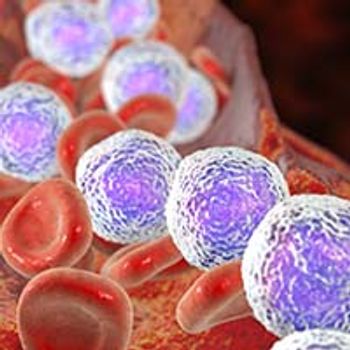
Historical prognostic markers for chemoimmunotherapy have largely lost their clinically relevance in the context of targeted therapies for patients with chronic lymphocytic leukemia; however, IGHV and TP53 mutational status remain important predictive markers of response, now for novel treatments.

Estimated 4-year mortality rates were greater than 10% in patients with polycythemia vera and vascular complications led to approximately one-third of these deaths, according to a retrospective analysis of the prospective REVEAL trial (NCT02252159) presented during the Society of Hematologic Oncology (SOHO) 2021 Annual Meeting.
Various phase 2 and 3 studies are currently underway utilizing both new and existing treatments in an effort to improve outcomes for patients with myelofibrosis.

Future treatment approaches for patients with polycythemia vera (PV) should center around adapting therapy using the available criteria, and eventually finding new targets.

The addition of venetoclax to fludarabine, cytarabine, idarubicin and G-CSF resulted in high complete response rates and enables a high consolidative allogeneic transplantation rate in patients with newly diagnosed acute myeloid leukemia.
Advertisement
Advertisement
Trending on OncLive
1
FDA Approves Zidesamtinib in Pretreated ROS1+ NSCLC
2
Ivonescimab Plus Chemotherapy Sustains OS Benefit Across Western and Asian Patients in Pretreated EGFR-Mutated NSCLC
3
Sacituzumab Govitecan Yields Responses in Platinum-Resistant Ovarian Cancer
4
How Are Treatment Intensification and Sequencing Reshaping Care in Prostate Cancer and RCC
5