


Lung Cancer
Latest News
Advertisement
Latest Videos



































































Advertisement
More News
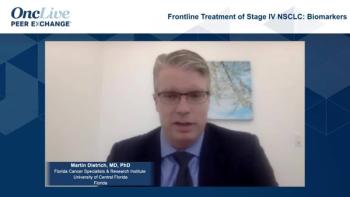
Martin Dietrich, MD, PhD, shares his thoughts on PD-L1 status, tumor mutational burden, and other predictive and prognostic biomarkers when making treatment decisions for patients with stage IV non–small cell lung cancer.
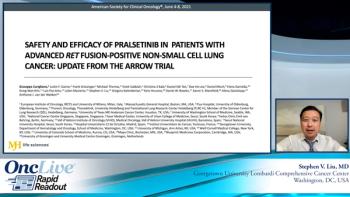
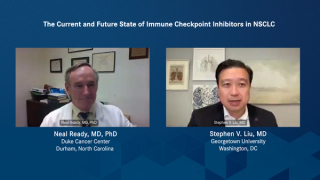
Stephen V. Liu, MD, presents data from the 2021 American Society of Clinical Oncology annual meeting on the updated results from the ARROW trial of pralsetinib in patients with RET fusion-positive non-small cell lung cancer.
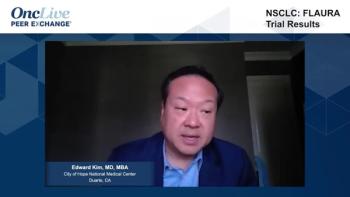
Edward Kim, MD, briefly summarizes results from the FLAURA trial in the treatment of previously untreated EGFR+ advanced non–small cell lung cancer (NSCLC).
On May 4, 2021, a select group of oncologists participated in a virtual workshop to discuss the treatment landscape and management of patients with ALK-positive NSCLC. This article summarizes key data about ALK-positive NSCLC as well as insights from stakeholder discussions regarding this topic.
Melissa Johnson, MD, provides an overview of other first generation TKIs for the treatment of non–small cell lung cancer (NSCLC) in the adjuvant setting.
A panel of experts in thoracic oncology concludes the discussion by emphasizing the importance of conducting reflex molecular testing, considering systemic therapy in all patients, and utilizing shared decision-making models.
A key opinion leader in lung cancer, Solange Peters, MD, PhD, provides a review of treatments under investigation for uncommon mutations in NSCLC: mobocertinib, amivantamab, poziotinib, and neratinib.
Gary Doherty, MRCP, PhD, Solange Peters, MD, PhD, and Christian Grohé, MD, discuss approaches to selecting or switching treatment based on molecular testing for biomarkers and pathways of resistance.
Considerations for selecting frontline therapy for metastatic non–small cell lung cancer based on various new data and treatment approvals in the field of immunotherapy.
Neal Edward Ready, MD, PhD, describes which patients with stage IV non–small cell lung cancer may benefit from the combination of ipilimumab and nivolumab in the frontline treatment setting.

The tumor-infiltrating lymphocyte therapy LN-145 was found to induce an objective response rate of 21.4% in patients with advanced or metastatic non–small cell lung cancer who had progressed following systemic therapy.

The novel combination comprised of rigosertib and nivolumab showed preliminary evidence of potential anticancer activity in patients with advanced metastatic KRAS-mutated non–small cell lung cancer.
Paul K. Paik, MD, discusses the clinical implications of tepotinib on the non–small cell lung cancer armamentarium.
Experts discuss how results from the ADAURA trial may influence treatment decisions in the adjuvant setting of non–small cell lung cancer (NSCLC).
Ben Levy, MD, leads a discussion about the evolution of precision medicine in non–small cell lung cancer (NSCLC) beginning with an overview of the results from the ADAURA trial.

Novel therapeutic strategies are poised to expand in adjuvant settings for patients with early-stage disease facing recurrence risks in the treatment paradigms for a range of tumor types after positive data from large phase 3 clinical trials were highlighted at the 2021 American Society of Clinical Oncology Annual Meeting
Expert thought leaders in thoracic oncology share their experiences with EGFR-TKI combination strategies in patients with EGFR-mutated metastatic NSCLC.
Panelists reflect on barriers to obtaining tissue biopsies in patients with EGFR-mutated metastatic NSCLC and share insights into the importance of making treatment decisions based on molecular testing results.
David P. Mason, MD, discusses new neoadjuvant and adjuvant developments in the treatment of patients with non–small cell lung cancer, as well as what those data mean from a surgical perspective.
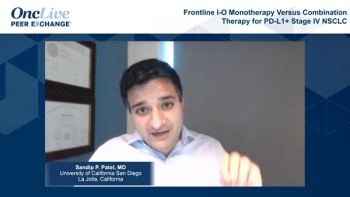
Drs Roy S. Herbst and Sandip P. Patel comment on patient candidacy for immunotherapy as monotherapy to treat PD-L1+ metastatic non–small cell lung cancer versus chemoimmunotherapy.
Early detection of primary lung cancer using low-dose computed tomography screening was associated with a lower risk of brain metastases after PLC diagnosis vs other methods
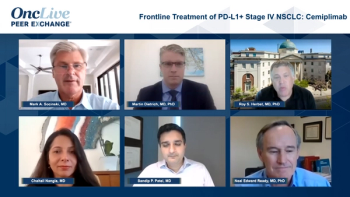
Roy S. Herbst, MD, PhD, of Yale Cancer Center, highlights treatment advances in stage IV non–small cell lung cancer, including cemiplimab as frontline monotherapy based on EMPOWER-Lung 1.
The field of targeted therapy for patients with non–small cell lung cancer has grown exponentially in recent years, with inhibitors for RET, MET exon 14 skipping, and KRAS G12C mutations transforming the paradigm.

The combination of the targeted cancer vaccine galinpepimut-S plus nivolumab resulted in a median overall survival of 35.4 weeks in patients with macroscopic deposits of malignant pleural mesothelioma who had received treatment for at least 1 month.

Joshua K. Sabari, MD; Jamie Chaft, MD; and Vamsidhar Velcheti, MD, discuss the utility with circulating tumor DNA, intriguing data of which were presented during the 2021 ASCO Annual Meeting.
Advertisement
Advertisement
Trending on OncLive
1
Five Under 5: Top Oncology Videos for the Week of 10/5/2026
2
Guardant360 CDx Receives European Approval as Companion Diagnostic for Camizestrant in ESR1-Mutated Advanced Breast Cancer
3
GI Cancer Monthly Rewind: Key News and Expert Insights You May Have Missed in September 2026
4
Armenia Grants First Marketing Authorizations to Botensilimab Plus Balstilimab in Previously Treated MSS mCRC
5