


Lung Cancer
Latest News

August 19th 2021
By Kristi Rosa
The addition of toripalimab to chemotherapy resulted in a significant improvement in progression-free survival compared with chemotherapy alone when given as first-line treatment in patients with non–small cell lung cancer, meeting the primary end point of the phase 3 CHOICE-01 trial.
Advertisement
Latest Videos



































































Advertisement
More News
Anne Chiang, MD, PhD, reviews the study design of 2 clinical trials, adding a third agent to the standard-of-care regimen of chemotherapy plus I/O; Stephen Liu, MD, discusses clinical trials in limited-stage disease.
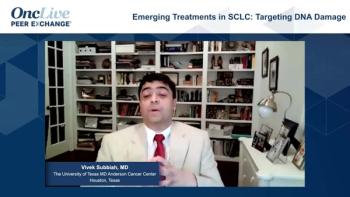
Thoracic oncology expert Vivek Subbiah, MD, provides an overview of recent clinical trials studying agents targeting DNA damage for the treatment of small cell lung cancer.
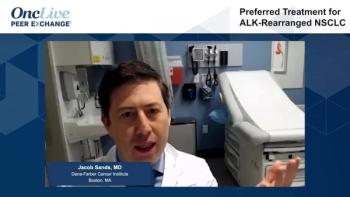
Experts have a discussion about their preferred treatment approach for newly diagnosed ALK-rearranged non–small cell lung cancer (NSCLC).

Recommendations for mitigating and managing common treatment-related adverse events associated with mobocertinib and other tyrosine kinase inhibitors.
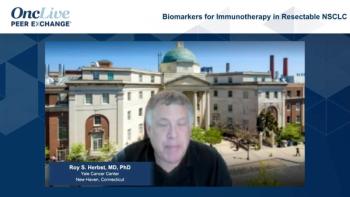
Dr Roy S. Herbst comments on the utilization of biomarkers and information needed to help aid in treatment decisions about perioperative therapy for patients with resectable non–small cell lung cancer.
Jonathan W. Goldman, MD, discusses the significance of the phase 3 CASPIAN and IMpower133 trials in small cell lung cancer and efforts made to optimize molecular testing.
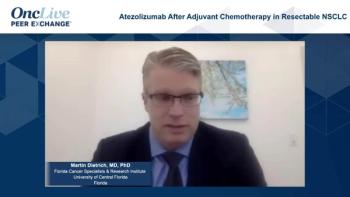
Dr Martin Dietrich comments on the IMpower010 trial of atezolizumab versus best supportive care after adjuvant chemotherapy in patients with resected non–small cell lung cancer.

Ferdinandos Skoulidis, MD, PhD, MRCP, discusses the rationale to target TROP-2 in lung cancer.

Erin Schenk, MD, PhD, discusses the importance of investigating novel targets and pathways in lung cancer.

Edgardo S. Santos, MD, discusses the potential role for CEACAM5- and KEAP1-targeted therapies in non–small cell lung cancer.
Dr. Chachoua discusses key guidelines for lung cancer screening, the psychological and financial implications of screening, and the opportunities of a screening initiative instated by NYU Langone Health.
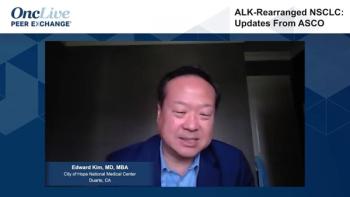
A summary of recent data that were presented at the American Society of Clinical Oncology (ASCO) 2021 annual meeting for ALK-rearranged non–small cell lung cancer (NSCLC).
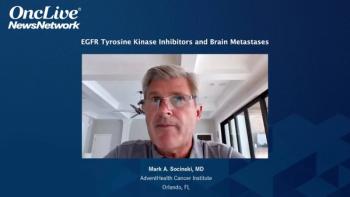
Commentary on the use of EGFR tyrosine kinase inhibitors and their efficacy on non–small cell lung cancer brain metastases.
Potential implications for treating patients with metastatic non–small cell lung cancers with EGFR exon 20 insertion mutations with mobocertinib, based on the EXCLAIM cohort.
Rare drivers such as EGFR exon 20 insertions and what they mean for treatment of patients with metastatic non–small cell lung cancer.
Expert panelists weigh in on emerging data from recent presentations on small cell lung cancer, including novel immunotherapy approaches such as bispecific antibodies targeting DLL3 or therapies targeting TIGIT.
An overview of the RET-fusion data updates that were presented at the American Society of Clinical Oncology (ASCO) 2021 annual meeting in non–small cell lung cancer (NSCLC).
Mark A. Socinski, MD shares a brief overview of the biomarkers and FDA-approved targeted therapies for non–small cell lung cancers.
Anne Chiang, MD, PhD, renowned expert in thoracic oncology, guides a discussion on whether to rechallenge with chemotherapy + I/O after progression of small cell lung cancer.
The impact of endpoints used in clinical trials of neoadjuvant therapy for resectable non–small cell lung cancer as they relate to newer drug approvals and real-world practice.
Martin Dietrich, MD, PhD, describes his interpretations of the KEYNOTE-799 study of pembrolizumab plus chemoradiation therapy for unresectable stage III non–small cell lung cancer.

An association has been found in Latin American patients with lung adenocarcinoma between Native American ancestry and somatic landscape, including EGFR, KRAS, and STK11 mutations, as well as tumor mutational burden.
The combination of cemiplimab-rwlc plus platinum-doublet chemotherapy was found to significantly improve overall survival over chemotherapy alone in the frontline treatment of patients with advanced non–small cell lung cancer, meeting the primary end point of the phase 3 EMPOWER-Lung 3 trial.
Key opinion leaders in thoracic oncology provide insights into second-line treatment for patients with relapsed/refractory small cell lung cancer and comment on the role of trilaciclib in managing cisplatin-associated neutropenia.
Lung cancer expert Anne Chiang, MD, PhD, considers the recent withdrawal of FDA-accelerated approval for nivolumab and pembrolizumab for patients with relapsed extensive-stage small cell lung cancer.
Advertisement
Advertisement
Trending on OncLive
1
Five Under 5: Top Oncology Videos for the Week of 10/5/2026
2
Guardant360 CDx Receives European Approval as Companion Diagnostic for Camizestrant in ESR1-Mutated Advanced Breast Cancer
3
GI Cancer Monthly Rewind: Key News and Expert Insights You May Have Missed in September 2026
4
Armenia Grants First Marketing Authorizations to Botensilimab Plus Balstilimab in Previously Treated MSS mCRC
5