



Lung Cancer
Latest News
Advertisement
Latest Videos
































































Advertisement
More News
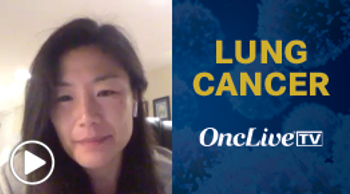
Liza C. Villaruz, MD, discusses updated data from the phase 3 CheckMate-227 trial examining nivolumab with or without ipilimumab in patients with non–small cell lung cancer.
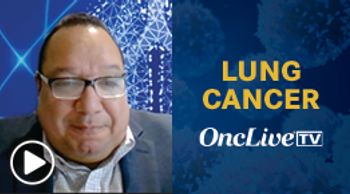
Edgardo S. Santos, MD, FACP, discusses the importance of identifying mechanisms of resistance in lung cancer.

Melissa Johnson, MD, discusses highlights from the 2021 ESMO Congress.
Erminia Massarelli, MD, MS, PhD, shares insight on potential barriers to appropriate molecular testing in patients with non–small cell lung cancer.
Experts take a broad look at how molecular profiling has impacted the treatment landscape of non–small cell lung cancer.
George Simon, MD, FACP, FCCP, discusses the importance of next-generation sequencing in patients with non–small cell lung cancer.

Luis E. Raez, MD, discusses the clinical implications of the phase 3 KEYNOTE-024 trial in non–small cell lung cancer.
Danny Nguyen, MD, discusses management strategies for mobocertinib-related gastrointestinal toxicities in EGFR exon 20 insertion–positive non–small cell lung cancer.

Maria Carmela Piccirillo, MD, discusses the safety profile of bevacizumab plus erlotinib in EGFR-mutated advanced nonsquamous non–small cell lung cancer.

Isabel Preeshagul, DO, MBS; Catherine Ann Shu, MD; and Ashish Saxena, MD, PhD, discuss the latest findings in small cell lung cancer based on studies that were presented during the 2021 ESMO Congress, 2021 World Conference on Lung Cancer, and 2021 ASCO Annual Meeting.

Isabel Preeshagul, DO, MBS; Catherine Ann Shu, MD; and Ashish Saxena, MD, PhD, share insight on the data with novel targeted agents with impressive efficacy in patients with lung cancer, as seen at the 2021 ESMO Congress and the 2021 World Conference on Lung Cancer.
Isabel Preeshagul, DO, MBS; Catherine Ann Shu, MD; and Ashish Saxena, MD, PhD, highlight results with immunotherapy in the neoadjuvant and stage IV setting in lung cancer that were presented at the 2021 World Conference on Lung Cancer and the 2021 ESMO Congress.

Isabel Preeshagul, DO, MBS; Catherine Ann Shu, MD; and Ashish Saxena, MD, PhD, discuss breakthroughs in adjuvant immunotherapy in lung cancer from data presented at the 2021 ESMO Congress and 2021 World Conference on Lung Cancer.

Miranda Gogishvili, MD, discusses the rationale for the phase 3 EMPOWER-Lung 3 trial in advanced or metastatic non–small cell lung cancer.
Antoinette Wozniak, MD, FACP, FASCO, highlights the importance of monitoring patients with lung cancer for toxicities and significant advances on the horizon that are expected to further expand the lung cancer armamentarium.
Dr. Johnson discusses the mechanism of action of VS-6766 alone and in combination with defactinib, expectations for the ongoing phase 2 RAMP 202 trial in KRAS-mutant non–small cell lung cancer, and where the combination could be used in practice pending further positive study results.

Canakinumab plus pembrolizumab and platinum-based doublet chemotherapy did not significantly improve progression-free survival or overall survival in previously untreated patients with locally advanced or metastatic non–small cell lung cancer, missing the primary end points of the phase 3 CANOPY-1 trial.
Ben Levy, Mark Socinski, and Stephen Liu describe the current treatment options for patients with ROS1+ NSCLC. They also summarize recent clinical data for agents that target ROS1.

Ben Levy, Mark Socinski, and Stephen Liu explain the role of a ROS1 alteration in NSCLC and its value as a targetable biomarker.
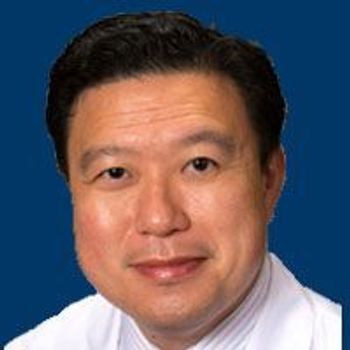
The overwhelming number of options for the treatment of patients with lung cancer underscores the importance of broad molecular testing up front to ensure patients receive optimal care.

Timothy F. Burns, MD, PhD, discusses the promise of combination regimens for patients with EGFR exon 20 insertion– and KRAS G12C–mutated non–small cell lung cancer.
Liza C. Villaruz, MD, discusses selecting between single-agent and combination immunotherapy in non–small cell lung cancer.
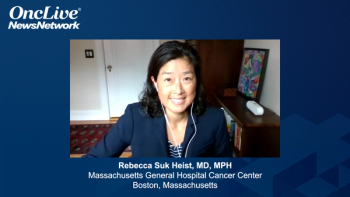
Rebecca Suk Heist, MD, MPH, discusses the treatment landscape and challenges when treating patients with second-line metastatic non-small cell lung cancer.
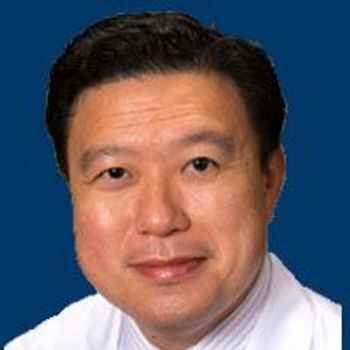
Clinical advances in treatment of small cell lung cancer have lagged behind those of other tumor types, but the delay is not for lack of effort.

Jay Moon Lee, MD, discusses the current state of molecular testing in early-stage non–small cell lung cancer.
Advertisement
Advertisement
Trending on OncLive
1
Five Under 5: Top Oncology Videos for the Week of 10/5/2026
2
Guardant360 CDx Receives European Approval as Companion Diagnostic for Camizestrant in ESR1-Mutated Advanced Breast Cancer
3
GI Cancer Monthly Rewind: Key News and Expert Insights You May Have Missed in September 2026
4
The OncFive: Top Oncology Articles for the Week of 10/4/2026
5