

Lung Cancer
Latest News

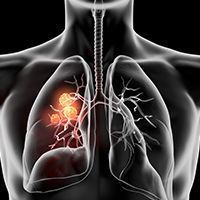
CLN-081 Continues to Elicit Encouraging, Durable Responses in EGFR Exon 20 Insertion+ NSCLC
By Chris Ryan
Advertisement
Latest Videos

































































Advertisement
More News
Early efficacy data in a phase 1 trial of the agent now known as nivolumab were not enough to convince Julie Brahmer, MD, MSc, about the potential of the investigative agent.
The addition of tiragolumab to atezolizumab produced a clinically meaningful improvement in progression-free survival, overall survival, and objective response rate compared with atezolizumab alone in the first-line treatment of patients with PD-L1–positive non–small cell lung cancer.

The FDA has granted breakthrough therapy designation to CLN-081 for the treatment of patients with locally advanced or metastatic non–small cell lung cancer harboring EGFR exon 20 insertion mutations and who have received prior platinum-based chemotherapy.

A broad review on how biomarker testing has impacted the clinical staging and management of non–small cell lung cancer across geographic regions.
Key opinion leaders detail the treatment options available for Lambert-Eaton myasthenic syndrome.
Steven Vernino, MD, describes the first-line treatment options for small cell lung cancer with Lambert-Eaton myasthenic syndrome.

The FDA has granted a fast track designation to a combination comprised of the immunogene therapy quaratusugene ozeplasmia and pembrolizumab for use in select patients with late-stage non–small cell lung cancer.

Tony SK Mok, MD, and Solange Peters, MD, PhD, relay the available treatment options for EGFR mutant NSCLC—both early and advanced stages.

Dr Mok finishes our discussion on the ADAURA trial, and Dr Peters delves into selecting the right adjuvant therapy for a patient with early-stage EGFR mutant NSCLC.
Jyoti D. Patel, MD, discusses biomarker testing, interpreting molecular result reports, and the growing armamentarium for patients with oncogene-driven lung cancer.
The investigational monoclonal antibody enoblituzumab has demonstrated activity in preclinical studies and in combination with pembrolizumab in phase 1/2 studies in patients with checkpoint inhibitor–naïve head and neck squamous cell carcinoma and non–small cell lung cancer.
The shift away from accepting only positive overall survival (OS) data from phase 3 trials as the pathway toward regulatory approval has been the biggest takeaway from 2021 in lung cancer.
Drs. David Gerber and Steven Vernino review the case of a 64-year-old man with Lambert-Eaton myasthenic syndrome.
Two experts debate the preferred testing options for Lambert-Eaton myasthenic syndrome presenting with small cell lung cancer.

Melissa L. Johnson, MD, discusses new drug approvals for EGFR exon 20 insertion mutation–positive non–small cell lung cancer.

Kathryn A. Gold, MD, medical oncologist, professor of medicine, UC San Diego Health, discusses current unmet needs in squamous cell carcinoma of the lung.

The FDA has granted a breakthrough therapy designation to patritumab deruxtecan for the treatment of patients with metastatic or locally advanced EGFR-mutated non–small cell lung cancer with disease progression on or after treatment with a third-generation TKI and platinum-based therapies.

Kathryn Gold, MD, discusses best practices with the use of sotorasib in patients with KRAS G12C–mutated non–small cell lung cancer.

Vamsidhar Velcheti, MD, leads the discussion on the current standard of care and approaching the treatment of second-line SCLC.

John V. Heymach, MD, PhD, reviews updated results from the phase III CASPIAN trial for patients with extensive-stage SCLC (small cell lung cancer) as presented at ESMO 2021.

Sandip P. Patel, MD, reviews results and clinical implications from the CASPIAN study, and Heather Wakelee, MD, shares insight on approaching the optimal immunotherapy option for patients with extensive-stage SCLC.
Shared insight on how comprehensive biomarker testing should be in non–small cell lung cancer, as well as what may or may not be reimbursed.

Expert oncologists from key Asian countries share guidelines for biomarker testing in their countries and how biomarker testing is being used for non–small cell lung cancer in their region.
A neurologist explains how to test for and diagnose Lambert-Eaton myasthenic syndrome.
David Gerber, MD, and Steven Vernino, MD, PhD, provide an overview of Lambert-Eaton myasthenic syndrome and its association with cancers.
Advertisement
Advertisement
Trending on OncLive
1
Five Under 5: Top Oncology Videos for the Week of 10/5/2026
2
Guardant360 CDx Receives European Approval as Companion Diagnostic for Camizestrant in ESR1-Mutated Advanced Breast Cancer
3
GI Cancer Monthly Rewind: Key News and Expert Insights You May Have Missed in September 2026
4
The OncFive: Top Oncology Articles for the Week of 10/4/2026
5