




Lung Cancer
Latest News
Advertisement
Latest Videos





































































Advertisement
More News
Christine Bestvina, MD, discusses the emerging role of neoadjuvant chemoimmunotherapy in lung cancer.

Preliminary research with datopotamab deruxtecan has shown a promising, unprecedented duration of response in heavily pretreated patients with non–small cell lung cancer.

Charu Aggarwal, MD, MPH, discusses the significance of the phase 3 IMpower010 trial in patients with PD-L1–positive non–small cell lung cancer.
Lung cancer experts provide insight on updates from key clinical trials presented at ESMO 2021 on PD-1 inhibitor–resistant NSCLC.
Dr Heather Wakelee reviews results from the IMpower110 study for first-line metastatic NSCLC treatment.

Konstantinos Arnaoutakis, MD, discusses the phase 3 ADAURA trial examining osimertinib in the adjuvant treatment of patients with EGFR-mutant lung cancer.

In this clinical case review, a panel of community experts discusses the management of immunotherapy in patients with NSCLC, reflects on factors affecting treatment selection and sequencing, and examines the evolving landscape of immunotherapy-based treatment approaches.

Christine Bestvina, MD, discusses challenges with interpreting molecular reports in lung cancer.

A new drug application seeking the approval of poziotinib as a potential therapeutic option for patients with previously treated locally advanced or metastatic non–small cell lung cancer with HER2 exon 20 insertion mutations has been submitted to the FDA.
Heather Wakelee, MD, shares updates from the CheckMate 9LA study, and Vamsidhar Velcheti, MD, reviews key data from the phase 3 POSEIDON study for patients with NSCLC.
Experts in lung cancer discuss recent updates from ESMO 2021 and IASLC 2021 WCLC on combination immunotherapy plus chemotherapy for the treatment of advanced NSCLC.

Ticiana Leal, MD, discusses the evolution of treatment in EGFR exon 20 insertion–positive non–small cell lung cancer.

Nasser Khaled Altorki, MD, provides insight on the results of the IMpower010 trial as well as post hoc analyses from the trial and what they signal for the remainder of this patient population.
Edward B. Garon, MD, discusses the potential impact of the ongoing, phase 3 TROPION-LUNG01 trial in non–small cell lung cancer.

The FDA has issued a complete response letter to the new drug application seeking the approval of plinabulin in combination with granulocyte colony-stimulating factor for the prevention of chemotherapy-induced neutropenia.
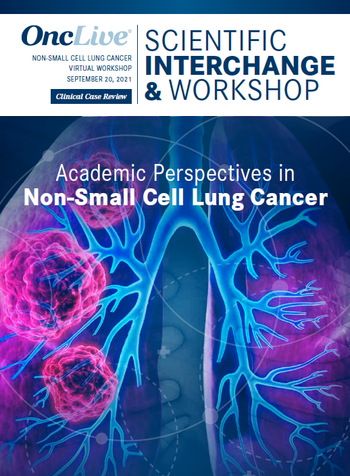
In this clinical case review, academic experts share insights into the disease management of patients with NSCLC, discuss factors impacting treatment selection and sequencing strategies, and evaluate the evolving landscape of immunotherapy-based regimens.
Rodolfo Bordoni, MD, discusses the utility of atezolizumab in the adjuvant setting in non–small cell lung cancer.

Several leading experts discussed a variety of tumor types set to influence the next wave of investigative directions and change the standard of care for patients in abstracts at the European Society for Medical Oncology Congress 2021.
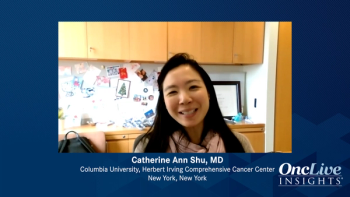
Before closing out their discussion on EGFR exon 20 insertion mutations in NSCLC, experts share their thoughts on the future treatment landscape and potential unmet needs.

Ticiana Leal, MD, discusses developments made in the treatment of patients with EGFR exon 20 insertion–mutant non–small cell lung cancer.

Sandip P. Patel, MD, reviews updates on dual immunotherapy agents for the treatment of advanced NSCLC including the 4-year update from the CheckMate 227 study.

Drs Vamsidhar Velcheti, Ani Balmanoukian, Heather Wakelee, and Stephen Liu discuss recent updates on single-agent immunotherapy regimens in patients with NSCLC.

Nathaniel Ivanick, MD, FCCP, discusses the evolution of interventional pulmonology, the benefits of robotic navigational bronchoscopy and other novel technologies in the field, and ongoing research that could further push the paradigm forward.
The addition of sintilimab to a bevacizumab biosimilar and pemetrexed/cisplatin resulted in a statistically significant and clinically meaningful improvement in progression-free survival vs chemotherapy alone in patients with EGFR-mutated, nonsquamous non–small cell lung cancer who progressed after an EGFR TKI.

Joel Neal, MD, PhD, discusses the evolving treatment landscape for patients with EGFR exon 20–mutant non–small cell lung cancer.
Advertisement
Advertisement
Trending on OncLive
1
Five Under 5: Top Oncology Videos for the Week of 10/5/2026
2
Guardant360 CDx Receives European Approval as Companion Diagnostic for Camizestrant in ESR1-Mutated Advanced Breast Cancer
3
GI Cancer Monthly Rewind: Key News and Expert Insights You May Have Missed in September 2026
4
The OncFive: Top Oncology Articles for the Week of 10/4/2026
5