




Lung Cancer
Latest News
Advertisement
Latest Videos




































































Advertisement
More News

Although advances in metastatic non–small cell lung cancer treatment have dramatically impacted cancer mortality, the translation of these approaches to earlier-stage NSCLC has just begun to bear fruit.

Nathaniel Ivanick, MD, FCCP, explains advancements in the use of robotic navigational bronchoscopy for the diagnosis of early-stage lung cancer.
Closing out their discussion on resectable NSCLC, experts review multidisciplinary care strategies and the role of neoadjuvant therapy in patients identified for resection.

In light of evolving treatment options for resectable non–small cell lung cancer, panelists discuss biomarker testing to guide adjuvant therapy in the postoperative setting.
The FDA has accepted for review a supplemental biologics license application for cemiplimab-rwlc in combination with chemotherapy in the frontline treatment of patients with advanced non–small cell lung cancer.
Experts provide clinical pearls on treating Lambert-Eaton myasthenic syndrome and small cell lung cancer and share upcoming advances and trials they look forward to.
Hope S. Rugo, MD, FASCO, Rita Nanda, MD, William J. Gradishar, MD, and Tiffany A. Traina, MD discuss the selective immunomodulating microtubule-binding agent plinabulin, plus several other novel chemoprotective therapies under exploration, including trilaciclib.

Paying particular attention to the specific type of gene mutation on a molecular testing report is critical in an era of increasing genomic complexity in non–small cell lung cancer.
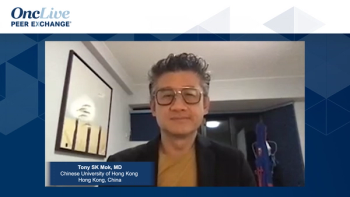
Experts consider if there’s a role for the continued use of first-generation TKIs in patients with resected EGFR-positive non–small cell lung cancer.

Shared insight on the clinical implications of the ADAURA trial, which tested osimertinib as adjuvant therapy following resection in patients with EGFR-positive NSCLC.
Konstantinos Arnaoutakis, MD, discusses new strategies in the management of ALK-positive non–small cell lung cancer, frontline immunotherapy, targeting EGFR, and biomarkers and targeted therapies in early-stage and advanced disease.
The addition of ADXS-503 to the treatment of patients with metastatic non–small cell lung cancer who were progressing on pembrolizumab (Keytruda) resulted in encouraging responses and durable disease control, according to findings from the phase 1/2 trial.
Liquid biopsies are critical in understanding oncogenic drivers and resistance mechanisms in patients with non–small cell lung cancer.
A brief discussion on the use of postoperative radiotherapy in non–small cell lung cancer following resection.
Perspectives on optimal treatment approaches for patients with resectable non–small cell lung cancer in Asia, with a focus on stage IB disease.
An oncologist reviews the case of a 57-year-old man diagnosed with small cell lung cancer after Lambert-Eaton myasthenic syndrome.
Drs. Steven Vernino and David Gerber continue their conversation on their preferred treatment approaches and monitoring strategies for Lambert-Eaton myasthenic syndrome and small cell lung cancer.

Wade T. Iams, MD, discusses the need to establish the clinical utility of circulating tumor DNA testing in lung cancer.

As the armamentarium of advanced non–small cell lung cancer () continues to grow with the addition of novel targeted therapies for rare patient subtypes, the field is simultaneously shifting to evaluate targeted therapy and immunotherapy in earlier lines of treatment, including the neoadjuvant and adjuvant spaces.
The European Commission has granted conditional marketing authorization to sotorasib for the treatment of adult patients with KRAS G12C mutant advanced non–small cell lung cancer.

Adjuvant treatment with pembrolizumab led to a statistically significant and clinically meaningful improvement in disease-free survival vs placebo in patients with stage IB to IIIA non–small cell lung cancer following resection, regardless of PD-L1 expression, meeting 1 of the dual primary end points of the phase 3 KEYNOTE-091 trial.

Solange Peters, MD, PhD, and Tony SK Mok, MD, discuss what they’re looking forward to in the future for treating both stages of EGFR mutant NSCLC and give advice to colleagues treating this disease.
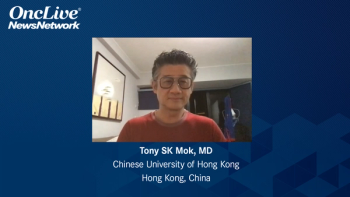
Drs Mok and Peters explain the updates seen in the treatment landscape for EGFR mutant advanced-stage NSCLC.
David Spigel, MD, discussed the focus of each presentation, which centered on immunotherapy vs chemoimmunotherapy in the frontline metastatic setting, the surgical perspective of treatment in early-stage NSCLC, best practices for molecular testing, and EGFR- and KRAS-targeted therapies for patients with advanced disease.
One of the reverberating themes of 2021 that should carry into 2022 is the importance of molecular testing.
Advertisement
Advertisement
Trending on OncLive
1
Five Under 5: Top Oncology Videos for the Week of 10/5/2026
2
Guardant360 CDx Receives European Approval as Companion Diagnostic for Camizestrant in ESR1-Mutated Advanced Breast Cancer
3
GI Cancer Monthly Rewind: Key News and Expert Insights You May Have Missed in September 2026
4
The OncFive: Top Oncology Articles for the Week of 10/4/2026
5