


Lung Cancer
Latest News
Advertisement
Latest Videos



































































Advertisement
More News
Alexander Spira, MD, PhD, FACP, shares an overview of the molecular testing needed for non–small cell lung cancer and his preferences for testing.
Experts share their real-world experiences regarding treatment with sotorasib, a new FDA-approved option for KRAS G12C-mutated non–small cell lung cancer (NSCLC).
An overview of new data presented at the American Society of Clinical Oncology 2021 annual meeting for KRAS G12C-mutated non–small cell lung cancer (NSCLC).

The method used to calculate how obesity is measured may impact whether it should be considered as a risk factor for non–small cell lung cancer.
How to differentiate whether a patient with unresectable stage III non–small cell lung cancer develops pneumonitis from chemoradiation or durvalumab, and insight regarding techniques to help manage treatment toxicities.
Chaitali Nangia, MD, of the Patty and George Hoag Cancer Center, reacts to the significance of the 5-year overall survival data for the PACIFIC trial evaluating the use of durvalumab after chemoradiation as treatment for inoperable stage III non–small cell lung cancer.

Hossein Borghaei, DO, MS, discusses the clinical implications of the FDA approval of sotorasib in patients with KRAS G12C–mutant NSCLC.
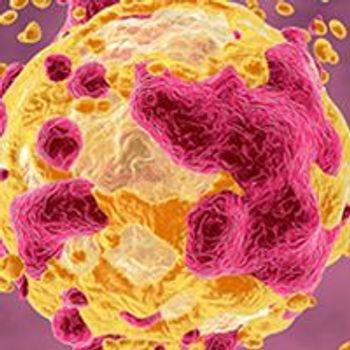
Racial minorities with limited-stage small cell lung cancer, including African American and Asian patients, were found to have more favorable survival outcomes compared with White patients, which suggests that race is associated with survival in this disease.
Drs Brown and Husain discuss the current and future applications of next-generation sequencing in lung cancer, the role of tissue-based testing in light of the growing role for liquid-based testing, and some of the emerging technologies that could overcome current barriers to biomarker testing.

During the past 12 months, the treatment landscape for patients with non–small cell lung cancer has expanded dramatically with FDA approvals of the first drugs directed at KRAS G12C and EGFR exon 20 mutations as well as continued progress in developing new therapies for subsets of patients with other molecularly targetable alterations and with PD-L1–high disease.
Justin Gainor, MD, discusses the potential value of targeting TROP-2 and CEACAM5 in lung cancer.

Chad V. Pecot, MD, discusses the growth of actionable targets in lung cancer.

Jacob Sands, MD, reviews data regarding the investigational oral EGFR inhibitor DZD9008 that were presented at the American Society of Clinical Oncology (ASCO) 2021 annual meeting for the treatment of non–small cell lung cancer (NSCLC).
Panelists reflect on key points from recent studies in ES SCLC by discussing patients for whom immunotherapy may be appropriate, examining the role of adding CTLA4 inhibition to a PD-L1 inhibitor, and reviewing factors to consider when deciding between cisplatin or carboplatin.
Experts provide an overview of treatment options for exon 20 insertion EGFR mutations in non–small cell lung cancer (NSCLC) and trial updates presented at the American Society of Clinical Oncology 2021 annual meeting .
Key opinion leader in lung cancer, Vivek Subbiah, MD, examines the phase 3 KEYNOTE-604 trial of platinum-based chemotherapy + pembrolizumab and considers whether the data support findings from other trials of chemotherapy + IO combination approaches.

Patients with non-small cell lung cancer harboring KRAS mutations have been an underserved population with few treatment options, specifically those with G12V mutations.
Second-line treatment recommendations for patients with stage IV non–small cell lung cancer who experience disease progression after immunotherapy.
Future projections regarding the role of novel I-O therapies as frontline treatment for patients with metastatic non–small cell lung cancer.

The Chinese National Medical Products Administration has approved durvalumab plus standard-of-care platinum chemotherapy, in the form of etoposide plus either carboplatin or cisplatin, as a frontline treatment option for patients with extensive-stage small cell lung cancer.

Tycel Jovelle Phillips, MD, reviews current therapy options for patients with relapsed/refractory diffuse large B-cell lymphoma (DLBCL) and how he selects among these options and highlights some potential new therapies.

The highly differentiated mechanism of action of plinabulin, an investigational, first-in-class, selective immunomodulating microtubule binding agent, has positioned the drug as a potential preventive treatment for chemotherapy-induced neutropenia, as well as an anticancer agent in non–small cell lung cancer.

Atezolizumab/Bevacizumab Demonstrates Durable Efficacy in Advanced Malignant Peritoneal Mesothelioma
The combination of atezolizumab plus bevacizumab elicited encouraging, durable responses in patients with advanced malignant peritoneal mesothelioma, irrespective of tumor mutational burden and PD-L1 expression status.

Among a plethora of novel immunotherapeutic and targeted agents, the treatment landscapes for small cell lung cancer and non–small cell lung cancer have witnessed a rapid expansion that has led to improved survival and quality of life for patients, including a wider range of patients who harbor molecular abnormalities.
Thoracic oncologist, Anne Chiang, MD, PhD, reviews the trial design and results of the CASPIAN trial and emphasizes implications for long-term benefit of combining platinum chemotherapy with durvalumab.
Advertisement
Advertisement
Trending on OncLive
1
Five Under 5: Top Oncology Videos for the Week of 10/5/2026
2
Guardant360 CDx Receives European Approval as Companion Diagnostic for Camizestrant in ESR1-Mutated Advanced Breast Cancer
3
GI Cancer Monthly Rewind: Key News and Expert Insights You May Have Missed in September 2026
4
Armenia Grants First Marketing Authorizations to Botensilimab Plus Balstilimab in Previously Treated MSS mCRC
5