
Lung Cancer
Latest News
Advertisement
Latest Videos







































































Advertisement
More News
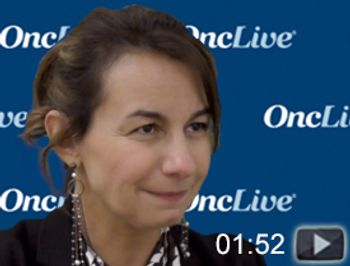
Marina Chiara Garassino, MD, medical consultant, Thoracic Unit, Fondazione IRCCS – Istituto Nazionale dei Tumori, Milan, Italy, discusses patient reported outcomes with durvalumab by PD-L1 expression in patients with stage III unresectable non–small cell lung cancer.
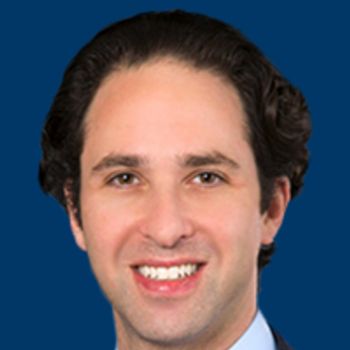
Eric S. Nadler, MD, discusses key data with immunotherapy in the treatment of patients with metastatic squamous non–small cell lung cancer.
Kartik Konduri, MD, discusses the use of combination therapies and newer agents in patients with targetable driver mutations.
Alexander E. Drilon, MD, medical oncologist at Memorial Sloan Kettering Cancer Center, discusses the activity of larotrectinib (Vitrakvi) in patients with TRK fusion–positive non–small cell lung cancer.
David P. Mason, MD, discusses the available treatment approaches for patients with locally advanced non–small cell lung cancer.
Aaron S. Mansfield, MD, associate professor of oncology, consultant in the Division of Medical Oncology, Mayo Clinic, discusses the current treatment paradigm for patients with extensive-stage small cell lung cancer (SCLC) and highlights ongoing research in the field.

Suresh S. Ramalingam, MD, deputy director, Winship Cancer Institute of Emory University, discusses the impact of osimertinib (Tagrisso) in both clinical trial and real-world settings.
Kartik Konduri, MD, medical director, Chest Cancer Research and Treatment Center, Baylor Charles A. Sammons Cancer Center, Baylor Scott & White Health, discusses treatment options available for patients with EGFR-mutant non–small cell lung cancer (NSCLC).
David P. Mason, MD, chief of thoracic surgery and lung transplantation, Baylor Scott & White Healthcare System, chief of lung transplantation, Baylor University Medical Center, discusses standard treatment approaches available for patients with stage III non–small cell lung cancer (NSCLC).
Kartik Konduri, MD, co-medical director of the Lung Cancer Center of Excellence, Baylor Charles A. Sammons Cancer Center, on the campus of Baylor University Medical Center, discusses sequencing therapy in patients with EGFR-positive non–small cell lung cancer.
Aaron S. Mansfield, MD, associate professor of oncology, consultant in the Division of Medical Oncology, Mayo Clinic, discusses challenges in the treatment of patients with small cell lung cancer.
Aaron S. Mansfield, MD, discusses recent progress in small cell lung cancer and remaining challenges in the field.
During an OncLive Peer Exchange® discussion, moderator Mark A. Socinski, MD, and other lung cancer experts from across the United States discuss what, in this context, the PACIFIC trial results mean for practicing oncologists and their patients.
Mark A. Socinski, MD, executive medical director, AdventHealth Medical Group, discusses new applications for immunotherapy in the treatment of patients with non–small cell lung cancer.

Atezolizumab plus bevacizumab, carboplatin, and paclitaxel has emerged as a potential new standard of care for patients with EGFR-positive metastatic nonsquamous non–small cell lung cancer who have failed prior TKIs.
Niels Reinmuth, MD, PhD, discusses the results of the MYSTIC study, which evaluated first-line durvalumab plus tremelimumab versus platinum-based chemotherapy in patients with metastatic non–small cell lung cancer.
James Chih-Hsin Yang, MD, discusses the final safety and efficacy results from 2 phase I expansion cohorts from the phase I/II AURA trial.

Tony Mok, MD, discusses the KEYNOTE-042 trial and the implications of its findings, and sheds light on the evolving role of immunotherapy in non–small cell lung cancer.

No overall survival advantage was obtained from maintenance therapy comprising nivolumab (Opdivo) alone or in combination with ipilimumab (Yervoy) over placebo in patients with extensive-stage small cell lung cancer.
Suresh S. Ramalingam, MD, describes findings with osimertinib, and discusses the emerging body of data exploring primary and acquired resistance mechanisms to the third-generation agent.

Final results from 2 phase I expansion cohorts of frontline osimertinib (Tagrisso) presented at the 2019 European Lung Cancer Congress confirmed the efficacy of the third-generation TKI in patients with EGFR-positive non­–small cell lung cancer.
Martin Reck, MD, PhD, head of the department of thoracic oncology at Lung Clinic Grosshansdorf, discusses the rationale for the IMpower150 study.
Luis G. Paz-Ares, MD, PhD, chief physician at the Hospital Universitario Doce De Octubre, discusses an integrated analysis of patients with NTRK fusion–positive non–small-cell lung cancer enrolled in the STARTRK-2, STARTRK-1, and ALKA-372-001 trials, which evaluated the safety and efficacy of entrectinib in patients with solid tumors.
Anna F. Farago, MD, PhD, assistant professor of medicine at Harvard Medical School, discusses the FDA approval of single-agent pembrolizumab for the frontline treatment of patients with stage III non–small cell lung cancer, who are ineligible for surgery or definitive chemoradiation, or metastatic NSCLC, with a PD-L1 expression (tumor proportion score) level of ≥1% and do not harbor EGFR or ALK aberrations.
The FDA has expanded the approval for pembrolizumab monotherapy for the frontline treatment of patients with stage III non–small cell lung cancer, who are ineligible for surgery or definitive chemoradiation, or metastatic NSCLC, with a PD-L1 expression (tumor proportion score) level of ≥1% and do not harbor EGFR or ALK aberrations.
Advertisement
Advertisement
Trending on OncLive
1
FDA Approves Tucatinib Plus Trastuzumab/Pertuzumab as First-Line Maintenance in Advanced HER2+ Breast Cancer
2
GI Cancer Monthly Rewind: Key News and Expert Insights You May Have Missed in September 2026
3
FDA Grants Breakthrough Device Designation to Natera’s Multi-Cancer Early Detection Assay
4
Five Under 5: Top Oncology Videos for the Week of 10/5/2026
5