
Lung Cancer
Latest News
Advertisement
Latest Videos


































































Advertisement
More News



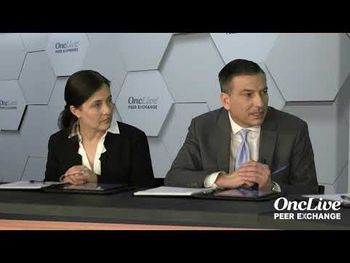


Robert J. Cerfolio, MD, director of the Lung Cancer Center, chief of clinical thoracic surgery, NYU Langone’s Perlmutter Cancer Center, discusses the role of surgery in lung cancer.

Janakiraman Subramanian, MD, a medical oncologist and director of thoracic oncology and director of the Center for Precision Medicine at Saint Luke’s Cancer Institute, discusses tumor biology in lung cancer.
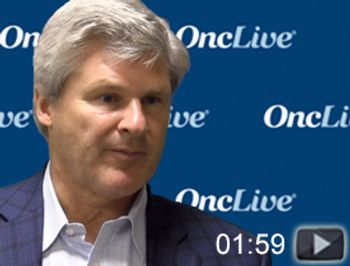
Mark A. Socinski, MD, executive medical director, AdventHealth Medical Group, discusses the current state of treatment for patients with non–small cell lung cancer.
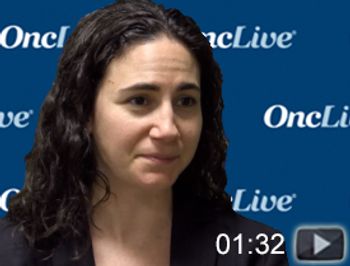
Sarah B. Goldberg, MD, MPH, an assistant professor of medicine at the Yale School of Medicine and Yale Cancer Center, discusses strategies for managing central nervous system metastases in patients with oncogene-driven non–small cell lung cancer.

The FDA has granted a priority review designation to a supplemental biologics license application for pembrolizumab (Keytruda) as a treatment for patients with advanced small cell lung cancer whose disease has progressed following ≥2 prior lines of therapy.
The FDA has granted a priority review designation to a new drug application for entrectinib as a treatment for select adult and pediatric patients with NTRK fusion–positive locally advanced or metastatic solid tumors, as well as patients with metastatic ROS1-positive non–small cell lung cancer.
Elaine Shum, MD, medical oncologist, NYU Langone’s Perlmutter Cancer Center, discusses mechanisms of resistance in patients with oncogene-driven non–small cell lung cancer (NSCLC).
J. Russell Davis, MD, clinical professor, University of Missouri–Kansas City School of Medicine, thoracic surgeon, Saint Luke's Hospital, compares the use of robotic surgery with open surgery in patients with lung cancer.
Sarah B. Goldberg, MD, MPH, sheds light on the complex treatment paradigm for patients with lung cancer who have central nervous system metastases and highlights emerging treatment strategies for those with mesothelioma.
Alexander E. Drilon, MD, medical oncologist at Memorial Sloan Kettering (MSK) Cancer Center, discusses rare drivers in non–small cell lung cancer (NSCLC).
Julie R. Brahmer, MD, discusses advances made with immunotherapy in the lung cancer space, highlights challenges that still need to be addressed, and sheds light on ongoing research designed to determine treatment approaches beyond PD-1/PD-L1 and CTLA-4 inhibition

Edward B. Garon, MD, discusses the landscape of EGFR-targeted therapy in non–small cell lung cancer.
Roy Decker, MD, PhD, associate professor of Therapeutic Radiology, Yale Cancer Center, discusses common adverse events associated with radiation therapy in the treatment of patients with lung cancer.
Following a 2-decade lull in early-stage lung cancer, we are now seeing much better-designed neoadjuvant and adjuvant studies based on proper biomarker selection, as well as optimized treatment choices founded upon recent advances in the metastatic setting.
Julie R. Brahmer, MD, co-director of the Upper Aerodigestive Department in the Bloomberg-Kimmel Institute for Cancer Immunotherapy, Johns Hopkins Medicine, discusses the potential for immunotherapy beyond PD-1 and PD-L1 checkpoints in non–small cell lung cancer.
Advertisement
Advertisement
Trending on OncLive
1
FDA Approves Tucatinib Plus Trastuzumab/Pertuzumab as First-Line Maintenance in Advanced HER2+ Breast Cancer
2
GI Cancer Monthly Rewind: Key News and Expert Insights You May Have Missed in September 2026
3
Five Under 5: Top Oncology Videos for the Week of 10/5/2026
4
FDA Grants Breakthrough Device Designation to Natera’s Multi-Cancer Early Detection Assay
5