






Lung Cancer
Latest News
Advertisement
Latest Videos





































































Advertisement
More News

Leora Horn, MD, MSc, associate professor of cancer research, Vanderbilt University Medical Center, discusses the use of circulating tumor DNA analysis as a means to monitor response to, as well as resistance to, ensartinib in patients with ALK–positive non–small cell lung cancer.
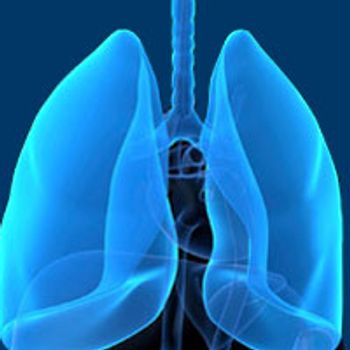
Findings from the phase III NEJ026 study, presented at the 2018 ASCO Annual Meeting and now published in Lancet Oncology, showed that adding bevacizumab to erlotinib significantly improved progression-free survival versus erlotinib alone in patients with EGFR-positive, advanced nonsquamous non–small cell lung cancer.
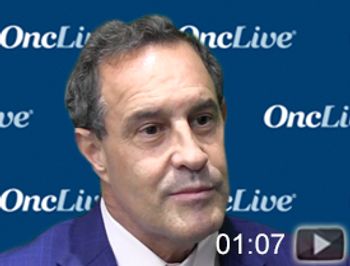
Robert J. Cerfolio, MD, director of the Lung Cancer Center, chief of clinical thoracic surgery, NYU Langone’s Perlmutter Cancer Center, discusses the importance of specialized care in lung cancer and sheds light on the current outlook of the disease.

Lecia V. Sequist, MD, highlights the expansion cohort data from the TATTON study and explains how these findings could impact the treatment landscape of EGFR-mutant NSCLC.

Chul Kim, MD, MPH, an attending physician at MedStar Health and an assistant professor of medicine at Georgetown University, discusses overcoming mechanisms of resistance to TKIs in non–small cell lung cancer (NSCLC).
Leslie J. Kohman, MD, FACS, Distinguished Service Professor of Surgery, Upstate University Hospital, Upstate Cancer Center, discusses the importance of lung cancer screening.
Jason M. Wallen, MD, MBA, FACS, FCCP, associate professor of surgery, division chief of thoracic surgery, director of gastric and esophageal cancer program, medical director of the thoracic oncology program, Upstate University Hospital, discusses the role of surgery in patients with advanced-stage lung cancer.
Brandon Weckbaugh, MD, an oncology fellow at the University of Missouri-Kansas City, discusses the results of the LIBRETTO-001 trial in the patients with non–small cell small cancer (NSCLC).

The European Commission has approved dacomitinib for the frontline treatment of adult patients with locally advanced or metastatic non–small cell lung cancer with EGFR-activating mutations.
Lecia V. Sequist, MD, MPH, thoracic medical oncologist and director of the Center for Innovation in Early Cancer Detection at Massachusetts General Hospital Cancer Center, discusses the rationale for the TATTON trial in non–small cell lung cancer (NSCLC).
Sarah B. Goldberg, MD, MPH, assistant professor of medicine, Yale School of Medicine and Yale Cancer Center, discusses the diagnosis of patients with mesothelioma.
Tumor mutational burden identified patients who obtained a survival benefit with the PD-L1 inhibitor durvalumab, as initial therapy versus chemotherapy for advanced non–small cell lung cancer, even though the primary analysis of the randomized trial showed no difference between treatment groups, according to a new analysis.

Pembrolizumab (Keytruda) demonstrated promising antitumor activity with durable responses in patients with pretreated advanced small cell lung cancer.
The combination of osimertinib and the MET inhibitor savolitinib demonstrated encouraging clinical activity and an acceptable risk-benefit profile in patients with EGFR-mutant, MET-amplified non–small cell lung cancer who previously received EGFR TKIs.
Bob T. Li, MD, MPH, a medical oncologist at Memorial Sloan Kettering Cancer Center, discusses the application of liquid biopsies in lung cancer.

Although TMB is associated with responses to checkpoint inhibitor therapy, more research is needed to better understand how TMB interacts with other genomic correlates of the immune cycle before the biomarker can be incorporated into clinical practice.
Eric Vallieres, MD, medical director, Division of Thoracic Surgery, Swedish Medical Center, discusses comparisons between video-assisted surgery and robotic surgery in the treatment of patients with lung cancer.
Sukhmani Padda, MD, assistant professor of medicine, Stanford University Medical Center, member, Stanford Cancer Institute, discusses next steps for treatment of EGFR-positive non–small cell lung cancer.
Benjamin P. Levy, MD, assistant professor of oncology, clinical director of Medical Oncology, Sidney Kimmel Cancer Center and Johns Hopkins Medicine, discusses the use of entrectinib in patients with NTRK-mutant and ROS1-rearranged non–small cell lung cancer.
The use of prophylactic cranial irradiation failed to demonstrate a statistically significant improvement in overall survival over observation in patients with locally advanced stage III non–small cell lung cancer; however, the modality did improve disease-free survival and decreased the risk of brain metastasis.
Stephen L. Graziano, MD, professor of medicine, division chief of medicine, and division chief of Upstate Cancer Center Adult Hematology/Oncology at the Upstate University Hospital, discusses sequencing targeted therapy for patients with non–small cell lung cancer (NSCLC).
Jason M. Wallen, MD, MBA, FACS, FCCP, associate professor of surgery, division chief of thoracic surgery, director of gastric and esophageal cancer program, medical director of the thoracic oncology program, Upstate University Hospital, discusses technological advances made in non–small cell lung cancer (NSCLC).
Benjamin P. Levy, MD, discusses the rise of checkpoint inhibitors in small cell lung cancer, an emerging targeted agent in non–small cell lung cancer, and the road that lies ahead in the overall landscape.
Joshua K. Sabari, MD, assistant professor, Department of Medicine, NYU Langone’s Perlmutter Cancer Center, discusses the management of immune-related adverse events (irAEs) in patients with lung cancer.

Janakiraman Subramanian, MD, medical oncologist, director of Thoracic Oncology, Center for Precision Medicine, Saint Luke’s Cancer Institute, discusses the IMpower131 trial in advanced squamous non–small cell lung cancer (NSCLC).
Advertisement
Advertisement
Trending on OncLive
1
FDA Approves Tucatinib Plus Trastuzumab/Pertuzumab as First-Line Maintenance in Advanced HER2+ Breast Cancer
2
GI Cancer Monthly Rewind: Key News and Expert Insights You May Have Missed in September 2026
3
FDA Grants Breakthrough Device Designation to Natera’s Multi-Cancer Early Detection Assay
4
Five Under 5: Top Oncology Videos for the Week of 10/5/2026
5