

Lung Cancer
Latest News
Advertisement
Latest Videos



































































Advertisement
More News


Two new therapies are showing encouraging findings for patients with NSCLC with either RET rearranged or EGFR exon 20 insertions, raising hope that 2 hard-to-target driver alterations may soon have an associated targeted treatment.

The investigational KRASG12C inhibitor AMG 510 achieved a 50% response rate in patients with KRASG12C-positive advanced non–small cell lung cancer, according to results from a phase I study presented at the 2019 ASCO Annual Meeting.

Patients with non–small cell lung cancer and baseline liver metastases had improved progression-free survival and overall survival with the addition of immunotherapy to bevacizumab and a chemotherapy doublet.

Two highly selective MET inhibitors, tepotinib and capmatinib showed promising clinical activity in the first- and second-line treatment of patients with MET exon 14-altered advanced non–small cell lung cancer.

Adding ramucirumab to erlotinib reduced the risk of disease progression or death by over 40% versus erlotinib alone as a frontline treatment for patients with EGFR-positive NSCLC.
Neoadjuvant immunotherapy demonstrated substantial activity with a favorable toxicity profile in findings from 2 studies of patients with operable early-stage non–small cell lung cancer reported at the 2019 ASCO Annual Meeting.
A broader set of clinical trial eligibility criteria proposed by the American Society of Clinical Oncology and Friends of Cancer Research would nearly double the number of patients with advanced non-small cell lung cancer available for enrollment.

Lurbinectedin monotherapy achieved an overall response rate of 35.2% as a second-line treatment for patients with small cell lung cancer, according to findings from a phase II basket trial presented at the 2019 ASCO Annual Meeting.


The development of tyrosine kinase inhibitors has revolutionized the treatment of EGFR-mutant non–small cell lung cancer in recent years, but new strategies are needed to overcome resistance mechanisms that promote disease recurrence.

After 5 years, newly diagnosed patients with advanced non–small cell lung cancer demonstrated an overall survival (OS) rate of 23.2% from treatment with pembrolizumab monotherapy and previously treated patients had an OS rate of 15.5%.
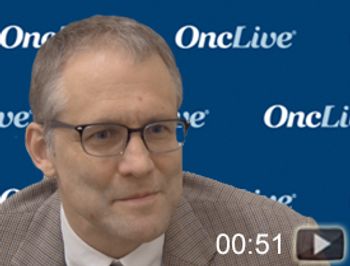
Thomas E. Stinchcombe, MD, professor of medicine, Duke Cancer Institute, discusses the benefit of alectinib in the treatment of patients with ALK-positive non–small cell lung cancer.
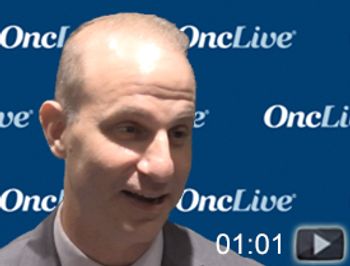
Benjamin P. Levy, MD, assistant professor of oncology, clinical director of Medical Oncology, Sidney Kimmel Cancer Center and Johns Hopkins Medicine, discusses the outlook for patients with oncogene-driven non–small cell lung cancer.
Advertisement
Advertisement
Trending on OncLive
1
FDA Approves Tucatinib Plus Trastuzumab/Pertuzumab as First-Line Maintenance in Advanced HER2+ Breast Cancer
2
GI Cancer Monthly Rewind: Key News and Expert Insights You May Have Missed in September 2026
3
FDA Grants Breakthrough Device Designation to Natera’s Multi-Cancer Early Detection Assay
4
Five Under 5: Top Oncology Videos for the Week of 10/5/2026
5