

Lung Cancer
Latest News

Advertisement
Latest Videos
































































Advertisement
More News
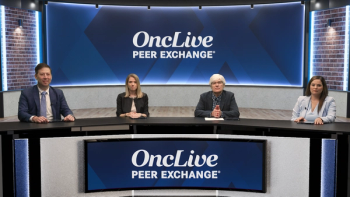
Panelists discuss how while emerging biomarkers like inflamed subtypes and MHC class I expression show promise for predicting immunotherapy benefit, current clinical practice treats all patients with immunotherapy since the potential for exceptional responses cannot be reliably predicted.
The FDA approved lurbinectedin plus atezolizumab as first-line maintenance for ES-SCLC that has not progressed after frontline induction therapy.

Ahead of the 2025 ESMO Congress, OncLive spoke with experts in lung cancer care to preview the most anticipated meeting abstracts.

Matthew Lee, MD, details the improved disease-free survival outcomes with adjuvant alectinib in patients with ALK-positive NSCLC.

Misty D. Shields, MD, PhD, discusses the modern role for prophylactic cranial irradiation in extensive-stage SCLC management.
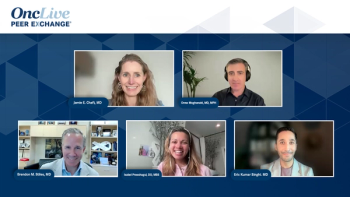
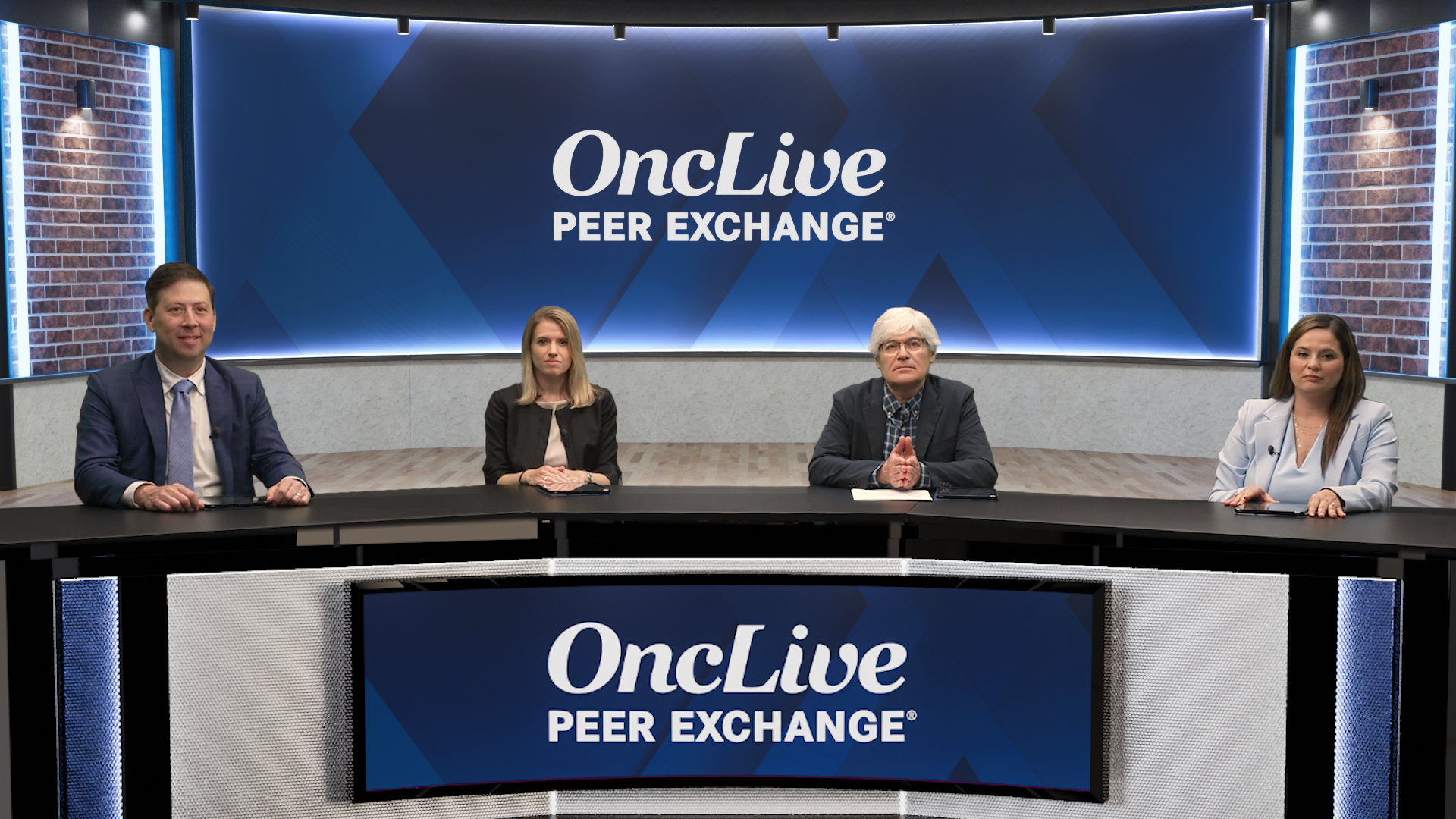
Panelists discuss how comprehensive biomarker testing is essential for all patients with early-stage non–small cell lung cancer (NSCLC), with thoracic specialists emphasizing the importance of testing primary tumor samples and lymph nodes to identify actionable mutations that guide treatment decisions and inform patients about their therapeutic journey, particularly as targeted therapies and immunotherapies continue to advance in early-stage and locally advanced disease settings.

Eric K. Singhi, MD, and Sandip P. Patel, MD, discuss treatment and sequencing considerations in advanced non–small cell lung cancer.
OncLive social media polls reveal which lung cancer abstracts are generating excitement ahead of the 2025 ESMO Congress.
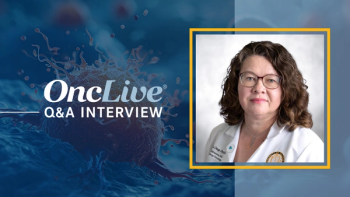
Lyudmila A. Bazhenova, MD, discusses the FDA approval of sunvozertinib (Zegfrovy) in patients with EGFR exon 20–mutant non–small cell lung cancer.
Panelists discuss how the concerning underutilization of first-line chemoimmunotherapy in extensive-stage SCLC may stem from clinical nihilism, lack of urgency in treatment initiation, and inadequate education about the substantial benefits these therapies provide to patients.
Panelists discuss how pneumonitis risk management requires intensive patient education about symptoms, close monitoring for several months post radiation, and multidisciplinary coordination with pulmonology and radiation oncology teams to distinguish between radiation-induced and immunotherapy-related pneumonitis.

J. Thaddeus Beck, MD, FACP, discusses the FDA approval of subcutaneous pembrolizumab and berahyaluronidase for use across all adult and solid-tumor indications.

China’s NMPA has accepted for review a new drug application for A400/EP0031 in patients with RET fusion–positive non–small cell lung cancer.

Vote in OncLive's polls to share which lung and genitournary cancer abstracts you're most anticipating at the 2025 ESMO Congress.

Patients with lung cancer who take GLP-1 receptor agonists—commonly prescribed for weight loss and diabetes management—fare better than those who don’t.
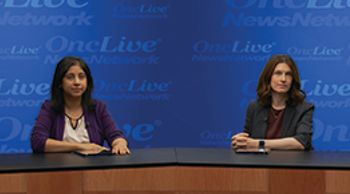
Julia Rotow, MD, and Jyoti Malhotra, MD, MPH, discuss unmet needs in second-line non–small cell lung cancer.
Julia Rotow, MD, and Jyoti Malhotra, MD, MPH, discuss the rationale for evaluating IB6 as a target in non–small cell lung cancer.

The top 5 OncLive TV videos of the week cover insights in lung cancer, multiple myeloma, and ovarian cancer.

The FDA held a Type A meeting for RP1 in advanced melanoma, the AACR released its Annual Cancer Progress Report, and more.
The FDA approved subcutaneous pembrolizumab for use in adult and pediatric solid tumor indications approved for intravenous pembrolizumab.

Taletrectinib was approved in Japan for advanced non–small cell lung cancer harboring ROS1 fusions.

The EMA’s CHMP has recommended the approval of subcutaneous pembrolizumab across all indications and perioperative pembrolizumab in locally advanced HNSCC.
Panelists discuss how patient selection for durvalumab consolidation requires careful consideration of autoimmune diseases, baseline lung function, and neurologic paraneoplastic syndromes, while emphasizing that most patients should receive immunotherapy unless they have severely active contraindications.
Panelists discuss how durvalumab consolidation after chemoradiation has become the standard of care for limited-stage SCLC based on the ADRIATIC trial, with most patients being considered candidates for the 2-year treatment course.
Greg Durm, MD, discusses factors that influence his decision to utilize perioperative treatment in patients with early-stage NSCLC.
Advertisement
Advertisement
Trending on OncLive
1
FDA Approves Tucatinib Plus Trastuzumab/Pertuzumab as First-Line Maintenance in Advanced HER2+ Breast Cancer
2
VIR-5500 Receives FDA Fast Track Designation in mCRPC
3
Iberdomide Plus Daratumumab/Dexamethasone Yields Significant PFS Benefit in R/R Myeloma
4
FDA Approves Atezolizumab Plus Chemo for Stage III dMMR Colon Cancer
5