



Lung Cancer
Latest News
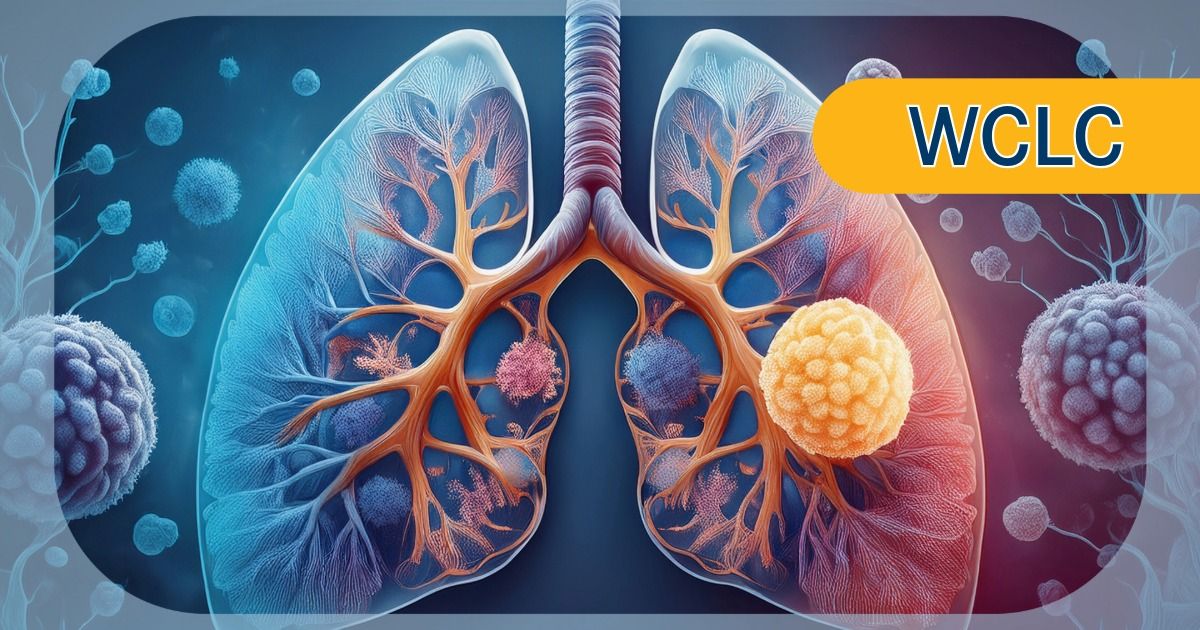
SHR-4849 Shows Preliminary Activity With Manageable Safety in Relapsed Small Cell Lung Cancer
By Kristi Rosa
Advertisement
Latest Videos




































































Advertisement
More News

Optune Lua plus concurrent PD-1/PD-L1 inhibition has been approved in Japan for advanced non–small cell lung cancer after platinum-based chemotherapy.

In an OncLive Peer Exchange, a panel of lung cancer experts discussed updated data in EGFR-mutated NSCLC from WCLC 2025.

Tarlatamab plus anti–PD-L1 as frontline maintenance shows acceptable safety and unprecedented survival in extensive-stage SCLC.
Tarlatamab plus anti–PD-L1 therapy as frontline maintenance shows acceptable safety and unprecedented survival in extensive-stage SCLC.

The top 5 OncLive TV videos of the week cover insights in lung cancer, non–muscle-invasive bladder cancer, and colorectal cancer.

Kelsey Pan, MD, MPH, discusses notable presentations from an OncLive Fellows Forum on Thoracic Oncology.

Frontline amivantamab plus lazertinib generated an OS benefit vs osimertinib in patients with EGFR-mutated NSCLC in the Asia cohort of the MARIPOSA trial.
The PD-L1– and VEGF-directed bispecific antibody IMM2510 proved active in patients with squamous NSCLC after prior chemotherapy and immunotherapy.

Ateganosine sequenced with cemiplimab was active in advanced NSCLC after disease progression on 2 or more standard therapies.

Experts reflect on pivotal data, emerging agents, and highly anticipated trends in lung cancer during the IASLC 2025 World Conference on Lung Cancer.

Real-world data showed that lutetium Lu 177 dotatate led to partial responses in patients with metastatic bronchopulmonary neuroendocrine tumors.
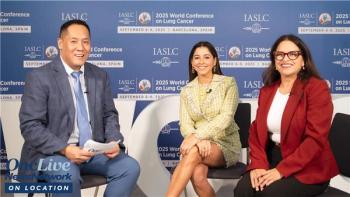
Estelamari Rodriguez, MD, MPH, Coral Olazagasti, MD, and Tina Roy, MD, sit down with Chandler Park, MD, FACP, to discuss the latest abstracts in lung cancer presented during the International Association for the Study of Lung Cancer 2025 World Conference on Lung Cancer.
Repotrectinib elicited durable responses, including intracranial responses, in TKI-naive and -pretreated patients with NSCLC.
Five-year data show cemiplimab plus chemotherapy delivers durable OS, ORR, and DOR benefits in advanced NSCLC.
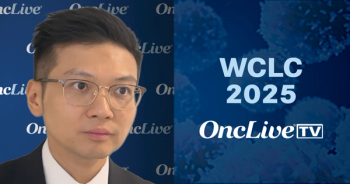
Yang Xia, MD, PhD, discusses the use of different ctDNA monitoring to detect resistance and predict outcomes in NSCLC with MET exon 14 skipping mutations.
Sun-Min Lim, MD, PhD, discusses the potential adoption of first-line subcutaneous amivantamab plus chemotherapy in EGFR-mutant NSCLC.
Firmonertinib was active and safe at both the 160-mg and 240-mg dose levels across a broad range of patients with NSCLC harboring EGFR PACC mutations.
Firmonertinib led to responses with a tolerable safety profile in frontline EGFR L858R–mutated NSCLC.
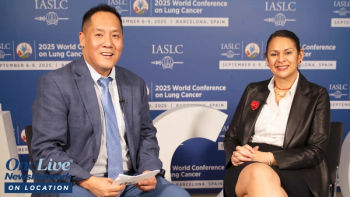
Narjust Florez, MD, and Joshua K. Sabari, MD, sit down with Chandler Park, MD, FACP, to discuss the latest abstracts in lung cancer presented during the International Association for the Study of Lung Cancer 2025 World Conference on Lung Cancer.

Tepotinib treatment was characterized by frequent but manageable TRAEs in MET exon 14–positive NSCLC, with peripheral edema as the most common toxicity.
The SKYSCRAPER-05 trial shed light on the use of perioperative tiragolumab plus atezolizumab with or without chemotherapy in NSCLC.
Sandip P. Patel, MD, discusses remaining gaps in biomarker testing and their implications for targeted therapies in early-stage NSCLC.

Jorge Nieva, MD, discusses the current role and the effect antibody-drug conjugates have on the lung cancer treatment paradigm.

Eric K. Singhi, MD, expands on how oncologists can work with patient advocacy groups on social media to improve patient education and engagement.

Tepotinib showed superior outcomes in patients with adenocarcinoma MET exon 14 skipping NSCLC vs those with non-adenocarcinoma.
Advertisement
Advertisement
Trending on OncLive
1
FDA Approves Tucatinib Plus Trastuzumab/Pertuzumab as First-Line Maintenance in Advanced HER2+ Breast Cancer
2
VIR-5500 Receives FDA Fast Track Designation in mCRPC
3
Iberdomide Plus Daratumumab/Dexamethasone Yields Significant PFS Benefit in R/R Myeloma
4
FDA Approves Atezolizumab Plus Chemo for Stage III dMMR Colon Cancer
5