





Lung Cancer
Latest News
Advertisement
Latest Videos
































































Advertisement
More News

RP1 BLA in advanced melanoma receives CRL from FDA, generic ibrutinib tablets gets green light for B-cell malignancies, and more.

Marina C. Garassino, MD, discusses the standing of durvalumab and other immunotherapy-based approaches in locally advanced NSCLC.

Pasi A. Jänne, MD, PhD, discusses changes to the second-line treatment paradigm and treatment decision-making factors for patients with EGFR-mutated NSCLC.

Sukhmani Padda, MD, discusses ways in which evolving treatment paradigms are tailoring treatment to target atypical EGFR alterations in NSCLC.

Tony S.K. Mok, BMSc, MD, FRCP(C), FHKCP, FHKAM, FASCO, discusses first-line treatment decision-making for patients with BRAF-mutant non–small cell lung cancer.
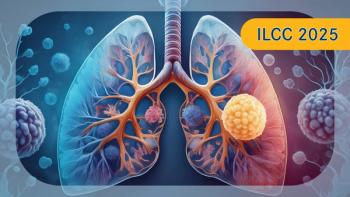
Heather Wakelee, MD, discusses underlying resistance mechanisms and potential therapies for EGFR+ NSCLC following osimertinib.

Wade T. Iams, MD, and Jessica Donington, MD, MSCR, discuss updated findings for neoadjuvant nivolumab plus chemotherapy in resectable NSCLC.
Wade T. Iams, MD, and Jessica Donington, MD, MSCR, discuss surgical outcomes from CheckMate-77T for perioperative nivolumab in resectable NSCLC.

The FDA has granted breakthrough therapy designation to elironrasib for KRAS G12C–mutated advanced NSCLC previously treated with chemotherapy and immunotherapy.
Jorge Nieva, MD, discusses matched-adjusted indirect comparison data evaluating crizotinib vs alectinib, brigatinib, and lorlatinib in ALK-positive NSCLC.

Sandip P. Patel, MD, discusses toxicities associated with the use of immunotherapy-based combination regimens in patients with advanced NSCLC.
Elaine Shum, MD, discusses questions that remain regarding the first-line treatment paradigm for patients with EGFR-mutant non–small cell lung cancer.

Jessica Donington, MD, MSCR, discusses how updated data with perioperative nivolumab in NSCLC may affect future surgical decision-making.

The FDA granted fast track designation to DB-1310 for patients with pretreated, advanced non–small cell lung cancer harboring select EGFR mutations.
Evan S. Wu, Md, PhD, concludes a three-part series highlighting the translatability of Chinese clinical data into US regulatory pathways.
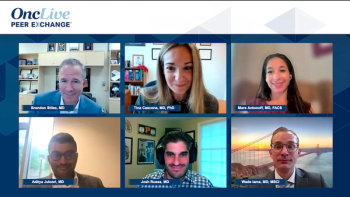
Panelists discuss how subcutaneous (SQ) nivolumab administration offers patient convenience and potential logistical advantages, particularly in the maintenance setting, though they acknowledge limited current adoption and need for more biological data on efficacy differences.
Panelists discuss how borderline resectable patients can be made resectable through neoadjuvant chemoimmunotherapy when surgeons have clear, objective goals for what they aim to achieve rather than vague hopes to make surgery “less scary.”

Osimertinib plus chemotherapy improved overall survival in the first-line treatment of advanced non–small cell lung cancer harboring EGFR mutations.

The top 5 OncLive videos of the week cover insights in ovarian cancer, RCC, melanoma, non–small cell lung cancer, and non–muscle-invasive bladder cancer.

Sandip P. Patel, MD, discusses targeted therapy combination regimens in EGFR-mutated NSCLC.
Wade T. Iams, MD, and Jessica Donington, MD, MSCR, discuss updated data from CheckMate-77T of perioperative nivolumab in resectable NSCLC.
Wade T. Iams, MD, and Jessica Donington, MD, MSCR, discuss how immunotherapy is affecting perioperative treatment in early-stage non–small cell lung cancer.
Eric K. Singhi, MD, explains the rationale for evaluating lurbinectedin plus atezolizumab as maintenance therapy after chemotherapy in ES-SCLC.
Panelists discuss how to manage patients who cannot proceed to surgery after neoadjuvant chemoimmunotherapy by pivoting to definitive concurrent chemoradiation with reduced-dose chemotherapy, while emphasizing the need to distinguish true progression from inflammatory changes.
Panelists discuss how real-world data from the Flatiron Health database revealed that surgical completion rates after neoadjuvant therapy are lower in community practice (65%) compared with clinical trials, particularly for patients with poor performance status or more advanced stage disease.
Advertisement
Advertisement
Trending on OncLive
1
FDA Approves Tucatinib Plus Trastuzumab/Pertuzumab as First-Line Maintenance in Advanced HER2+ Breast Cancer
2
VIR-5500 Receives FDA Fast Track Designation in mCRPC
3
Iberdomide Plus Daratumumab/Dexamethasone Yields Significant PFS Benefit in R/R Myeloma
4
FDA Approves Atezolizumab Plus Chemo for Stage III dMMR Colon Cancer
5