



Lung Cancer
Latest News
Advertisement
Latest Videos































































Advertisement
More News

Benmelstobart with or without anlotinib boosted progression-free survival after chemoradiotherapy in unresectable stage III non–small cell lung cancer.
Neoadjuvant nivolumab plus chemo significantly improved OS vs chemo alone in resectable NSCLC, supporting practice-changing potential.
Tarlatamab improved overall survival and progression-free survival in the second-line treatment of small cell lung cancer.

Neoadjuvant osimertinib as monotherapy or plus chemotherapy was more effective vs chemotherapy alone in patients with resectable EGFR-mutated NSCLC.
COCOON DM reduced the severity and QOL influence of dermatologic AEs vs SOC DM in EGFR-mutant, advanced NSCLC treated with amivantamab plus lazertinib.
Neoadjuvant chemotherapy and nivolumab and adjuvant nivolumab prolonged EFS vs placebo in patients with resectable NSCLC in follow-up from CheckMate-77T.
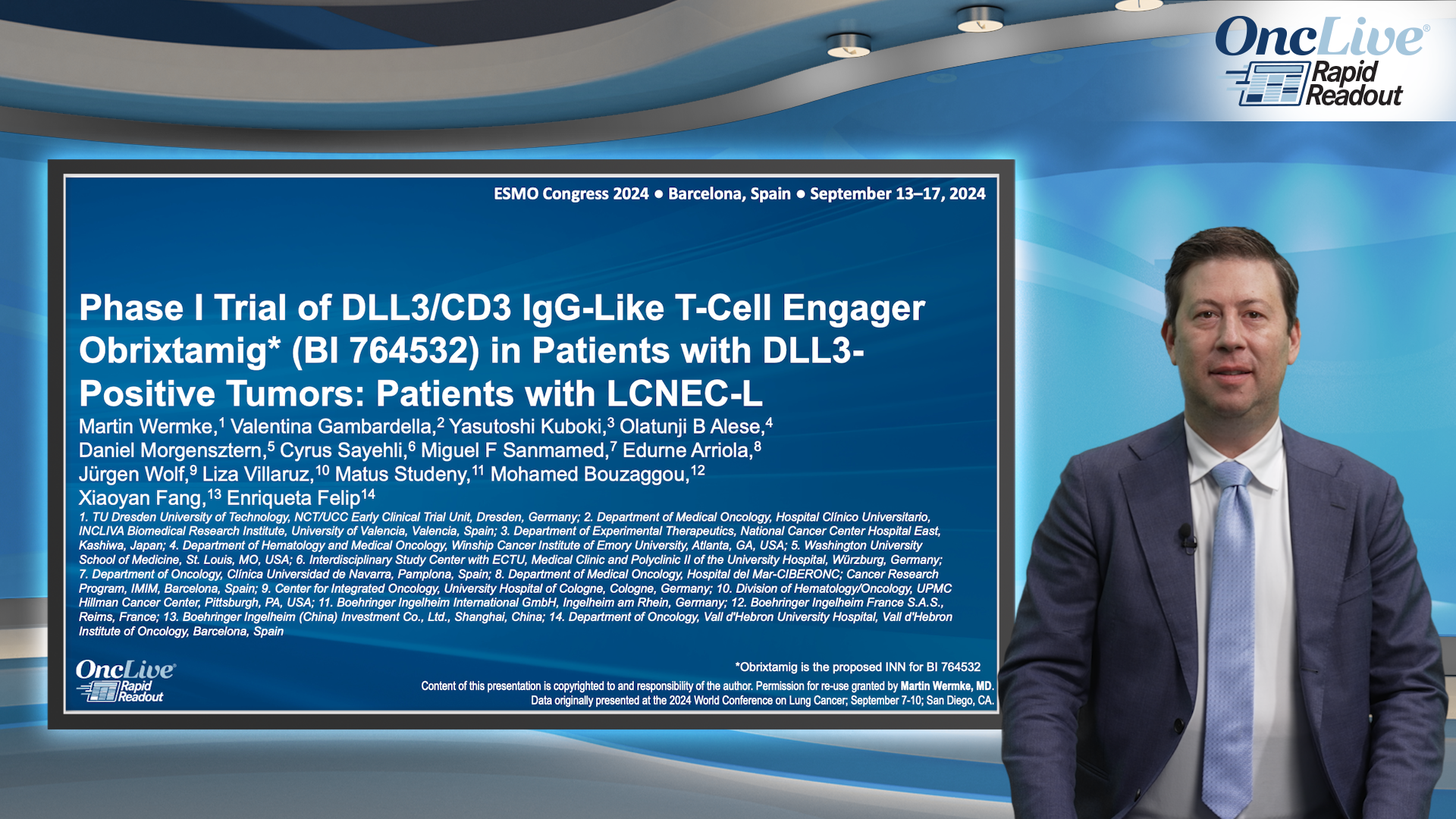
The DLL3-directed CAR T-cell therapy LB2102 was safe with preliminary antitumor activity in small cell lung cancer and large cell neuroendocrine carcinoma.
Neoadjuvant alectinib produced major pathologic responses, and it was tolerable and feasible in potentially resectable, stage III, ALK-positive NSCLC.
Adding induction toripalimab to chemotherapy followed by definitive chemoradiotherapy and consolidation therapy reduced risk for disease progression by 74%.
Sacituzumab tirumotecan showed statistically significant improvements in responses and survival vs docetaxel alone in advanced EGFR-mutant NSCLC.
Patritumab deruxtecan did not improve OS vs platinum-based chemotherapy in patients with EGFR mutation–positive locally advanced or metastatic NSCLC.
Savolitinib plus osimertinib was safe and effective in patients with EGFR-mutated, MET-amplified advanced NSCLC after disease progression on an EGFR TKI.
Treatment with the oral TKI showed promising responses among 2 subgroups of patients with advanced, HER2-mutant non–small cell lung cancer.
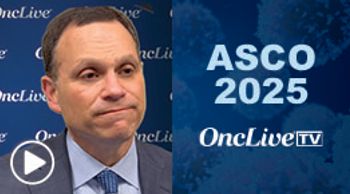
David Spigel, MD, discusses evaluating the utility of adjuvant chemotherapy in patients with stage IA to IIA NSCLC identified as high risk by a 14-gene molecular assay.
Adagrasib plus pembrolizumab was efficacious in patients with KRAS G12C-mutant NSCLC.
Amivantamab/chemotherapy demonstrated sustained efficacy, despite the osimertinib resistance mechanism in patients with EGFR-mutated NSCLC.
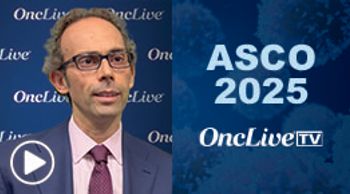
Raffaele Califano, MD, discusses molecularly stratified outcomes amivantamab with chemotherapy vs chemotherapy alone in patients with advanced EGFR-mutant NSCLC.
Adjuvant chemotherapy generated a DFS benefit over observation in patients identified as having higher-risk nonsquamous NSCLC per a prognostic assay.
Read a recap of the episodes of OncLive On Air that debuted in May 2025.

Charu Aggarwal, MD, MPH, and Geoffrey Liu, MSc, MD, on novel approaches being investigated in ROS1-positive non–small cell lung cancer.
Charu Aggarwal, MD, MPH, and Geoffrey Liu, MSc, MD, on how FDA approval of taletrectinib would affect ROS1-positive non–small cell lung cancer management.
Charu Aggarwal, MD, MPH, and Geoffrey Liu, MSc, MD, discuss data for taletrectinib in ROS1-positive non–small cell lung cancer.
Charu Aggarwal, MD, MPH, and Geoffrey Liu, MSc, MD, discuss CNS involvement in ROS1-positive non–small cell lung cancer.
Charu Aggarwal, MD, MPH, and Geoffrey Liu, MSc, MD, discuss TKI selection in ROS1-positive non–small cell lung cancer.
Charu Aggarwal, MD, MPH, and Geoffrey Liu, MSc, MD, discuss treatment sequencing in ROS1-positive non–small cell lung cancer.
Advertisement
Advertisement
Trending on OncLive
1
FDA Approves Tucatinib Plus Trastuzumab/Pertuzumab as First-Line Maintenance in Advanced HER2+ Breast Cancer
2
FDA Approves Atezolizumab Plus Chemo for Stage III dMMR Colon Cancer
3
Iberdomide Plus Daratumumab/Dexamethasone Yields Significant PFS Benefit in R/R Myeloma
4
VIR-5500 Receives FDA Fast Track Designation in mCRPC
5