



Lung Cancer
Latest News
Advertisement
Latest Videos






























































Advertisement
More News
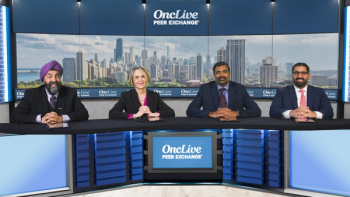
Panelists discuss how the diagnostic workup for unresectable stage III non–small cell lung cancer (NSCLC) requires comprehensive staging including imaging studies (PET-CT, brain MRI), tissue sampling through bronchoscopy or endobronchial ultrasound (EBUS), molecular and biomarker testing, and multidisciplinary evaluation to guide optimal treatment planning.

The FDA granted priority review to sevabertinib for pretreated, advanced non–small cell lung cancer harboring HER2 mutations.
Lung cancer patients with high TTF-1 expression had improved survival outcomes following treatment with the KRAS inhibitor, sotorasib.
A 2025 ASCO press briefing previewed key advances in breast and lung cancer, HER2 diagnostics, and GLP-1s’ link to reduced cancer risk.
Panelists discuss how implementing the new standard of combination therapies requires thorough patient education, prophylactic management of toxicities, and multidisciplinary support to optimize outcomes for patients with EGFR-mutant lung cancer.
Panelists discuss how optimizing treatment duration, using local therapy for oligometastatic disease, and understanding the limitations of current biomarkers are important considerations in developing effective sequencing strategies for EGFR-mutant lung cancer.
Panelists discuss how central nervous system (CNS) progression presents unique challenges in treatment decision-making, highlighting the importance of brain imaging surveillance and considering approaches that maintain CNS disease control while addressing systemic progression.

IMforte data highlight potential for lurbinectedin plus atezolizumab to become a new SOC for first-line maintenance treatment in ES-SCLC.

Osimertinib, with conditions, has been approved by Health Canada for locally advanced, unresectable NSCLC, harboring EGFR mutations.

The FDA granted breakthrough device designation to EnVisio X1 for minimally invasive surgery in cancer care.
Panelists discuss how to treat patients who do not achieve a pathological complete response or major pathological response after neoadjuvant chemoimmunotherapy, considering options such as adjuvant therapy, close surveillance, or clinical trial enrollment based on individual risk factors and disease characteristics.
Panelists discuss how circulating tumor DNA could serve as a potential marker for minimal residual disease (MRD) in this setting, offering a noninvasive and sensitive method for monitoring treatment response and detecting relapse.
The DLL3-targeted antibody-drug conjugate ZL-1310 has received FDA fast track designation for patients with extensive-stage small cell lung cancer.
The FDA has approved options in non–small cell lung cancer, advanced anal cancer, and pheochromocytoma or paraganglioma, and more from OncLive this week.

First-line cemiplimab extended median PFS and OS vs chemotherapy in patients with untreated advanced NSCLC with brain metastases.

Perioperative nivolumab plus chemotherapy was approved by the European Commission for use in resectable PD-L1–positive non–small cell lung cancer.
Panelists discuss how many patients never receive second-line therapy, emphasizing the critical importance of selecting the optimal first-line treatment and monitoring patients closely to identify progression early.
Panelists discuss how subsequent therapy after initial disease progression should consider patient symptomatology, biomarker testing through tissue or liquid biopsies, and potential treatment options including MET-targeted approaches or chemotherapy combinations.
First-Line Eftilagimod Alpha Plus Pembrolizumab/Chemo Yields Responses in Advanced Nonsquamous NSCLC
First-line eftilagimod alpha plus pembrolizumab and chemotherapy produced responses in advanced nonsquamous non–small cell lung cancer.

The FDA has approved the VENTANA MET (SP44) RxDx Assay as a companion diagnostic for telisotuzumab vedotin in non–small cell lung cancer.
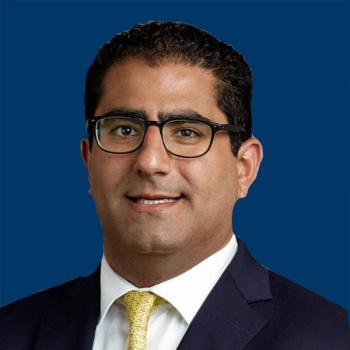
Ahead of the 2025 ASCO Annual Meeting, lung cancer experts highlight the abstracts and related trials they’re looking forward to seeing at the meeting.
The FDA approved telisotuzumab vedotin for pretreated advanced NSCLC harboring high c-MET protein overexpression.

The novel injectable radiotherapy 186RNL showed safety and clinical activity as treatment for patients with leptomeningeal metastases.
Panelists discuss how medical professionals are integrating targeted therapies, such as those for EGFR, ALK, and other mutations like RET and ROS1, into the treatment of resectable early-stage non–small cell lung cancer (NSCLC), with a focus on incorporating the ADAURA and ALINA regimens into clinical practice.
Panelists discuss how medical professionals identify patients who should receive neoadjuvant immune checkpoint inhibitors (ICI) before surgery based on tumor characteristics, patient health, and treatment response, and how factors such as surgical outcomes, recurrence risk, and molecular markers guide decisions on the need for additional adjuvant therapy post surgery.
Advertisement
Advertisement
Trending on OncLive
1
FDA Approves Tucatinib Plus Trastuzumab/Pertuzumab as First-Line Maintenance in Advanced HER2+ Breast Cancer
2
VIR-5500 Receives FDA Fast Track Designation in mCRPC
3
Iberdomide Plus Daratumumab/Dexamethasone Yields Significant PFS Benefit in R/R Myeloma
4
FDA Approves Atezolizumab Plus Chemo for Stage III dMMR Colon Cancer
5