
Lung Cancer
Latest News
Advertisement
Latest Videos






























































Advertisement
More News
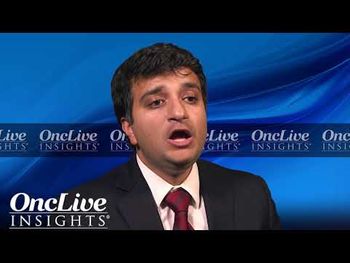
David R. Gandara, MD, discusses the latest immunotherapy developments in lung cancer and the next steps toward optimizing the benefit of these agents.
Everett Vokes, MD, John E. Ultmann Professor of Medicine and Radiation Oncology, physician-in-chief, chair, Department of Medicine, University of Chicago Medicine, discusses PARP inhibitors for patients with non-small cell lung cancer (NSCLC).
Maximilian Diehn, MD, PhD, an assistant professor in the Department of Radiation Oncology, Stanford Medicine, discusses some of the next steps researchers are taking with liquid biopsies in the field of lung cancer.
David R. Gandara, MD, director, Thoracic Oncology Program, professor, senior advisor to director, UC Davis Comprehensive Cancer Center, treasurer, International Association for the Study of Lung Cancer (IASLC), discusses the MYSTIC trial for patients with non-small cell lung cancer (NSCLC)
Nintedanib, an angiogenesis inhibitor, is being investigated as a first-line treatment for patients with unresectable malignant pleural mesothelioma (MPM).
Monotherapy with a tyrosine kinase inhibitor is the frontline standard of care for patients with advanced EGFR-mutant non–small cell lung cancer, with 3 currently approved agents: erlotinib, gefitinib, and afatinib.
Lyudmila A. Bazhenova, MD, discusses the non-driver NSCLC population, the treatment strategies available for them, and challenges physicians continue to face with this subgroup of patients.
ASCO has updated its guidelines for first- and second-line treatment of patients with stage IV non–small cell lung cancer.
Monte Winslow, PhD, shares the work on CRISPR being developed in his lab, and how this technology might help advance treatment for the non-driver NSCLC population.
Everett Vokes, MD, John E. Ultmann Professor of Medicine and Radiation Oncology, physician-in-chief, chair, Department of Medicine, University of Chicago Medicine, discusses pembrolizumab (Keytruda) plus chemotherapy and radiation therapy in patients with lung cancer.
Billy W. Loo Jr, MD, PhD, discusses the advancements in radiation therapy options for patients with lung cancer, how SABR has improved outcomes for patients, and the intriguing combinations being explored with RT and immunotherapy.

Maximilian Diehn, MD, PhD, discussed the future of NGS platforms and liquid biopsies and his vision for them eventually becoming standard practice for patients with lung cancer.
Millie Das, MD, discusses the difficulties of the non-driver non-small cell lung cancer patient population, interesting clinical trials that could reshape therapeutic options, and her belief that these patients do have molecular targets that have yet to be identified.
Anne Chiang, MD, PhD, professor and thoracic oncologist at Yale Cancer Center, discusses ipilimumab (Yervoy) plus nivolumab (Opdivo) in small cell lung cancer.
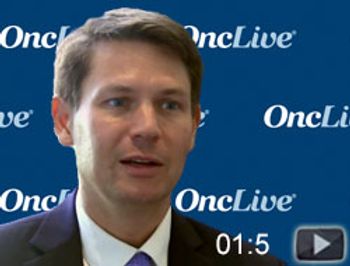
Joel Neal, MD, an assistant professor of medicine and oncology at Stanford Medicine, discusses whether, if approved by the FDA, alectinib (Alecensa) will become the frontline standard of care for patients with ALK-positive non–small cell lung cancer (NSCLC).
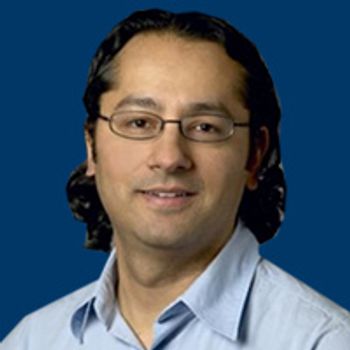
Tushar Desai, MD, discusses his research in stem cells and why discovering which cells have the potential to form lung cancer is significant to the treatment paradigm.
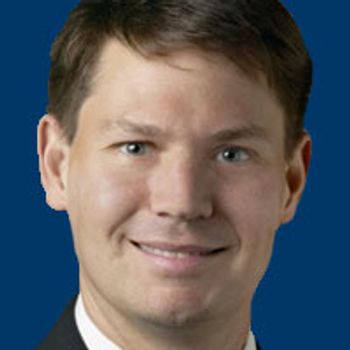
Joel Neal, MD, discusses the latest therapeutic changes to the ALK-positive NSCLC armamentarium.
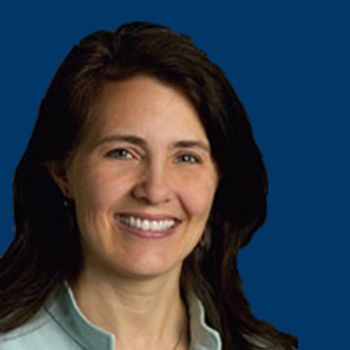
Heather Wakelee, MD, discusses the latest developments with EGFR inhibitors and immunotherapy agents in non-small cell lung cancer.
The FDA has granted a priority review to a supplemental new drug application for alectinib (Alecensa) for the frontline treatment of patients with ALK-positive locally advanced or metastatic non–small cell lung cancer.
Targeted therapies are beginning to carve out a growing number of indications in non–small cell lung cancer, emphasizing the importance of precision medicine.
The therapeutic paradigm continues to evolve in advanced non-small cell lung cancer, with increased emphasis being placed on rational combinations and biomarkers in the next few years.
Advertisement
Advertisement
Trending on OncLive
1
FDA Approves Tucatinib Plus Trastuzumab/Pertuzumab as First-Line Maintenance in Advanced HER2+ Breast Cancer
2
FDA Grants Breakthrough Device Designation to Natera’s Multi-Cancer Early Detection Assay
3
VIR-5500 Receives FDA Fast Track Designation in mCRPC
4
FDA Approves Atezolizumab Plus Chemo for Stage III dMMR Colon Cancer
5