
Multiple Myeloma
Latest News
Advertisement
Latest Videos
CME Content




































Advertisement
More News
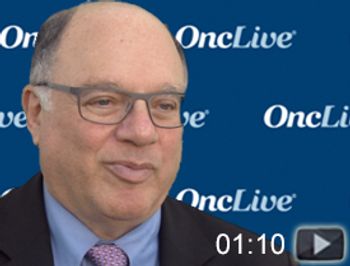
Robert M. Rifkin, MD, attending physician, Rocky Mountain Cancer Centers, research lead, Multiple Myeloma, The US Oncology Network, discusses a trial looking at split dosing of daratumumab in myeloma.
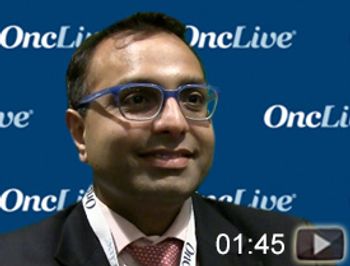
Samir Parekh, MD, associate professor of Medicine, Mount Sinai Health System, discusses the mechanism of action of selinexor in multiple myeloma.
Deepu Madduri, MD, discusses the status of transplant for eligible patients and the developments that are being made with CAR T-cell therapy in multiple myeloma.
Hearn Jay Cho, MD, PhD, discusses classes of immunotherapy under investigation in multiple myeloma.
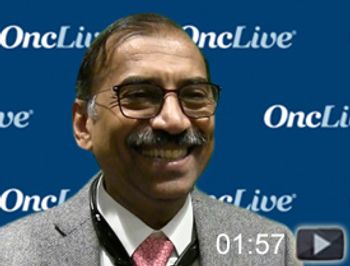
Sundar Jagannath, MD, director of the Multiple Myeloma program and professor of medicine at the Tisch Cancer Institute, Mount Sinai Health System, discusses cancer proliferation in multiple myeloma.
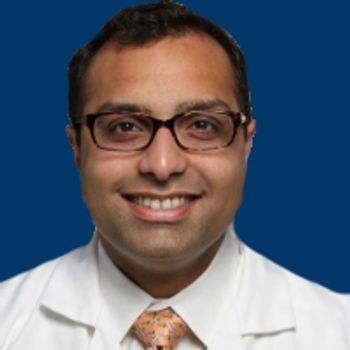
Samir Parekh, MD, discusses the excitement of selinexor and venetoclax (Venclexta) as possible additions to the myeloma treatment landscape
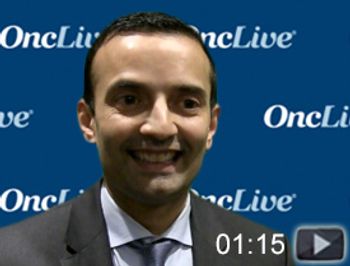
Ajai Chari, MD, associate professor of Medicine, Hematology and Medical Oncology, at Mount Sinai Hospital, discusses the use of pomalidomide (Pomalyst), bortezomib (Velcade), and dexamethasone (PVd) for relapsed patients with multiple myeloma.
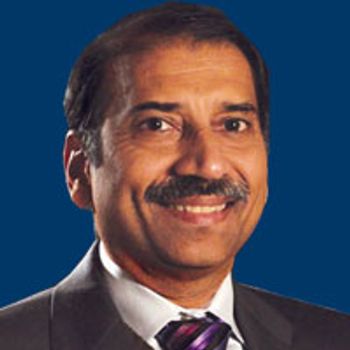
Sundar Jagannath, MD, provides insight into the biology of multiple myeloma.
Hearn Jay Cho, MD, PhD, associate professor of medicine, Hematology/Oncology, Icahn School of Medicine, Mount Sinai Hospital, discusses the knowledge deficit in multiple myeloma.
Ajai Chari, MD, discusses some of the available and anticipated combinations for use in patients with relapsed/refractory multiple myeloma.
David M. Siegel, MD, PhD, chief of myeloma, John Theurer Cancer Center, professor of medicine, Hackensack Meridian Health, discusses a trial distinguishing between classes of drugs in myeloma.
C. Ola Landgren, MD, PhD, discusses the role of minimal residual disease negativity and the emergence of CAR T-cell therapy in multiple myeloma.
Data from 2 early-stage trials of bispecific T-cell engager antibody constructs in relapsed/refractory hematologic malignancies demonstrated antitumor activity and early evidence of tolerability.
Deepu Madduri, MD, assistant professor, Mount Sinai Hospital, discusses treatment after CAR T-cell therapy in patients with myeloma.
Although many new drugs have been introduced for treating patients with hematologic malignancies, stem cell transplantation remains a vital part of the therapeutic paradigm, particularly for multiple myeloma and non-Hodgkin lymphoma.
Ajai Chari, MD, associate professor of medicine, Hematology and Medical Oncology, Mount Sinai Hospital, discusses carfilzomib (Kyprolis) dosing in the treatment of patients with multiple myeloma.
A multitude of BCMA-targeted CAR T-cell therapies are currently in development, each demonstrating different efficacy and safety profiles and each with different constructs.
Thomas G. Martin, MD, clinical professor of medicine, Adult Leukemia and Bone Marrow Transplantation Program, associate director, Myeloma Program, University of California, San Francisco (UCSF); co-leader, Hematopoietic Malignancies Program, Helen Diller Family Comprehensive Cancer Center, discusses minimal residual disease (MRD) status in multiple myeloma.
The triplet of daratumumab, lenalidomide, and dexamethasone reduced the risk of disease progression or death by 44% compared with lenalidomide plus dexamethasone in newly diagnosed patients with multiple myeloma who were not candidates for high-dose chemotherapy and autologous stem-cell transplant.
A Selinexor combination regimen induced an overall response rate of 26.2% in heavily pretreated patients with penta-refractory multiple myeloma.
Nina Shah, MD, associate professor of medicine at the University of California, San Francisco Helen Diller Comprehensive Cancer Center, discusses initial results from a phase I clinical trial of bb21217, a next-generation anti-BCMA CAR T-cell therapy, in patients with multiple myeloma during the 2018 ASH Annual Meeting.
The anti-BCMA CAR T cell therapy bb21217 demonstrated an objective response rate of 83.3%, with a very good partial response or better rate of 75% in patients with heavily pretreated relapsed/refractory multiple myeloma.
Two-year maintenance therapy with ixazomib led to a 39% improvement in progression-free survival compared with placebo in patients with newly diagnosed multiple myeloma who achieved a partial response to induction treatment with a proteasome inhibitor and/or an immunomodulatory agent following autologous stem cell transplant.
Daratumumab added to bortezomib, lenalidomide, and dexamethasone induced at least a very good partial response in all patients and a stringent complete response or CR in 63% of patients at the end of consolidation therapy in the run-in phase of an open-label study of transplant-eligible patients with newly diagnosed multiple myeloma.
Advertisement
Advertisement
Trending on OncLive
1
Five Under 5: Top Oncology Videos for the Week of 8/31/26
2
FDA Approves Camizestrant Plus a CDK4/6 Inhibitor for Emergent ESR1-Mutated HR+, HER2– Advanced Breast Cancer
3
B7-H4–Targeted ADCs Signal a New Frontier for Platinum-Resistant Ovarian and Endometrial Cancer
4
Ivonescimab Meets OS End Point vs Pembrolizumab in First-Line PD-L1+ NSCLC
5