

Multiple Myeloma
Latest News
Advertisement
Latest Videos




































Advertisement
More News
The emergence of monoclonal antibodies, immunomodulatory agents, immunotoxins, bispecific T-cell engagers, and CAR T-cell therapies will redefine multiple myeloma treatment. However, these new approaches, by themselves, are not enough to achieve cure; they must be used in combination.
Cesar Rodriguez Valdes, MD, assistant professor of Hematology and Oncology, Wake Forest University Comprehensive Cancer Center, highlights the evolving role of small molecules in multiple myeloma.
Peter Voorhees, MD, discusses the recent data with triplet regimens in late relapsed multiple myeloma and other novel agents shaking up the paradigm.
The goal of induction regimens for patients with newly diagnosed multiple myeloma is to reduce the burden of disease and prolong durability of response and overall survival, while minimizing toxicity.
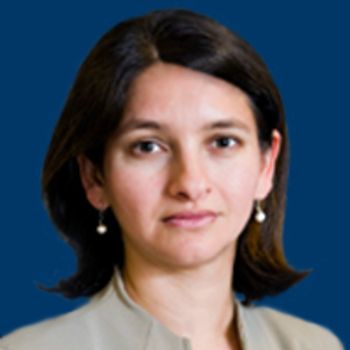
Noopur Raje, MD, highlights the multitude of available and emerging options in relapsed myeloma, as well as the key factors for treatment selection in this heterogeneous population.
Ajai Chari, MD, associate professor, hematology and medical oncology, Mount Sinai Hospital, discusses the use of frontline daratumumab (Darzalex) in transplant-eligible patients with multiple myeloma.
OncLive interviewed experts at the State of the Science Summits in July 2019 on highly anticipated clinical trial results across tumor types.
Cristina Gasparetto, MD, an associate professor of medicine, Duke University Medical Center, and director, Multiple Myeloma Program at Duke Cancer Institute, discusses key trials in relapsed/refractory multiple myeloma.
Andrew J. Cowan, MD, an assistant professor of medicine at University of Washington and hematologist/oncologist at Seattle Cancer Care Alliance, discusses the role of venetoclax (Venclexta) in multiple myeloma.
David Samuel Dicapua Siegel, MD, highlights key research in multiple myeloma and the renewed focus on improving quality of life.
C. Ola Landgren, MD, PhD, shares his expert insight on recent shifts in multiple myeloma management.
Ajai Chari, MD, associate professor, hematology and medical oncology, Mount Sinai Hospital, discusses the phase III E3A06 study, which looked at the effects of lenalidomide in patients with smoldering myeloma.
Kenneth C. Anderson, MD, discusses available and emerging frontline treatment regimens for patients with newly diagnosed multiple myeloma and evaluated the utility of minimal residual disease in the paradigm.
The European Medicines Agency's Committee for Medicinal Products for Human Use has recommended approving elotuzumab (Empliciti) for use in combination with pomalidomide (Pomalyst) and low-dose dexamethasone for the treatment of patients with relapsed/refractory multiple myeloma following 2 or more prior therapies, including lenalidomide (Revlimid) and a proteasome inhibitor.
Ajai Chari, MD, discusses current and emerging research in patients with transplant-eligible and -ineligible multiple myeloma as well as updates in smoldering multiple myeloma.
Deepu Madduri, MD, discusses ongoing trials examining CAR T-cell therapy in myeloma and the potential to use it in earlier lines of therapy.
Omar Nadeem, MD, a physician at Dana-Farber Cancer Institute and an instructor in medicine at Harvard Medical School, discusses individualizing therapy for patients with multiple myeloma.
Paul G. Richardson, MD, reviews the results of the phase III ICARIA-MM trial as well as preliminary data regarding melflufen in relapsed/refractory multiple myeloma.
Paul G. Richardson, MD, clinical program leader and director of clinical research, Jerome Lipper Multiple Myeloma Center, and institute physician, Dana-Farber Cancer Institute, discusses new directions in multiple myeloma.
Noopur S. Raje, MD, director, Center for Multiple Myeloma, Massachusetts General Hospital Cancer Center, and professor of medicine, Harvard Medical School, highlights the different options available for patients with relapsed multiple myeloma.
Andrew J. Cowan, MD, an assistant professor of medicine at University of Washington School of Medicine and hematologist/oncologist at Seattle Cancer Care Alliance, discusses patient eligibility criteria for transplant in multiple myeloma.
Advertisement
Advertisement
Trending on OncLive
1
RELATIVITY-1093 Trial Aims to Advance Nivolumab Plus Relatlimab and Chemo in Nonsquamous NSCLC
2
Dostarlimab Monotherapy Elicits Durable cCRs in dMMR/MSI-H Locally Advanced Rectal Cancer
3
NEXERA-303 Trial Aims to Bring TGFβR2×PD-1 Bispecific Antibody INCA33890 Into First-Line MSS CRC
4
The OncFive: Top Oncology Articles for the Week of 10/25
5