



Multiple Myeloma
Latest News
Advertisement
Latest Videos






































































Advertisement
More News

Adding daratumumab to carfilzomib and dexamethasone improved progression-free survival in patients with relapsed/refractory multiple myeloma, according to topline findings from the phase III CANDOR study.

The all-oral triplet regimen of 60 mg of weekly selinexor plus lenalidomide and dexamethasone appears to be highly active and well-tolerated in patients with relapsed, refractory multiple myeloma, particularly in patients who did not receive prior lenalidomide, according to results of the multi-arm STOMP study that were presented during the 17th International Myeloma Workshop.
Paul G. Richardson, MD, clinical program leader and director of clinical research, Jerome Lipper Multiple Myeloma Center, and institute physician, Dana-Farber Cancer Institute, discusses interim results of the phase II HORIZON trial in relapsed/refractory multiple myeloma.
Maria-Victoria Mateos, MD, PhD, associate professor of medicine, and director of the Myeloma unit at the University Hospital of Salamanca in Spain, discusses the impact of performance status on the outcomes of patients with multiple myeloma in the phase III ARROW trial.
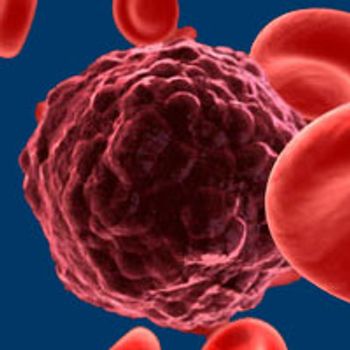
AMG 701, a half-life–extended anti-BCMA bispecific T-cell engager, showed promising in vitro antimyeloma activity and characteristics suitable for once-weekly dosing in patients with multiple myeloma, according to findings presented at the 17th International Myeloma Workshop.

Shaji Kumar, MD, discusses the addition of the BCL-2 inhibitor venetoclax to the combination of bortezomib and dexamethasone significantly improved progression-free survival, overall response rate, very good partial response, and minimal residual disease negativity rates in the phase III BELLINI trial in relapsed/refractory patients with multiple myeloma.
Melflufen and dexamethasone demonstrated encouraging activity in patients with relapsed/refractory multiple myeloma with and without extramedullary disease, with response rates higher than those observed in prior studies of other agents.
Saad Z. Usmani, MD, FACP, chief of Plasma Cell Disorder, director of Clinical Research in Hematologic Malignancies, Levine Cancer Institute, Atrium Health, discusses how the target BCMA is impacting the multiple myeloma treatment landscape.

The addition of daratumumab to bortezomib, lenalidomide, and dexamethasone for transplant-eligible patients with newly diagnosed multiple myeloma improved the depth of response without affecting stem cell mobilization or hematopoietic reconstitution.

The novel agent iberdomide (formerly CC-220) was safe and showed antitumor activity when combined with dexamethasone in patients with heavily pretreated, relapsed/refractory multiple myeloma, according to findings from a phase Ib/IIa study presented at the 17th International Myeloma Workshop.

Adding the CD38-directed monoclonal antibody isatuximab in combination with pomalidomide and dexamethasone improved progression-free survival in both standard-risk patients with relapsed/refractory multiple myeloma and those with high-risk cytogenetics.

A quadruplet regimen combining the anti-CD38 monoclonal antibody isatuximab with carfilzomib, lenalidomide, and dexamethasone was safe and had a 100% response rate among 10 patients enrolled in the safety run-in cohort of the phase II, multicenter GMMG-CONCEPT trial.
Habte A. Yimer, MD, of Texas Oncology, discusses a real-world study evaluating the long-term use of proteasome inhibition in patients with multiple myeloma, and transitioning from bortezomib (Velcade) to ixazomib (Ninlaro).
Katja Weisel, MD, myeloma specialist at the University of Tübingen, discusses an analysis of the INSIGHT MM study evaluating fixed-duration versus continuous therapy for patients with multiple myeloma.

Pieter Sonneveld, MD, PhD, discusses the significance of the subgroup analysis of the phase III CASSIOPEIA trial evaluating the regimen of daratumumab, bortezomib, thalidomide, and dexamethasone in patients with high-risk multiple myeloma.
Peter Voorhees, MD, physician, Levine Cancer Institute, Atrium Health, discusses the randomized phase II ELOQUENT-3 trial in relapsed/refractory multiple myeloma.
Amrita Krishnan, MD, director of the Judy and Bernard Briskin Center for Multiple Myeloma Research and a professor in the Department of Hematology & Hematopoietic Cell Transplantation at City of Hope, discusses key aspects of the phase III ELOQUENT-2 and -3 trials in relapsed/refractory multiple myeloma.
Sarah M. Larson, MD, discusses potentially practice-changing studies for patients with transplant-eligible and -ineligible multiple myeloma.

Amrita Krishnan, MD, highlights recent research in relapsed/refractory multiple myeloma.

We traveled to New York City, New York, for a State of the Science Summit™ on Multiple Myeloma, which featured insights from the faculty from the Mount Sinai Hospital.
Michael A. Rosenzweig, MD, MS, discusses changes in the frontline setting of multiple myeloma.

Phillippe Moreau, MD, head, Hematology Department, university professor of clinical hematology, University Hospital of Nantes, France, discusses the phase III CASSIOPEIA trial in transplant-eligible multiple myeloma.

Samir Parekh, MBBS, highlights ongoing research regarding personalized medicine for multiple myeloma.

Hearn Jay Cho, MD, PhD, provides background on these novel approaches, while highlighting exciting trials to look for in the future.

Sundar Jagannath, MD, highlights the current state of the relapsed/refractory multiple myeloma paradigm and research regarding next steps for advancing treatment.
Advertisement
Advertisement
Trending on OncLive
1
RELATIVITY-1093 Trial Aims to Advance Nivolumab Plus Relatlimab and Chemo in Nonsquamous NSCLC
2
Dostarlimab Monotherapy Elicits Durable cCRs in dMMR/MSI-H Locally Advanced Rectal Cancer
3
NEXERA-303 Trial Aims to Bring TGFβR2×PD-1 Bispecific Antibody INCA33890 Into First-Line MSS CRC
4
The OncFive: Top Oncology Articles for the Week of 10/25
5