
Multiple Myeloma
Latest News
Advertisement
Latest Videos








































Advertisement
More News
Adding daratumumab (Darzalex) to carfilzomib (Kyprolis) and dexamethasone reduced the risk of disease progression or death by 37% compared with carfilzomib and dexamethasone alone in patients with relapsed/refractory multiple myeloma.
Noa Biran, MD, physician, John Theurer Cancer Center, discusses the 2-year update of a phase II trial of pembrolizumab (Keytruda), lenalidomide (Revlimid), and dexamethasone as post-autologous stem cell transplant consolidation in patients with high-risk multiple myeloma.
The BCMA-directed CAR T-cell therapy JNJ-4528 achieved a 100% overall response rate with early and deep responses in 29 patients with heavily pretreated relapsed/refractory myeloma.
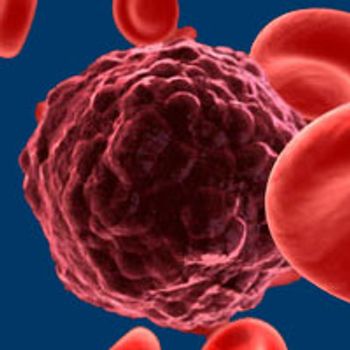
Chimeric antigen receptor T-cell therapy targeting both BCMA and CD38 induced an objective response in >90% of patients with multiple myeloma who had been treated with at least 3 prior therapies and whose disease had spread outside of the bone marrow.
CC-93269 showed encouraging signs of dose-dependent efficacy with a safety profile that continues to be refined for patients with heavily pretreated relapsed/refractory multiple myeloma.

Treatment with the BCMA-targeted CAR T-cell therapy idecabtagene vicleucel was associated with a 73.4% overall response rate in patients with relapsed/refractory multiple myeloma, meeting the primary endpoint of the pivotal phase II KarMMA trial.
Ahead of the 2019 ASH Annual Meeting, C. Ola Landgren, MD, PhD, shares insight on the potentially practice-changing data in the multiple myeloma paradigm that will be discussed at the conference.

Sagar Lonial, MD, FACP, discusses important additions to the treatment arsenal in relapsed/refractory multiple myeloma.
Sham Mailankody, MBBS, discusses research regarding the BCMA CAR T-cell therapy bb2121 in patients with relapsed/refractory multiple myeloma.

Rakesh Popat, BSc, MBBS, MRCP, FRCPath, PhD, discusses results from the phase I, dose-expansion DREAMM-1 trial in relapsed/refractory multiple myeloma.
Sergio A. Giralt, MD, discusses the current frontline standard of care for patients with multiple myeloma.

Marc J. Braunstein, MD, PhD, discusses challenges pertaining to the bone marrow microenvironment in multiple myeloma.
Sham Mailankody, MBBS, discusses ongoing research and recent advances in relapsed/refractory multiple myeloma.
Eric Shinohara, MD, MSCI, discusses the emergence of stereotactic body radiotherapy to treat patients with prostate cancer.
Ajai Chari, MD, discusses the implementing quadruplet-regimens in transplant-eligible multiple myeloma.

Edward A. Stadtmauer, MD, discusses what makes BCMA a unique target in multiple myeloma.
Sergio A. Giralt, MD, discusses the changing frontline treatment setting in multiple myeloma, how to determine transplant eligibility, and the utility of testing for minimal residual disease negativity.
Sham Mailankody, MBBS, discusses minimal residual disease negativity in multiple myeloma.
Ajai Chari, MD, discusses transplant eligibility in multiple myeloma.
Alfred L. Garfall, MD, provides insight on the FDA approval of daratumumab added to bortezomib, thalidomide, and dexamethasone for the treatment of patients with newly diagnosed multiple myeloma who are eligible for autologous stem cell transplant.
The European Commission has approved the triplet regimen of daratumumab with lenalidomide and dexamethasone for the treatment of adult patients with newly diagnosed multiple myeloma who are ineligible for autologous stem cell transplant.
Marc J. Braunstein, MD, PhD, discusses the ultra–high-risk patient population in smoldering multiple myeloma.
Sagar Lonial, MD, FACP, discusses treatments for patients with heavily pretreated multiple myeloma.
Sergio A. Giralt, MD, professor of medicine at Weill Cornell Medical College, and chief, Adult Bone Marrow Transplant Service, Melvin Berlin Family Chair in Multiple Myeloma, at Memorial Sloan Kettering Cancer Center, discusses methods of evaluating measurable residual disease (MRD) in multiple myeloma.
Ajay K. Nooka, MD, MPH, FACP, discusses current options for transplant-eligible and -ineligible patients with multiple myeloma.
Advertisement
Advertisement
Trending on OncLive
1
RELATIVITY-1093 Trial Aims to Advance Nivolumab Plus Relatlimab and Chemo in Nonsquamous NSCLC
2
Dostarlimab Monotherapy Elicits Durable cCRs in dMMR/MSI-H Locally Advanced Rectal Cancer
3
NEXERA-303 Trial Aims to Bring TGFβR2×PD-1 Bispecific Antibody INCA33890 Into First-Line MSS CRC
4
The OncFive: Top Oncology Articles for the Week of 10/25
5