






Multiple Myeloma
Latest News
Advertisement
Latest Videos










































































Advertisement
More News

Yubin Kang, MD, discusses how progress made in frontline therapy has impacted the outlook of multiple myeloma and the remaining work that needs to be done across settings.
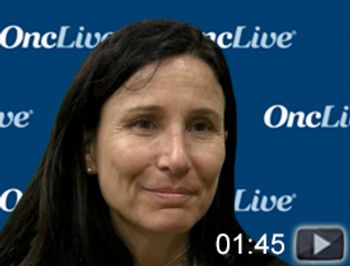
Cristina Gasparetto, MD, an associate professor of medicine and director, Multiple Myeloma Program at Duke Cancer Institute, discusses therapies for patients with penta-refractory multiple myeloma.
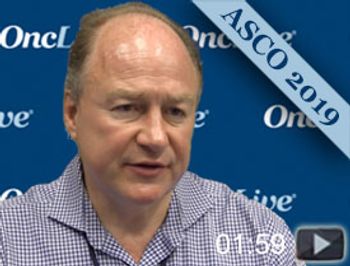
Paul G. Richardson, MD, clinical program leader and director of clinical research at the Jerome Lipper Multiple Myeloma Center at Dana-Farber Cancer Institute, discussed the phase III ICARIA-MM trial, which looked at the triplet regimen of isatuximab, pomalidomide (Pomalyst), and dexamethasone in patients with relapsed/refractory multiple myeloma.
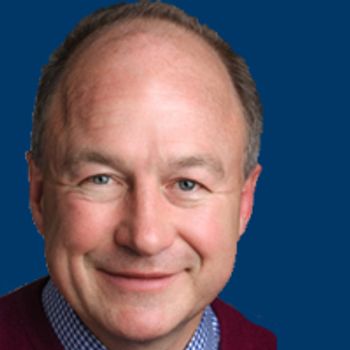
Adding isatuximab to pomalidomide and low-dose dexamethasone led to a greater than 40% reduction in the risk of disease progression or death compared with pomalidomide and dexamethasone alone in patients with relapsed/refractory multiple myeloma.

A subcutaneous flat-dose version of daratumumab demonstrated noninferior efficacy with a reduction in the treatment burden compared with the original intravenous formulation of the anti-CD38 monoclonal antibody for patients with relapsed/refractory multiple myeloma.

Higher income was associated with significantly greater probability of survival for patients with multiple myeloma, according to authors of a study they performed to call attention to the need to address socioeconomic disparities that influence treatment outcomes.





The FDA has granted a priority review designation to a supplemental biologics license application for daratumumab in combination with bortezomib, thalidomide, and dexamethasone for the treatment of patients with newly diagnosed multiple myeloma who are eligible for autologous stem cell transplant.

Cristina Gasparetto, MD, discusses the rapidly evolving field of relapsed/refractory myeloma.

Giada Bianchi, MD, physician, Dana-Farber Cancer Institute, instructor in medicine, Harvard Medical School, discusses maintenance therapy in the treatment of patients with multiple myeloma.

Parameswaran Hari, MD, MRCP, the Armand J. Quick/William F. Stapp Professor of Hematology, and the chief of the Division of Hematology/Oncology, Department of Medicine, at the Medical College of Wisconsin, discusses the current state of frontline therapy in multiple myeloma.
Paul G. Richardson, MD, clinical program leader and director of clinical research, Jerome Lipper Multiple Myeloma Center, and institute physician, Dana-Farber Cancer Institute, discusses advances made with immunotherapy in the treatment of patients with relapsed/refractory multiple myeloma.

The European Commission has granted an approval to lenalidomide in combination with bortezomib and dexamethasone for the treatment of adult patients with previously untreated multiple myeloma who are ineligible for stem cell transplant, as well as pomalidomide in combination with bortezomib and dexamethasone for the treatment of adult patients with myeloma who have received ≥1 prior treatment regimen that included lenalidomide.

In patients with smoldering multiple myeloma, lenalidomide induced a 72% reduction in the risk for progression to symptomatic disease at 3 years.
Advertisement
Advertisement
Trending on OncLive
1
RELATIVITY-1093 Trial Aims to Advance Nivolumab Plus Relatlimab and Chemo in Nonsquamous NSCLC
2
Dostarlimab Monotherapy Elicits Durable cCRs in dMMR/MSI-H Locally Advanced Rectal Cancer
3
NEXERA-303 Trial Aims to Bring TGFβR2×PD-1 Bispecific Antibody INCA33890 Into First-Line MSS CRC
4
The OncFive: Top Oncology Articles for the Week of 10/25
5