









































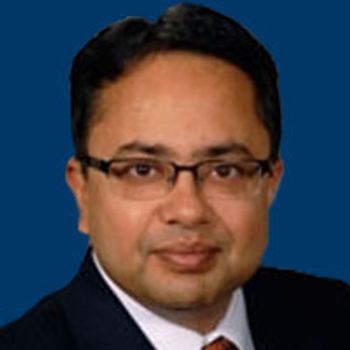
Neeraj Agarwal, MD, discusses his preferred sequencing strategies in the treatment of patients with mRCC.
Neeraj Agarwal, MD, discusses his preferred sequencing strategies in the treatment of patients with mRCC.
Allyson J. Ocean, MD, discusses the potential impact of SM-88 in the treatment of patients with advanced pancreatic cancer and highlights a platform that patients can use to stay updated on the latest research in the field.
Susan Domcheck, MD, discusses the updated results of the MEDIOLA trial in patients with germline BRCA-mutated metastatic breast cancer and speaks to the next phase of development with the combination.
The Lung Cancer Master Protocol, known as the first precision medicine trial in lung cancer supported by the National Cancer Institute, has expanded to include patients with all types of non–small cell lung cancers.

The National Pancreas Foundation (NPF) has designated Roswell Park Comprehensive Cancer Center as an NPF Center for pancreatic cancer.
Kevin Kalinsky, MD, MS, highlights the recent data with alpelisib and CDK4/6 inhibitors, the toxicity differences between the 3 available CDK4/6 agents, and the next steps for both classes of agents.

Susana Campos, MD, MPH, highlights the success with PARP inhibitors in the relapsed and maintenance ovarian cancer settings.
RNA-based analyses of prospectively-collected tumor specimens from patients with metastatic renal cell carcinoma in the phase III COMPARZ trial revealed 4 molecular subgroups, of which a high angiogenesis expression and a low macrophage infiltrate were indicative of response to frontline TKI therapy.

Charles E. Geyer, Jrm, MD, discusses the clinical implications of the KATHERINE trial and the outlook for T-DM1 in patients with HER2-positive breast cancer.

Stephanie K. Dougan, PhD, discusses research aimed at assessing ways of augmenting T-cell immunity in pancreatic cancer.
Subha Madhavan, PhD, discusses the role of data science and informatics in bringing novel clinical study designs to the field of oncology.
Erika P. Hamilton, MD, discusses the findings from the phase II nextMONARCH 1 study of abemaciclib in HR-positive, HER2-negative advanced breast cancer.
Michael J. Overman, MD, highlights new combination agents under investigation for the treatment of patients with GI cancers—specifically CRC—and challenges that still need to be addressed.

Amol K. Narang, MD, discusses recent advances made in the treatment of pancreatic cancer and explained how radiation oncology can be used to provide further clinical benefit to this patient population.

The FDA has approved the combination of ibrutinib and obinutuzumab for the first-line treatment of patients with chronic lymphocytic leukemia or small lymphocytic lymphoma.
Ajai Chari, MD, discusses novel treatment approaches for patients with heavily pretreated multiple myeloma.
Paula Klein, MD, discusses the research surrounding extended adjuvant therapy in early-stage hormone receptor-positive breast cancer.
Ursula A. Matulonis, MD, highlights available and emerging treatment options and strategies for patients with recurrent ovarian cancer.
Tanya B. Dorff, MD, discusses landmark approvals in nonmetastatic castration-resistant prostate cancer and anticipated developments in the space.
Dana-Farber Cancer Institute researchers are Grand Challenge winners for a project that aims to discover how certain microbes inside the body lead to colorectal cancer and influence a patient’s response to treatment.

Stephen C. Malamud, MD, reflects on the intriguing and practice-changing data presented at the 2018 SABCS.

The European Commission has approved an expanded indication for single-agent rucaparib as a maintenance therapy in adult patients with platinum-sensitive, relapsed high-grade epithelial ovarian, fallopian tube, or primary peritoneal cancer who are in complete or partial response to platinum-based chemotherapy, regardless of BRCA status.
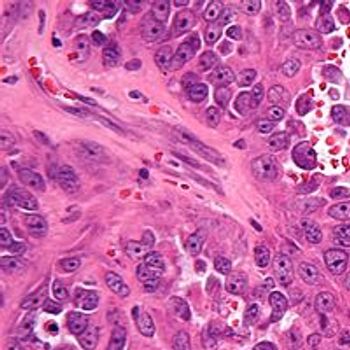
The FDA and European Medicines Agency have recommended that no new patients with advanced soft tissue sarcoma should be treated with the combination of olaratumab plus doxorubicin.

The FDA has placed a partial clinical hold on the phase III AIM2CERV trial evaluating the use of axalimogene filolisbac in patients with high-risk locally advanced cervical cancer.

Bristol-Myers Squibb has withdrawn its supplemental biologics license application for the combination of nivolumab (Opdivo) and ipilimumab (Yervoy) for the frontline treatment of patients with advanced non–small cell lung cancer with tumor mutational burden ≥10 mutations per megabase.