
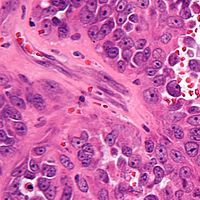

































































Panagiotis A. Konstantinopoulos, MD, discusses the status of immunotherapy in ovarian cancer and focuses on numerous combinations under investigation.
Panagiotis A. Konstantinopoulos, MD, discusses the status of immunotherapy in ovarian cancer and focuses on numerous combinations under investigation.

Meghna Trivedi, MD, highlights 3 classes of agents that are showing promise in patients with metastatic triple-negative breast cancer.

Richard T. Maziarz, MD, discusses the updated findings from JULIET and their clinical implications for patients with diffuse large B-cell lymphoma.
The FDA has cleared a direct-to-consumer genetic test for a risk report on MUTYH-associated polyposis, a hereditary colorectal cancer syndrome.

Janakiraman Subramanian, MD, discusses ongoing advances and remaining challenges in the field of lung cancer.
Tanios Bekaii-Saab, MD, discusses ways to further develop precision medicine within the treatment of patients with gastrointestinal cancers.
Cristina Gasparetto, MD, discusses the combination of daratumumab, selinexor, and dexamethasone in patients with multiple myeloma who have previously received ≥3 lines of therapy, which include an immunomodulatory agent and a proteasome inhibitor.

A supplemental Biologics License Application (sBLA) has been initiated with the FDA for daratumumab (Darzalex) for use in combination with lenalidomide (Revlimid) and dexamethasone (DRd) for the treatment of certain patients with multiple myeloma.

Brandon Weckbaugh, MD, sheds light on emerging biomarkers in non–small cell lung cancer.

The European Commission has approved blinatumomab for the treatment of adult patients with B-cell precursor acute lymphoblastic leukemia who are in remission but still have minimal residual disease of at least 0.1%.

The FDA has granted umbralisib (TGR-1202) a breakthrough therapy designation for the treatment of adult patients with marginal zone lymphoma who have received 1 prior anti-CD20 regimen.

The frontline combination of ibrutinib (Imbruvica) and nab-paclitaxel (Abraxane)/gemcitabine did not show a statistically significant benefit in progression-free or overall survival versus placebo plus nab-paclitaxel/gemcitabine in patients with metastatic pancreatic cancer.

Michael A. Choti, MD, highlights ongoing developments in the field of pancreatic cancer.

Maria-Victoria Mateos, MD, PhD, discusses the updated findings from the ALCYONE trial in patients with newly diagnosed multiple myeloma.
Robert M. Rifkin, MD, highlights the results of a trial evaluating the safety of split-dosing administration of daratumumab in patients with multiple myeloma.
The FDA has granted an approval to SB3 (Ontruzant; trastuzumab-dttb), a trastuzumab biosimilar, for the treatment of patients with HER2-overexpressing breast cancer or metastatic gastric or gastroesophageal junction adenocarcinoma.
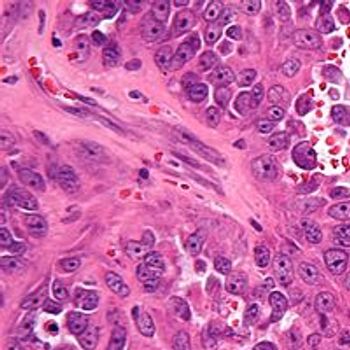
Olaratumab in combination with doxorubicin missed the phase III ANNOUNCE trial’s primary endpoint of overall survival and did not confirm a clinical benefit for patients with advanced or metastatic soft tissue sarcoma compared with standard doxorubicin.

The FDA has issued a complete response letter to Immunomedics regarding its biologics license application for sacituzumab govitecan as a treatment for patients with metastatic triple-negative breast cancer who have received at least 2 prior therapies, citing chemistry, manufacturing, and control matters.
The FDA has issued a letter to healthcare providers that they should monitor patients with a type of peripheral arterial disease who have been treated with vascular balloons that were coated with paclitaxel or stents that release paclitaxel in the femoropopliteal artery in the leg.

Several clinical trials have evaluated the addition of immunotherapy to standard chemotherapy in the frontline treatment of patients with advanced non–small cell lung cancer, all of which echo similar conclusions: these combinations are a mainstay in this population.
Within 6 months of receiving induction chemotherapy, consolidation treatment with autologous hematopoietic cell transplantation correlated with a significant improvement in progression-free survival in younger, fit patients with mantle cell lymphoma.

The FDA has accepted a supplemental biologics license application for atezolizumab, carboplatin, and nab-paclitaxel as a first-line treatment for patients with metastatic nonsquamous non–small cell lung cancer.

The Association of Community Cancer Centers ninth annual Trending Now in Cancer Care survey reveals how cancer programs across the country are being impacted by pressure from turbulence in multiple sectors: payers, government, and industry.

Neil Horowitz, MD, discusses surgical options for patients with newly diagnosed ovarian cancer.
Suzanne George, MD, highlights the available therapies for patients with uterine sarcomas and what novel options are on the horizon.