





Non-Hodgkin Lymphoma
Latest News
Advertisement
Latest Videos













































Advertisement
More News

Lindsey Roeker, MD, discusses the rationale for combining venetoclax with BTK inhibitors for use in patients with chronic lymphocytic leukemia.

Polatuzumab vedotin-piiq in combination with rituximab, cyclophosphamide, doxorubicin, and prednisone resulted in a statistically significant and clinically meaningful improvement in progression-free survival vs rituximab, cyclophosphamide, doxorubicin, vincristine, and prednisone in previously untreated patients with diffuse large B-cell lymphoma.

Bristol Myers Squibb has made the decision to withdraw in the indication for romidepsin as a monotherapy for the treatment of adult patients with peripheral T-cell lymphoma who have previously received at least 1 therapy.

The CAR T-cell product tisagenlecleucel has been shown to elicit durable responses in adult patients with relapsed/refractory follicular lymphoma with a safety profile that compares favorably with other available products.

Heterogeneity in the cellular and molecular features of CAR T-cell products contributes to variation in efficacy and toxicity follow treatment with axicabtagene ciloleucel in patients with large B-cell lymphoma, and molecular response at day 7 might represent an early predictor of efficacy with this modality.

Sairah Ahmed, MD, discusses optimizing treatment with axicabtagene ciloleucel in large B-cell lymphoma.

Copanlisib plus rituximab exhibited a manageable safety profile and superior efficacy in patients with relapsed indolent non-Hodgkin lymphoma (iNHL) compared with rituximab plus placebo.

Brad S. Kahl, MD, discusses the differences between mechanisms of action of PI3K inhibitors in follicular lymphoma.

John P. Leonard, MD, discusses the future of PI3K inhibitors in follicular lymphoma.
John P. Leonard, MD, discusses the potential for combination regimens with PI3K inhibitors in follicular lymphoma.
Brad S. Kahl, MD, discusses selecting between PI3K inhibitors in follicular lymphoma.

Fixed-duration venetoclax plus obinutuzumab demonstrated prolonged remissions compared with chemoimmunotherapy in elderly patients with previously untreated chronic lymphocytic leukemia and comorbidities.
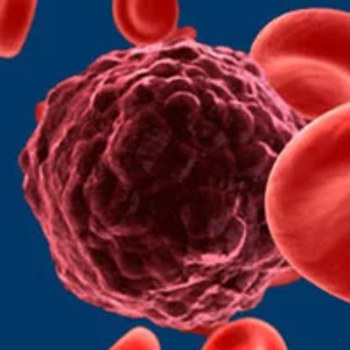
Axicabtagene ciloleucel significantly improved event-free survival by 60% over chemotherapy plus stem cell transplant in the second-line treatment of patients with relapsed or refractory large B-cell lymphoma, meeting the primary end point of the phase 3 ZUMA-7 trial.

The European Medicines Agency’s Committee for Medicinal Products for Human Use has issued a positive opinion in favor of granting conditional marketing authorization to the combination of tafasitamab-cxix and lenalidomide, followed by single-agent tafasitamab, for the treatment of adult patients with relapsed or refractory diffuse large B-cell lymphoma who are not candidates for autologous stem cell transplant.
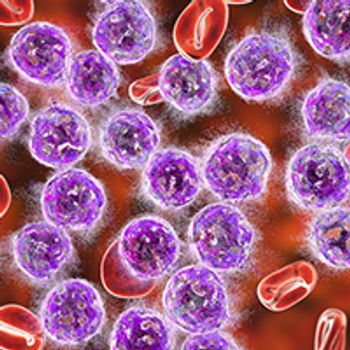
177Lu Lilotomab Satetraxten Shows Early Activity in Transplant-Ineligible, Relapsed/Refractory DLBCL
The next-generation CD37-directed radioimmunotherapy 177Lu lilotomab satetraxten has showcased early clinical activity with favorable tolerability when used in patients with relapsed/refractory diffuse large B-cell lymphoma who are not candidates for stem cell transplantation.

Peter Martin, MD, discusses discrepancies in real-world patterns of care for patients with MCL and what can be done to overcome them.

Loncastuximab tesirine-lpyl continued to demonstrate promising antitumor activity with an acceptable toxicity profile when used in the treatment of select patients with non-Hodgkin lymphoma, including diffuse large B-cell lymphoma and mantle cell lymphoma.
Rates of clinical trial initiation, novel drug development, and collaborative research and development deals were oncology.

The majority of patients with indolent follicular lymphoma do well with observation and after first-line treatment, but approximately 20% experience disease progression within 2 years of their initial treatment, which is associated with a 50% risk of dying within 5 years. Subsequently, this is an area of unmet need but one in which considerable progress is being made.

The rituximab biosimilar CT-P10 produced response and survival rates that were comparable to those previously reported with the reference product, along with acceptable tolerability, in patients with diffuse large B-cell lymphoma.
Tafasitamab-cxix plus lenalidomide and R-CHOP may have synergistic potential and could represent a potential future treatment option for patients with newly diagnosed diffuse large B-cell lymphoma.

The combination of naratuximab emtansine and rituximab yielded deep responses, and a duration of response that was not reached in patients with relapsed or refractory diffuse large B-cell lymphoma.
In the first few years of their availability in the United States, axicabtagene ciloleucel and tisagenlecleucel have been used to mostly treat patients with diffuse large b-cell lymphoma in the outpatient setting who are receiving the CAR T-cell therapies prior to failure on 2 prior lines of therapy.
Axicabtagene ciloleucel demonstrated significant clinical activity with durable responses in patients with relapsed/refractory indolent non-Hodgkin lymphoma who experienced disease progression within 24 months from initiation of the first anti-CD20–containing chemotherapy, which is a high-risk clinical feature.
The combination of lenalidomide and rituximab continued to improve progression-free survival with durable outcomes and a manageable safety profile in patients with indolent B-cell non-Hodgkin lymphomas and mantle cell lymphomas.
Advertisement
Advertisement
Trending on OncLive
1
Ifinatamab Deruxtecan BLA Voluntarily Withdrawn in Previously Treated Extensive-Stage SCLC
2
Tegavivint Plus Osimertinib Shows Early Activity in First-Line EGFR-Mutated NSCLC
3
Etentamig Improves Response and PFS vs Standard Therapies in Triple-Class Exposed Relapsed/Refractory Myeloma
4
FDA Approves Lirafugratinib for Pretreated, Locally Advanced or Metastatic Cholangiocarcinoma
5