





Non-Hodgkin Lymphoma
Latest News

Advertisement
Latest Videos









































Advertisement
More News

The European Medicines Agency granted an orphan drug designation to devimistat for the treatment of patients with relapsed or refractory Burkitt lymphoma. The novel compound targets mitochondria in tumor cells.
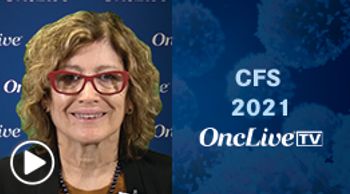
Francine Foss, MD, discusses pursing new therapeutic options for the treatment of patients with T-cell non-Hodgkin lymphoma.

The FDA has accepted a new drug application for the PI3Kδ inhibitor parsaclisib for use in the treatment of patients with relapsed or refractory follicular lymphoma, marginal zone lymphoma, and mantle cell lymphoma.

The FDA has granted a priority review to tisagenlecleucel for use in adult patients with relapsed or refractory follicular lymphoma.

The allogeneic CD19-targeted CAR T-cell therapy CTX110 was found to elicit encouraging responses with favorable tolerability in patients with relapsed or refractory B-cell malignancies, according to data from the phase 1 CARBON trial.

Julie M. Vose, MD, MBA, discusses the use of CAR T-cell therapy in non-Hodgkin lymphoma.
Epcoritamab had a manageable toxicity profile when subcutaneously administered to patients with relapsed/refractory B-cell non-Hodgkin lymphoma and was found to elicit encouraging responses in those who were heavily pretreated.

Alex Herrera, MD, discusses the potential for CAR T-cell therapy in earlier lines of treatment for patients with diffuse large B-cell lymphoma.

The European Medicines Agency’s Committee for Medicinal Products for Human Use has adopted a positive opinion regarding the use of zanubrutinib in adult patients with Waldenström macroglobulinemia who have previously received at least 1 therapy or in the frontline treatment of patients who are not eligible for chemoimmunotherapy.
The FDA has granted an accelerated approval to zanubrutinib for the treatment of adult patients with relapsed or refractory marginal zone lymphoma who have received at least 1 anti–CD20-based regimen.
Existing racial and socioeconomic disparities among patients with T-cell non-Hodgkin lymphoma continue to lead to obstacles with access for newly available treatment options.

CAR T-cell products targeting CD19 are eliciting clinical activity in patients with indolent non-Hodgkin lymphoma, as seen in the ZUMA-5, SCHOLAR-5, and ELARA trials, but longer follow-up will showcase the true potential of this treatment in this subpopulation.

The European Commission has granted a conditional marketing authorization to tafasitamab plus lenalidomide followed by single-agent tafasitamab for use in adult patients with relapsed/refractory diffuse large B-cell lymphoma who are not candidates for autologous stem cell transplant.
Ibrutinib demonstrated encouraging clinical responses in patients with variant-type, high-risk hairy cell leukemia.

Paolo F. Caimi, MD, discusses the FDA approval of loncastuximab tesirine in large B-cell lymphoma, results from the phase 2 LOTIS-2 trial, and future research directions with the agent.
Fixed-duration treatment with mosunetuzumab elicited encouraging responses with acceptable safety when used in patients with multiply relapsed follicular lymphoma.

Regimens that included the off-the-shelf, induced pluripotent stem cell–derived natural killer cell products FT596 and FT516 were found to elicit encouraging responses with favorable tolerability when used in patients with B-cell lymphoma.

Primary central nervous system lymphoma is a rare and aggressive variant of extranodal non-Hodgkin lymphoma that occurs in the brain, spinal cord, cerebrospinal fluid, or eyes in the absence of systemic disease.

Julie M. Vose, MD, MBA, discusses the potential utility of CAR T-cell therapy across the non-Hodgkin lymphoma paradigm.
Updated outcomes from the ongoing phase 1/2 GO40554 trial show that mosunetuzumab monotherapy demonstrated promising efficacy and a tolerable safety for elderly/unfit patients with previously untreated first-line diffuse large B-cell lymphoma.
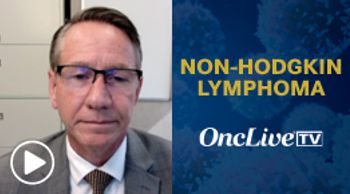
Stephen M. Ansell, MD, PhD, discusses the utility of non–CAR T-cell therapy options in non-Hodgkin lymphoma.

Alexey V. Danilov, MD, discusses the safety and efficacy achieved with the novel combination comprised of zandelisib and zanubrutinib in patients with relapsed/refractory B-cell malignancies.

Duvelisib monotherapy demonstrated encouraging efficacy for patients with relapsed/refractory peripheral T-cell lymphoma.

Zandelisib plus rituximab is being evaluated as a potentially chemotherapy-free treatment strategy vs standard chemoimmunotherapy in patients with indolent non-Hodgkin lymphoma in first relapse in the ongoing, phase 3 COASTAL trial.
Zanubrutinib demonstrated clinical activity and tolerability in previously treated patients with B-cell malignancies who were intolerant to therapy with ibrutinib and/or acalabrutinib, according to results of the phase 2 BGB-3111-215 trial.
Advertisement
Advertisement
Trending on OncLive
1
Ifinatamab Deruxtecan BLA Voluntarily Withdrawn in Previously Treated Extensive-Stage SCLC
2
Tegavivint Plus Osimertinib Shows Early Activity in First-Line EGFR-Mutated NSCLC
3
Etentamig Improves Response and PFS vs Standard Therapies in Triple-Class Exposed Relapsed/Refractory Myeloma
4
FDA Approves Lirafugratinib for Pretreated, Locally Advanced or Metastatic Cholangiocarcinoma
5