





Pediatric Oncology
Latest News
Advertisement
Latest Videos






































































Advertisement
More News

The Biden-Harris administration has announced a plan to restart the Cancer Moonshot initiative, which President Joe Biden first launched as vice president of the Obama administration in 2016.

The FDA has granted a rare pediatric disease designation to the bone-targeting radiopharmaceutical, Samarium-153-DOTMP, for use as a potential therapeutic option for patients with osteosarcoma.

Chemoimmunotherapy is still a relatively new strategy for patients with pediatric neuroblastoma, and the humanized anti-disialoganglioside monoclonal antibody hu14.18K322A could provide a breakthrough for children with high-risk disease.

Leslie S. Kersun, MD, MSCE, MSEd, discusses finding the right fellowship program; the challenge of balancing research, patient care, and education as a trainee; and finding one’s focus during fellowship.

Two new studies by Yale Cancer Center reveal the structure of the molecule known as anaplastic lymphoma kinase, which is a driver of several cancers, including pediatric neuroblastoma, B-cell lymphomas, and myofibroblast tumors.
A rolling submission of a biologic license application to the FDA has been completed for betibeglogene autotemcel for use in adult, adolescent, and pediatric patients with beta-thalassemia who require regular red blood cell transfusions, across all genotypes.
Dr. Lee-Kim discusses her path into treating pediatric patients with cancer, key lessons that can be learned during fellowship, and tips on managing finances and burnout during a pediatric oncology fellowship program.
The new drug application seeking the approval of a unique formulation of sodium thiosulfate for the prevention of ototoxicity induced by cisplatin chemotherapy in patients aged 1 month to less than 18 years of age with localized, nonmetastatic solid tumors has been resubmitted to the FDA.

YoungNa Lee-Kim, MD, shares advice on how to advance as an oncology fellow.
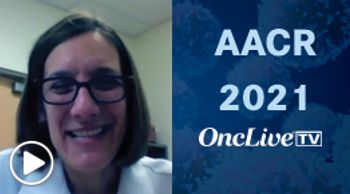
Marielle E. Yohe, MD, PhD, discusses the potential utility of targeting RAS mutations in pediatric cancers.

Natural killer T cells that co-express GD2-CAR and interleukin-15 were found to be safe and to demonstrate evidence of in vivo expansion and localization to metastatic sites in patients with stage IV relapsed/refractory neuroblastoma.

In a new study led by Yale Cancer Center, researchers report many survivors of childhood cancers receive systemic therapies associated with cognitive effects and chronic health conditions that may impact long-term cognitive outcomes with downstream effects on education, employment, and income.
Sara M. Federico, MD, discusses the diagnosis and presentation of neuroblastoma, the role of multidisciplinary care, and novel therapies that could significantly affect the treatment paradigm for this malignancy.
The FDA has granted a priority review designation to SH-111, a sterile injectable therapy, for the treatment of pediatric patients with T-cell leukemia.

As part of a resubmission plan for a biologics license application for omburtamab in pediatric patients with central nervous system and leptomeningeal metastasis from neuroblastoma, Y-mAbs, the manufacturer of the B7-H3–targeting monoclonal antibody, announced that it is collecting additional granularity data requested by the FDA and anticipates submitting them to the regulatory agency by the end of April 2021.

Adavosertib plus irinotecan showed early activity in a cohort of pediatric patients with neuroblastoma, thus meeting the protocol-defined efficacy end point of the 1/2 ADVL1312 trial.
Erin Murphy, MD, discusses the clinical implications of pazopanib plus stereotactic body radiotherapy in pediatric sarcoma.

Erin Murphy, MD, discusses future research efforts with pazopanib plus stereotactic body radiation therapy in patients with pediatric sarcoma.

Somatic KMT2A rearrangements, RAS/MAPK mutations, RUNX1 and TP53 alterations, and MECOM overexpression were all found to be common oncogenic drivers of pediatric therapy-related myeloid neoplasms, arising predominantly after exposure to cytotoxic therapy and identifiable at least 1 year prior to morphologic evidence of neoplasm.
The FDA has approved a revised label for daunorubicin/cytarabine (Vyxeos) to include the treatment of pediatric patients aged 1 year and older with newly diagnosed, therapy-related acute myeloid leukemia (AML) or AML with myelodysplasia-related changes.

Mark Walters, MD, discusses the limitations of standard blood transfusions in pediatric patients with transfusion-dependent beta-thalassemia.

The European Commission has approved an expanded label for pembrolizumab for use as a single agent in the treatment of select adult and pediatric patients aged 3 years and older who have relapsed/refractory classical Hodgkin lymphoma.
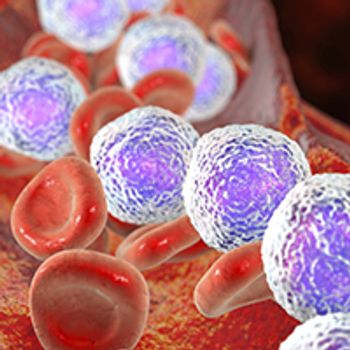
Total body irradiation plus etoposide prior to hematopoietic stem cell transplantation resulted in improved overall survival and a lower risk of relapse in pediatric patients with high-risk acute lymphocytic leukemia compared with chemotherapy conditioning.

Thomas E. Merchant, DO, PhD, discusses the incidence of craniopharyngioma.

Anne Angiolillo, MD, discusses the adverse effects that are associated with traditional treatment in pediatric B-cell acute lymphoblastic leukemia.
Advertisement
Advertisement
Trending on OncLive
1
FDA Approves Tucatinib Plus Trastuzumab/Pertuzumab as First-Line Maintenance in Advanced HER2+ Breast Cancer
2
VIR-5500 Receives FDA Fast Track Designation in mCRPC
3
Iberdomide Plus Daratumumab/Dexamethasone Yields Significant PFS Benefit in R/R Myeloma
4
FDA Approves Atezolizumab Plus Chemo for Stage III dMMR Colon Cancer
5