






Pediatric Oncology
Latest News
Advertisement
Latest Videos




































































Advertisement
More News

Zhaoming Wang, PhD, bioinformatics scientist, Department of Computational Biology, St. Jude Children’s Research Hospital, discusses a genomic analysis of breast cancer risk in pediatric cancer survivors.

Benjamin A. Youngblood, PhD, assistant member, Department of Immunology, St. Jude Children’s Research Hospital, discusses the process of T-cell differentiation in pediatric solid tumors.

Ami Vijay Desai, MD, assistant professor of Pediatrics, University of Chicago Comer Children's Hospital, discusses the design of a phase I study testing entrectinib in patients with solid tumors.

Elissa Engel, MD, pediatric resident, University of South Florida, discusses the future of eltrombopag (Promacta) in HIV-related thrombocytopenia.

Rosandra N. Kaplan, MD, investigator, Pediatric Oncology Branch, Head, Tumor Microenvironment Section, National Cancer Institute, discusses the treatment of pediatric patients with sarcoma.

Sixty percent of adult survivors of pediatric CNS tumors do not achieve full functional and social independence, according to results from a study conducted by researchers at St. Jude Children’s Research Hospital and the University of Tennessee Health Science Center.
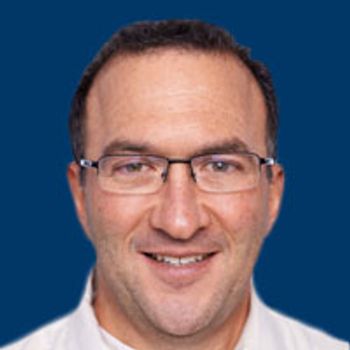
James I. Geller, MD, describes the ongoing work in pediatric patients with rare rhabdoid tumors.
Kristopher R. Bosse, MD, discusses how D3-GPC2-PBD could impact pediatric neuroblastoma.

Benjamin A. Youngblood, PhD, assistant member, Department of Immunology, St. Jude Children’s Research Hospital, discusses the impact of T-cell differentiation and exhaustion in pediatric cancer.

Susan N. Chi, MD, senior physician, director, Pediatric Brain Tumor Clinical Trials Program, Dana-Farber Cancer Institute, assistant professor of pediatrics, Harvard Medical School, discusses a trial of tazemetostat in pediatric patients with INI1-negative tumors.

Kristopher Bosse, MD, attending physician, Division of Oncology, The Children's Hospital of Philadelphia, discusses challenges with immunotherapy in pediatric cancers.

Kelly Bailey, MD, PhD, physician, department of Pediatric Hematology/Oncology, Children's Hospital of Pittsburgh, University of Pittsburgh Medical Center, discusses the treatment of pediatric patients with sarcoma.

Justin N. Baker, MD, chief, Division of Quality of Life and Palliative Care, attending physician, Quality of Life Service, St. Jude Children’s Research Hospital, discusses integrating palliative care into the treatment of pediatric oncology.
Brian D. Crompton, MD, provides insight on the debate of liquid versus tissue biopsies, particularly in the setting of pediatric patients with sarcomas.

Birte Wistinghausen, MD, medical director of the Division of Pediatric Hematology-Oncology, the Kravis Children's Hospital and Icahn School of Medicine at Mount Sinai, discusses developing drugs for children with cancer.
Susan N. Chi, MD, senior physician, director, Pediatric Brain Tumor Clinical Trials Program, Dana-Farber Cancer Institute, assistant professor of pediatrics, Harvard Medical School, discusses pediatric atypical teratoid rhabdoid tumors.
Ami Vijay Desai, MD, discusses the ideal patient population for entrectinib and what the future could hold for the agent.

Santhosh A. Upadhyaya, MD, discusses how chemotherapy prior to radiation can improve cure rates, the importance of long-term follow-up in this patient population, and emerging research and treatment for pediatric ependymoma.

The FDA has approved the combination of nivolumab and ipilimumab for the treatment of adult and pediatric patients 12 years and older with microsatellite instability-high or mismatch repair deficient metastatic colorectal cancer following progression on a fluoropyrimidine, oxaliplatin, and irinotecan.

The European Commission has approved dasatinib for the treatment of children and adolescent patients aged 1 to 18 years with Philadelphia chromosome–positive chronic myeloid leukemia in chronic phase.

The European Medicines Agency’s Committee for Medicinal Products for Human Use has recommended approval of tisagenlecleucel for the treatment of either adult patients with diffuse large B-cell lymphoma that is relapsed or refractory after 2 or more lines of systemic therapy, or patients up to 25 years of age with B-cell acute lymphoblastic leukemia that is refractory, in relapse posttransplant, or in second or later relapse.

Justin N. Baker, MD, discusses the benefits of a holistic approach to end-of-life care in pediatric oncology, as well as the importance of teaching palliative care to the next generation of oncologists and hematologists.
The FDA has granted an accelerated approval to pembrolizumab for the treatment of adult and pediatric patients with refractory primary mediastinal large B-cell lymphoma, or those who have relapsed after 2 or more prior lines of therapy.
All 3 patients with targeted gene fusions responded to the multikinase inhibitor entrectinib, according to a phase I study in children and young adults with advanced, previously treated central nervous system tumors.
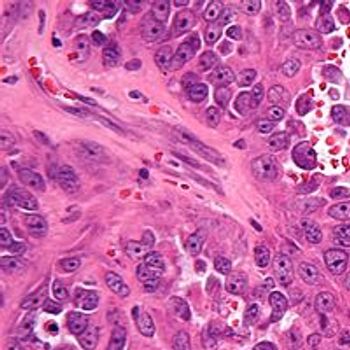
A course of low-dose maintenance chemotherapy administered after standard-of-care intensive chemotherapy led to significant improvements in disease-free and overall survival in pediatric rhabdomyosarcoma.
Advertisement
Advertisement
Trending on OncLive
1
FDA Approves Tucatinib Plus Trastuzumab/Pertuzumab as First-Line Maintenance in Advanced HER2+ Breast Cancer
2
VIR-5500 Receives FDA Fast Track Designation in mCRPC
3
Iberdomide Plus Daratumumab/Dexamethasone Yields Significant PFS Benefit in R/R Myeloma
4
FDA Approves Atezolizumab Plus Chemo for Stage III dMMR Colon Cancer
5