





Pediatric Oncology
Latest News
Advertisement
Latest Videos





































































Advertisement
More News

The FDA has granted an accelerated approval to blinatumomab (Blincyto) for the treatment of pediatric and adolescent patients with Philadelphia chromosome-negative relapsed or refractory B-cell precursor acute lymphoblastic leukemia.

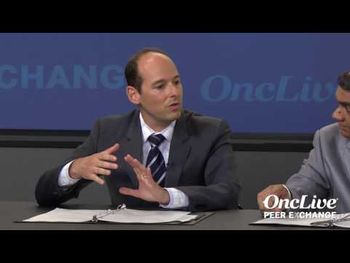


Members of the Pediatric Subcommittee of the FDA's Oncologic Drugs Advisory Committee voiced their support for new clinical trials examining promising cancer agents in pediatric patients.

A supplemental biologics license application has been submitted to the FDA to expand the approval of blinatumomab (Blincyto) to include the treatment of pediatric and adolescent patients with Philadelphia chromosome-negative relapsed or refractory B-cell precursor acute lymphoblastic leukemia.

Stephen Grupp, MD, PhD, director of translational research for the center for Childhood Cancer Research at The Children's Hospital of Philadelphia (CHOP) and medical director of the Stem Cell Laboratory at CHOP, discusses the use of engineered cell therapy for the treatment of Acute Lymphoblastic Leukemia (ALL).

Stephen Huang, MD, Associate Professor of Pediatrics, Harvard Medical School, Dana Farber Cancer Institute, discusses the challenges of pediatric thyroid cancer.

Over the past 30 years, survivors of childhood cancers have become less likely to die of illnesses caused by their treatment, such as new malignancies or cardiac or lung disease.

Treatment with an intensified chemotherapy regimen was associated with improvements in event-free survival for children with favorable histology Wilms tumor with loss of heterozygosity in chromosomes 1p and 16q.

The chimeric antigen receptor T-cell therapy JCAR017 elicited a 91% complete remission rate in pediatric patients with relapsed/refractory acute lymphoblastic leukemia.


The FDA has approved dinutuximab in combination with interleukin-2, GM-CSF, and 13-cis-retinoic acid as a frontline therapy for pediatric patients with high-risk neuroblastoma.




Advertisement
Advertisement
Trending on OncLive
1
FDA Approves Tucatinib Plus Trastuzumab/Pertuzumab as First-Line Maintenance in Advanced HER2+ Breast Cancer
2
VIR-5500 Receives FDA Fast Track Designation in mCRPC
3
Iberdomide Plus Daratumumab/Dexamethasone Yields Significant PFS Benefit in R/R Myeloma
4
FDA Approves Atezolizumab Plus Chemo for Stage III dMMR Colon Cancer
5