



Pediatric Oncology
Latest News
Advertisement
Latest Videos




































































Advertisement
More News
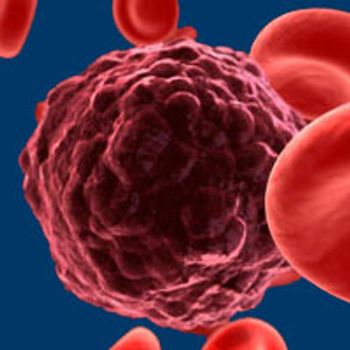
Investigators working in the UK and Europe found a correlation between minimal residual disease kinetics and risk for relapse in pediatric patients with acute lymphoblastic leukemia.

Sarah K. Tasian, MD, discusses the success of CAR T-cell therapy, as well as novel agents and immunotherapies that appear promising in the treatment of children with leukemia.

Naval Daver, MD, assistant professor, Department of Leukemia, Division of Cancer Medicine, The University of Texas MD Anderson Cancer Center, discusses the approval of a chimeric antigen receptor (CAR) T-cell therapy in pediatric acute lymphoblastic leukemia.

Everyone, at every level, is checking, rechecking, thinking, researching, asking questions, discussing, analyzing, and trying to help patients.

The FDA has approved dasatinib (Sprycel) for the treatment of pediatric patients with Philadelphia chromosome-positive chronic myeloid leukemia in chronic phase.
Treatment with prolonged native E. coli asparaginase therapy for children with acute lymphoblastic leukemia or non-Hodgkin lymphoma not only failed to improve survival versus the standard regimen, but also resulted in an increase in infections and allergy.

The combination of clofarabine, cyclophosphamide, and etoposide reached an overall response rate of 41% in a small study of children and adolescents with relapsed/refractory acute myeloid leukemia.
Guy Young, MD, director, Hemostasis and Thrombosis Program, attending physician, Hematology, Oncology and Blood and Marrow Transplantation, Children’s Hospital Los Angeles, USC, discusses using anticoagulants in children with cancer.
In the CALL-0603 study of 44 patients with first marrow-relapsed childhood acute lymphoblastic leukemia, the second complete remission rate was 72.7% for a chemotherapy regimen that included a reduced dose of idarubicin.

Guy Young, MD, discussed the use of anticoagulants in managing thromboembolic events in pediatric cancer.

Tisagenlecleucel (Kymriah) induced a complete remission with complete or incomplete hematologic recovery in 83% of pediatric, adolescent, and young adult patients with acute lymphoblastic lymphoma.
The effort to improve outcomes in pediatric acute lymphoblastic leukemia should follow insight provided by next-generation sequencing and appropriate use of minimal residual disease criteria.

James L. Ferrara, MD, discusses the significance of the FDA approving tisagenlecleucel as the first CAR T-cell therapy.
A 15 mg/kg dose of rabbit anti-T-lymphocyte globulin was associated with similar graft-vs-host-disease, less nonrelapse mortality, and less disease recurrence compared with a 30 mg/kg dose for children with hematological malignancies.
Administering high-dose cytarabine to children with myeloid leukemia of Down syndrome during the second chemotherapy induction cycle resulted in improved event-free survival and overall survival compared to results observed in previous research studies.
Advertisement
Advertisement
Trending on OncLive
1
FDA Approves Tucatinib Plus Trastuzumab/Pertuzumab as First-Line Maintenance in Advanced HER2+ Breast Cancer
2
VIR-5500 Receives FDA Fast Track Designation in mCRPC
3
Iberdomide Plus Daratumumab/Dexamethasone Yields Significant PFS Benefit in R/R Myeloma
4
FDA Approves Atezolizumab Plus Chemo for Stage III dMMR Colon Cancer
5