






Prostate Cancer
Latest News
Advertisement
Latest Videos


































































Advertisement
More News

The FDA has approved the imaging product TLX591-CDx as a radioactive diagnostic agent for PET of prostate-specific membrane antigen positive lesions in patients with prostate cancer who have suspected metastasis who are candidates for initial definitive therapy, and in those with suspected recurrence based on elevated serum prostate-specific antigen level.

Amado J. Zurita-Saavedra, MD, discusses the utilization of the antiandrogen agents apalutamide and enzalutamide in patients with metastatic hormone-sensitive prostate cancer.

Saum Ghodoussipour, MD, discusses ongoing trials in renal cell carcinoma and prostate cancer.

Bilal A. Siddiqui, MD, discusses selecting between available antiandrogen agents in nonmetastatic castration-resistant prostate cancer.

Neal D. Shore, MD, FACS, discusses the rationale for the open-label, randomized phase 2 ENACT trial in prostate cancer.
The FDA has awarded 510K clearance to the Exablate Prostate system for the treatment of prostate cancer.

The addition of darolutamide to docetaxel and androgen deprivation therapy resulted in a significant improvement in overall survival compared with docetaxel/ADT alone in patients with metastatic hormone-sensitive prostate cancer, meeting the primary end point of the phase 3 ARASENS trial.
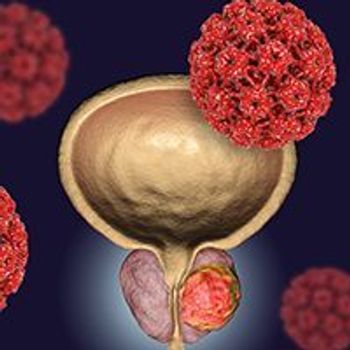
Patients with locally advanced or metastatic hormone-sensitive prostate cancer who received docetaxel and abiraterone acetate plus prednisone or prednisolone and standard of care androgen deprivation therapy had superior patient-reported quality of life compared with patients who received docetaxel plus ADT, although the improvement narrowly missed the predefined value for clinical significance.

Jeff M. Michalski, MD, MBA, FASTRO, shares his presidential goals for ASTRO, the success of the hybrid 2021 ASTRO Annual Meeting, and remaining questions in radiation oncology that research efforts are poised to address.

Bilal A. Siddiqui, MD, discusses the potential for novel imaging in patients with nonmetastatic castration-resistant prostate cancer.

The use of androgen deprivation therapy and prolongation of adjuvant ADT to at least 18 months in conjunction with definitive radiotherapy provides clinically meaningful benefit for patients with localized prostate cancer, irrespective of radiation dose.

Men carrying MSH2 and MSH6 pathogenic variants, which are associated with Lynch syndrome, were found to have a higher incidence of prostate cancer compared with age-matched non-carrier individuals, supporting the value of annual, targeted prostate-specific antigen screening from age 40 to identify men with clinically significant prostate cancer.

Prostate cancer is a highly hetero-geneous disease, with individual tumor cells having distinct genomic and pheno-typic characteristics, resulting in a great deal of variability in patients’ disease course.

Sumit K. Subudhi, MD, PhD, discusses the integration of antiandrogen agents in metastatic hormone-sensitive prostate cancer.
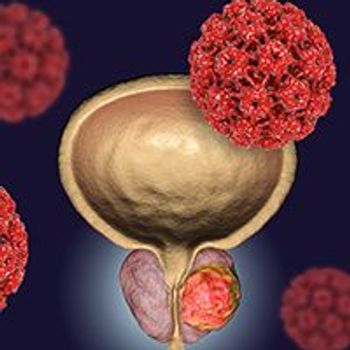
Investigators have made great strides in the development of radiopharmaceuticals for prostate cancer diagnostics, culminating in recent FDA approvals for the first prostate-specific membrane antigen–targeted radioligands, gallium 68–PSMA-11 and piflufolastat F 18, for the detection of disease recurrence and metastatic lesions.

Amado J. Zurita-Saavedra, MD, discusses moving therapies utilized in metastatic castration-resistant prostate cancer into the treatment of patients with metastatic hormone-sensitive prostate cancer.

Sumit K. Subudhi, MD, PhD, discusses future directions with immunotherapy in prostate cancer.
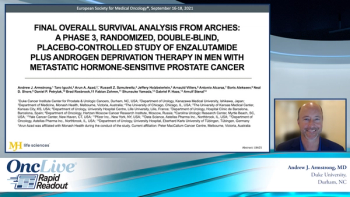
Andrew J. Armstrong, MD, discusses final overall survival data from the phase 3 randomized, double-blind, placebo-controlled ARCHES study of enzalutamide plus androgen deprivation therapy in men with metastatic hormone-sensitive prostate cancer presented at the European Society for Medical Oncology 2021 Congress.

Bilal A. Siddiqui, MD, discusses the current state of treatment in nonmetastatic castration-resistant prostate cancer.

Spanning metastatic non–small cell lung cancer, castration-resistant prostate cancer, and HER2-low breast cancer, here are 4 must-know clinical trials in Tennessee that community oncologists can now enroll their patients on.

Immunotherapy, Second-Generation AR Antagonists Provide Expansive Utility Throughout Prostate Cancer
Sumit K. Subudhi, MD, PhD, discusses the treatment of patients with nonmetastatic castration-resistant prostate cancer, as well as those with metastatic castration-naïve, hormone-sensitive, and castration-resistant prostate cancer.
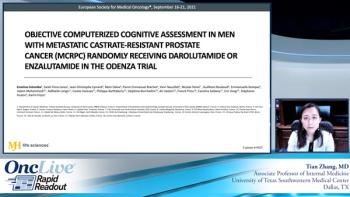
Dr Zhang, MD, discusses cognitive assessment data from patients with metastatic castrate-resistant prostate cancer in the ODENZA trial receiving either darolutamide or enzalutamide that was presented at the European Society for Medical Oncology 2021 Annual Meeting.

The FDA has granted a priority review designation to a new drug application for lutetium-177-PSMA-617 for use in the treatment of patients with metastatic castration-resistant prostate cancer following androgen receptor pathway inhibition and taxane-based chemotherapy.
Olaparib in combination with abiraterone acetate demonstrated a significant and clinically meaningful improvement in radiographic progression-free survival vs abiraterone alone as a first-line treatment for patients with metastatic castration-resistant prostate cancer with or without homologous recombination repair gene mutations.

The FDA has authorized the marketing of Paige Prostate, an artificial intelligence–based software that was designed to help pathologists scan areas of the body for suspicious cancer as a supplement to the review of digitally-scanned slide images from prostate biopsies.
Advertisement
Advertisement
Trending on OncLive
1
Savolitinib Plus Osimertinib NDA Submitted to FDA for MET-Driven, EGFR-Mutated NSCLC After EGFR TKI
2
Calculating the Real Cost of False Positive Findings in Cancer Screening
3
FDA Grants Priority Review to Elinzanetant for Endocrine Therapy–Associated Vasomotor Symptoms in HR+ Breast Cancer
4
Cilta-Cel Shows Long-Term Treatment-Free Remissions in Lenalidomide-Refractory Myeloma
5