




Prostate Cancer
Latest News
Advertisement
Latest Videos





























































Advertisement
More News
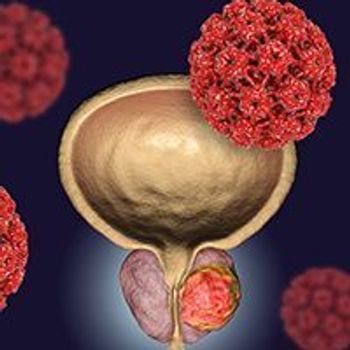
Pharmaceutical giant Novartis has temporarily halted radioligand therapy production at sites in Millburn, New Jersey, and Ivrea, Italy, citing potential quality issues in its manufacturing processes.
Niraparib was found to maintain or improve health-related quality of life in patients with advanced or metastatic castration-resistant prostate cancer, according to data from the final analysis of the phase 2 GALAHAD trial.

Andrew J. Armstrong, MD, MSc, breaks down ongoing prostate cancer clinical trials looking at targeted radioligand therapies.
Oliver Sartor, MD, considers the respective roles of Lu-PSMA-617 and radium-223 as radiotherapy in the setting of mCRPC.
Expert perspectives on how DNA alterations may inform the selection and use of PARP inhibitors in metastatic CRPC.
A broad overview of the armamentarium for metastatic CRPC followed by detailed discussion on the role of PARP inhibitors in this setting.

The addition of apalutamide to androgen deprivation therapy was not found to significantly reduce health-related quality of life or increase patient-reported adverse effect burden in patients with metastatic castration-sensitive prostate cancer enrolled to the phased 3 TITAN trial.

FDA Grants Priority Review to Darolutamide/Docetaxel in Metastatic Hormone-Sensitive Prostate Cancer
The FDA has accepted a supplemental new drug application and granted priority review to darolutamide plus docetaxel in patients with metastatic hormone-sensitive prostate cancer.

Andrew J. Armstrong, MD, discusses the updated results and the clinical implications of the final survival analysis of the ARCHES trial, which he coauthored.

Treatment with the androgen-receptor inhibitor enzalutamide plus androgen deprivation therapy led to significant survival benefits in patients with metastatic hormone-sensitive prostate cancer.
Expert perspectives on where Lu-PSMA-617 therapy may fit into the treatment paradigm for metastatic castration-resistant prostate cancer.
A comprehensive review of the design and results of VISION, which analyzed Lu-PSMA-617 therapy in patients with mCRPC.
Comprehensive insight on results from the ARASENS trial and how panelists will be incorporating what was learned into real-world clinical practice.
Focusing on treatment selection factors in metastatic HSPC, panelists consider how the ARASENS trial redefined treatment approaches.

Andrew J. Armstrong, MD, MSc, discusses updated results from the phase 3 ARCHES trial in metastatic hormone-sensitive prostate cancer.
Expert Scott Tagawa, MD, MS, FACP, details the role of radium-223 in treating metastatic CRPC and highlights real-world experiences.
Shared insight on the key factors that play into the selection of therapy for patients with metastatic castration-resistant prostate cancer.
Shared insight on the role of micronized abiraterone in metastatic HSPC and how it may be utilized in practice.
Expert perspectives on metastatic hormone-sensitive prostate cancer and the current state of the treatment armamentarium.

Helen Heng-Shan Moon, MD, discusses the role of PARP inhibitors in prostate cancer.
A detailed review of the available pharmacologic agents used to treat patients with metastatic castration-resistant prostate cancer.
A brief discussion on how novel imaging strategies are being used to inform the treatment of patients with prostate cancer.

The FDA has cleared an investigational new drug application for 177Lu-rhPSMA-10.1 as a potential therapeutic option for patients with metastatic castration-resistant prostate cancer.
A brief discussion on best practices in monitoring patients on therapy for nonmetastatic castration-resistant prostate cancer [nmCRPC].
A brief review of the value of quality of life measures while managing patients on therapy for nonmetastatic castration-resistant prostate cancer (nmCRPC).
Advertisement
Advertisement
Trending on OncLive
1
Savolitinib Plus Osimertinib NDA Submitted to FDA for MET-Driven, EGFR-Mutated NSCLC After EGFR TKI
2
Calculating the Real Cost of False Positive Findings in Cancer Screening
3
FDA Grants Priority Review to Elinzanetant for Endocrine Therapy–Associated Vasomotor Symptoms in HR+ Breast Cancer
4
Cilta-Cel Shows Long-Term Treatment-Free Remissions in Lenalidomide-Refractory Myeloma
5