






Prostate Cancer
Latest News
Advertisement
Latest Videos



















































Advertisement
More News
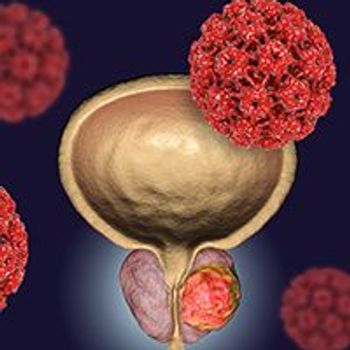
Abiraterone acetate plus prednisone should be considered as the first treatment choice for patients with newly diagnosed metastatic castration-resistant prostate cancer if fatigue is a concern.

Eighty-five percent of patients with nonmetastatic castration-resistant prostate cancer who crossed over from placebo to darolutamide in the phase 3 ARAMIS trial experienced a maximum prostate-specific antigen decline of at least 50% at any time of crossover.
Investigators demonstrated that the benefit of androgen deprivation therapy was extended with the addition of apalutamide for patients with metastatic castration-sensitive prostate cancer regardless of disease volume.

Intense androgen receptor inhibition with neoadjuvant apalutamide did not complicate robotic prostatectomy surgical outcomes.
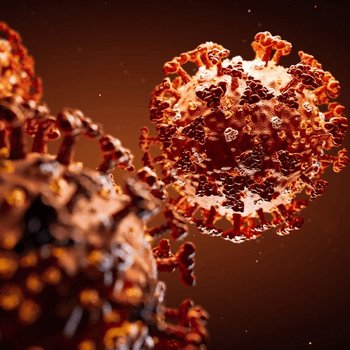
Patients with a urological cancer who were also infected with COVID-19 and undergoing elective surgery for their disease, were found to have a significantly higher likelihood of experiencing respiratory complications and mortality than those without the virus.

Evangelia Sereti, MSc, PhD, discusses the preclinical efficacy of NOV202 plus olaparib in BRCA1/2-mutated prostate cancer cells.

Vinayak G. Wagaskar, MBBS, discusses the rationale to evaluate the relationship between obesity paradigm and outcomes in prostate cancer.

Scott T. Tagawa, MD, MS, FACP, discusses tumor targeting with radionuclides in prostate cancer.
Adjuvant Radiation Therapy Could Yield Reduction in All-Cause Mortality in High-Risk Prostate Cancer
Men with positive pelvic lymph nodes or a prostatectomy Gleason score of 8 to 10 with disease extending beyond the prostate should be considered for treatment with adjuvant radiation therapy.
Scott T. Tagawa, MD, MS, FACP, reports on data presented at the 2021 American Society of Clinical Oncology (ASCO) Annual Meeting regarding health-related quality of life (HRQoL) and patient-reported outcomes (PROs) at the final analysis of TITAN, a phase 3 study evaluating apalutamide versus placebo in patients with metastatic castration-sensitive prostate cancer (mCSPC) who were receiving androgen deprivation therapy (ADT).

Robotic prostate surgery pioneer Mani Menon, MD, is joining Mount Sinai and will serve as Chief of Strategy and Innovation in the Department of Urology for the Mount Sinai Health System.
Neal Shore, MD, presents data on the tolerability of and responses to darolutamide (DARO) as seen in the extended follow-up of the phase 3 ARAMIS trial of DARO treatment in men with high-risk, nonmetastatic, castration-resistant prostate cancer. The results were reported at the 2021 American Society of Clinical Oncology (ASCO) Annual Meeting.
Neal Shore, MD, presents data on treatment preferences from the phase 2 ODENZA trial of darolutamide and enzalutamide in men with asymptomatic or mildly symptomatic metastatic castrate-resistant prostate cancer. The results were reported at the 2021 American Society of Clinical Oncology (ASCO) Annual Meeting.

Eric Klein, MD, discusses the promise of VERU-111 in patients with metastatic CRPC and other research efforts that are generating excitement in the paradigm.

Neal D. Shore, MD, FACS, discusses the design of the phase 3 ARAMIS trial in nonmetastatic castration-resistant prostate cancer.

Arun Azad, MBBS, PhD, FRACP, discusses the rationale that inspired the launch of the UpFrontPSMA trial, and highlights past and future research directions with 177Lu-PSMA-617 in the treatment of patients with prostate cancer.

Álvaro Juárez Soto, MD, discusses the efficacy of apalutamide plus androgen deprivation therapy in patients with metastatic hormone-sensitive prostate cancer.

Eric Klein, MD, discusses the rationale to evaluate VERU-111 in metastatic castration-resistant prostate cancer.

Tanya Dorff, MD, discusses encouraging data from a study evaluating bright white light in older patients with prostate cancer and updates from the phase ARAMIS trial.

The FDA granted a breakthrough therapy designation to 177Lu-PSMA-617 for the treatment of patients with metastatic castration-resistant prostate cancer.
Álvaro Juárez Soto, MD, discusses the rationale for examining apalutamide plus androgen deprivation therapy in patients with metastatic hormone-sensitive prostate cancer, as seen in the phase 3 TITAN study.

Atish D. Choudhury, MD, PhD, discusses emerging treatment strategies in metastatic castration-resistant prostate cancer.

Christopher Pieczonka, MD, discusses the design of the phase 3 VERACITY trial studying VERU-111 in patients with metastatic castration-resistant prostate cancer.

A water vapor ablation therapy has been shown to be able to reach and treat all prostate regions and eradicate intermediate risk, grade group 2 prostate cancer with acceptable safety and tolerability.

Adding abiraterone acetate and prednisone to androgen-deprivation therapy plus docetaxel improved radiographic progression-free survival in patients with de novo metastatic castration-sensitive prostate cancer.
Advertisement
Advertisement
Trending on OncLive
1
Savolitinib Plus Osimertinib NDA Submitted to FDA for MET-Driven, EGFR-Mutated NSCLC After EGFR TKI
2
Calculating the Real Cost of False Positive Findings in Cancer Screening
3
FDA Grants Priority Review to Elinzanetant for Endocrine Therapy–Associated Vasomotor Symptoms in HR+ Breast Cancer
4
Cilta-Cel Shows Long-Term Treatment-Free Remissions in Lenalidomide-Refractory Myeloma
5