

Prostate Cancer
Latest News
Advertisement
Latest Videos
















































Advertisement
More News

Adding enzalutamide to androgen deprivation therapy (ADT) significantly improved metastasis-free survival versus ADT alone in patients with nonmetastatic castration-resistant prostate cancer, according to findings from the phase III PROSPER trial.

Peter Choyke, MD, FACR, chief of Molecular Imaging Program, National Cancer Institute, discusses the importance of multidisciplinary care in prostate cancer.
Jim Hu, MD, MPH, director of the LeFrak Center for Robotic Surgery at Weill Cornell Medicine/NewYork-Presbyterian Hospital and the Ronald Lynch Chair of Urologic Oncology at Weill Cornell Medical College, discusses active surveillance for patients with prostate cancer.
Ipatasertib is being investigated in patients with metastatic castration-resistant prostate cancer as a method of simultaneously blocking a resistance mechanism to hormone therapy and improving responses to abiraterone.

Adam Scott Feldman, MD, MPH, urologist at Massachusetts General Hospital, assistant professor of surgery, Harvard Medical School, discusses a study of active surveillance in younger men with prostate cancer.

Michael Brawer, MD, vice president of medical affairs, Myriad Genetic Laboratories, discusses the results of the Prolaris genetic test in predicting prostate cancer aggressiveness in African-American men.
Celestia Higano, MD, professor of medicine and urology at the University of Washington, and a member of the Clinical Research Division at Fred Hutchinson Cancer Research Center, discusses the effectiveness of PARP inhibitors for patients with metastatic prostate cancer.

Jim Hu, MD, MPH, director of the LeFrak Center for Robotic Surgery at Weill Cornell Medicine/NewYork-Presbyterian Hospital and the Ronald Lynch Chair of Urologic Oncology at Weill Cornell Medical College, discusses the next steps of biopsies for patients with prostate cancer.

Stacy Loeb, MD, assistant professor of urology and population health at NYU Langone School of Medicine, discusses the results and impact of active surveillance on patients with prostate cancer.

Oliver Sartor, MD, medical oncologist at Tulane University School of Medicine, discusses conclusions drawn from an analysis of African-American patients receiving sipuleucel-T (Provenge) in metastatic castration-resistant prostate cancer and the potential for combinations with this agent.

Results from the PROSELICA trial showed that 20 mg/m2 of cabazitaxel (Jevtana) was as safe and effective as the 25 mg/m2 dose for postdocetaxel patients with metastatic castration-resistant prostate cancer.

Adam Scott Feldman, MD, MPH, urologist at Massachusetts General Hospital, assistant professor of surgery, Harvard Medical School, discusses metabolomic findings in prostate cancer.
Celestia Higano, MD, professor of medicine and urology at the University of Washington, and a member of the Clinical Research Division at Fred Hutchinson Cancer Research Center, discusses the changes being made in the field of prostate cancer.
Peter Choyke, MD, FACR, chief of Molecular Imaging Program, National Cancer Institute, discusses the challenges with MRI in prostate cancer.

Andrew J. Stephenson, MD, director for the Center of Urologic Oncology at the Cleveland Clinic, discusses the development of biomarkers for patients with prostate cancer.
The use of biomarkers in genitourinary cancers offers exciting potential in understanding which patients may do better with androgen-targeting therapies.
Celestia Higano, MD, professor of medicine and urology at the University of Washington, and a member of the Clinical Research Division at Fred Hutchinson Cancer Research Center, discusses risks associated with combining radium-223 dichloride (Xofigo) for patients with prostate cancer.

Charles Drake, MD, PhD, shares his insight on the promise and challenges with immunomodulatory drugs, and immune-activating agents in prostate cancer.

Adam Scott Feldman, MD, MPH, urologist at Massachusetts General Hospital, assistant professor of surgery, Harvard Medical School, discusses the remaining challenges with biomarkers in prostate cancer.

Oliver Sartor, MD, a medical oncologist at the Tulane University School of Medicine, discusses the science behind the results of a study investigating sipuleucel-T (Provenge) for patients with castration-resistant prostate cancer (CRPC).

Susan F. Slovin, MD, PhD, a medical oncologist at Memorial Sloan Kettering Cancer Center, discusses approaches of immunotherapy for patients with prostate cancer.

Michael Brawer, MD, vice president of medical affairs, Myriad Genetic Laboratories, discusses the significance of the Prolaris genetic test in predicting prostate cancer aggressiveness in African-American men.
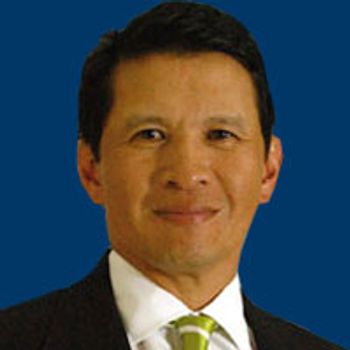
Research into the biology of prostate cancer has resulted in a growing understanding of the molecular drivers of the malignancy, resulting in a rapid evolution of genetic testing that is poised to revolutionize the diagnosis and care of at-risk men as well as those who have the disease.
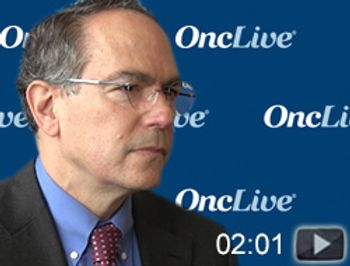
Peter Choyke, MD, FACR, chief of the Molecular Imaging Program, National Cancer Institute, discusses screening in prostate cancer.
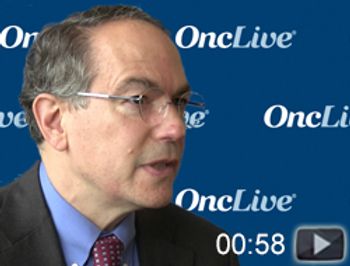
Peter Choyke, MD, FACR, chief of Molecular Imagine Program, National Cancer Institute, discusses developments being made in screening for patients with prostate cancer.
Advertisement
Advertisement
Trending on OncLive
1
Savolitinib Plus Osimertinib NDA Submitted to FDA for MET-Driven, EGFR-Mutated NSCLC After EGFR TKI
2
Calculating the Real Cost of False Positive Findings in Cancer Screening
3
FDA Grants Priority Review to Elinzanetant for Endocrine Therapy–Associated Vasomotor Symptoms in HR+ Breast Cancer
4
Cilta-Cel Shows Long-Term Treatment-Free Remissions in Lenalidomide-Refractory Myeloma
5