





Sarcomas
Latest News
Advertisement
Latest Videos


































































Advertisement
More News

A new drug application has been submitted to the FDA for tazemetostat for the treatment of patients with metastatic or locally advanced epithelioid sarcoma not eligible for curative surgery.

Shoba A. Navai, MD, an assistant professor, Department of Pediatrics, Section of Pediatric Hematology and Oncology, at Baylor College of Medicine, Texas Children’s Hospital, discusses treatment options for patients with relapsed/refractory sarcoma.
The FDA’s Oncologic Drugs Advisory Committee voted in favor of pexidartinib for an indication as a treatment of adult patients with symptomatic tenosynovial giant cell tumor.

The FDA has granted a breakthrough therapy designation to pomalidomide for use as a treatment for patients with HIV-positive Kaposi sarcoma who have received prior chemotherapy, as well as patients with HIV-negative Kaposi sarcoma.

Matthew P. Schlumbrecht, MD, associate professor and co-director of Cancer Prevention and Control, Division of Gynecologic Oncology, Sylvester Comprehensive Cancer Center, University of Miami Health System, discusses investigational treatment strategies in uterine leiomyosarcoma.
The European Medicines Agency’s Committee for Medicinal Products for Human Use has recommended that the conditional marketing authorization for olaratumab be revoked following results of the ANNOUNCE study, which did not demonstrate a survival benefit with the PDGFRα antagonist in combination with doxorubicin versus doxorubicin alone in patients with advanced or metastatic soft tissue sarcoma.

Eli Lilly and Company has announced that it is withdrawing its PDGFRα antagonist olaratumab from the market for the treatment of patients with advanced soft tissue sarcoma.
The FDA has scheduled an Oncologic Drugs Advisory Committee hearing for May 14, 2019, to discuss a new drug application for pexidartinib for the treatment of adult patients with symptomatic tenosynovial giant cell tumor.

Suzanne George, MD, director of Clinical Research, Center for Sarcoma and Bone Oncology, Dana-Farber Cancer Institute, and an associate professor of medicine, Harvard Medical School, discusses the importance of collaboration in the treatment of patients with uterine sarcoma.
A third of patients with advanced TRK fusion tumors had objective responses to the second-generation TRK inhibitor LOXO-195 after failure of initial anti-TRK therapy.
The term statistically significant is almost certainly beautiful music to the ears of clinical investigators and pharma/biotech companies. However, concern develops when one inquires how the most common test of significance, the P value, is used in clinical investigative efforts and whether at times this is more harmful than helpful within the domain of cancer medicine.

Kristen N. Ganjoo, MD, associate professor of medicine, Stanford University Medical Center, Stanford Medicine, discusses the treatment of patients with metastatic uterine leiomyosarcoma.
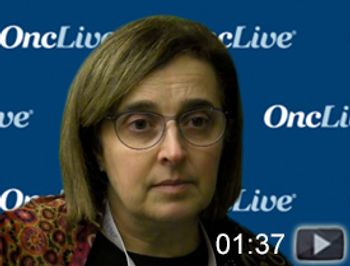
Suzanne George, MD, director of Clinical Research, Center for Sarcoma and Bone Oncology, Dana-Farber Cancer Institute, and an associate professor of Medicine, Harvard Medical School, discusses ongoing trials in soft tissue sarcoma (STS).
The FDA has granted a priority review designation to a new drug application for the investigational, small molecule, CSF1R receptor inhibitor pexidartinib for the treatment of adult patients with symptomatic tenosynovial giant cell tumor.
The FDA and European Medicines Agency have recommended that no new patients with advanced soft tissue sarcoma should be treated with the combination of olaratumab plus doxorubicin.
Olaratumab in combination with doxorubicin missed the phase III ANNOUNCE trial’s primary endpoint of overall survival and did not confirm a clinical benefit for patients with advanced or metastatic soft tissue sarcoma compared with standard doxorubicin.
The FDA has issued a letter to healthcare providers that they should monitor patients with a type of peripheral arterial disease who have been treated with vascular balloons that were coated with paclitaxel or stents that release paclitaxel in the femoropopliteal artery in the leg.

Suzanne George, MD, highlights the available therapies for patients with uterine sarcomas and what novel options are on the horizon.

Kristen N. Ganjoo, MD, associate professor of medicine, Stanford University Medical Center, Stanford Medicine, discusses therapies for patients with uterine leiomyosarcomas.

Although soft-tissue sarcoma is seldom diagnosed in adults, the development of several new therapies in recent years for patients with rare subtypes is energizing leaders in the field and underscoring the need for a multidisciplinary approach to care.

Kristen N. Ganjoo, MD, associate professor of medicine, Stanford University Medical Center, Stanford Medicine, discusses the rarity and diagnosis of uterine sarcomas.
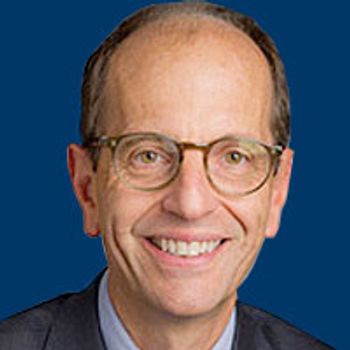
More than half of patients with advanced solid tumors associated with NTRK gene fusions responded to treatment with the small-molecule inhibitor entrectinib, an integrated analysis of 3 clinical trials showed.
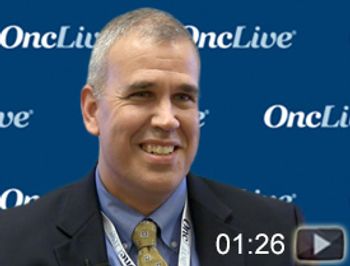
Richard F. Riedel, MD, associate professor of medicine, Duke Cancer Institute, discusses the emerging role of immunotherapy in uterine sarcoma.
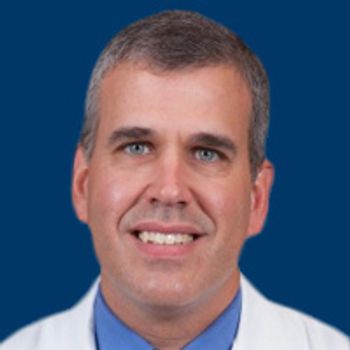
Richard Riedel, MD, discussed the presentation and standard management of uterine sarcomas, the potential role of immunotherapy and targeted agents, and the challenges he hopes to overcome in the landscape in the near future.
Richard F. Riedel, MD, associate professor of medicine, Duke Cancer Institute, discusses the treatment landscape of uterine sarcomas.
Advertisement
Advertisement
Trending on OncLive
1
FDA Approves Nogapendekin Alfa Inbakicept Plus BCG for High-Grade, Papillary-Only BCG-Unresponsive NMIBC
2
SurVaxM Cancer Vaccine Shows Clinically Meaningful OS Signal in Newly Diagnosed Glioblastoma
3
VS-7375 Elicits Responses in KRAS G12D–Mutated Pancreatic Cancer
4
FDA Accepts BLA Resubmission for Tabelecleucel in EBV+ Post-Transplant Lymphoproliferative Disease
5