

Sarcomas
Latest News
Advertisement
Latest Videos



































































Advertisement
More News

The European Commission has granted a conditional marketing authorization to avapritinib for single agent use in adult patients with unresectable or metastatic gastrointestinal stromal tumors that harbor a PDGFRA D842V mutation.
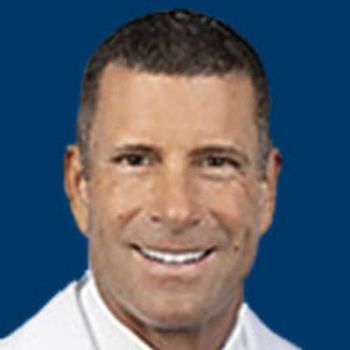
R. Lor Randall, MD, highlights the innovative efforts by the COG, ongoing studies in sarcomas, and how the organization is adapting during a world with COVID-19.
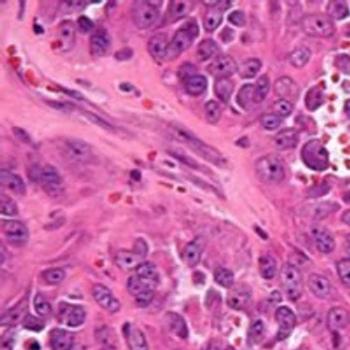
The feasibility of treatment with trabectedin in combination with durvalumab as treatment of patients with advanced or metastatic pretreated soft tissue sarcoma was demonstrated in the phase 1b TRAMUNE trial.
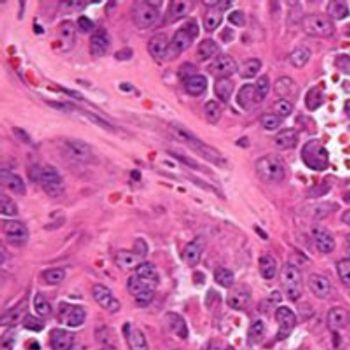
Pembrolizumab monotherapy prolonged progression-free survival in selected rare sarcoma subtypes, supporting the immune checkpoint inhibitor’s ability to improve outcomes across histotypes.
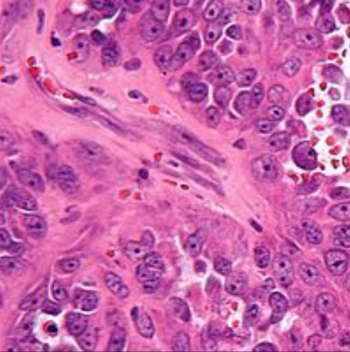
Regorafenib extended progression-free survival at 24 weeks compared with placebo for patients with Ewing sarcoma in the phase 2 REGOBONE study. However, the oral multi-kinase inhibitor failed to meet the study’s primary endpoint of non-progression at 8 weeks.

Patricia Pautier, MD, discusses remaining challenges in treating patients with metastatic/advanced uterine and soft tissue leiomyosarcoma.
Patricia Pautier, MD, discusses the rationale for the phase 2 LMS-02 trial, the importance of histologic stratification, and ongoing challenges in soft tissue sarcoma.
Patricia Pautier, MD, discusses the rationale for the phase 2 LMS-02 trial in uterine and soft tissue leiomyosarcoma.
Christina L. Roland, MD, MS, FACS, discusses the results from a phase 2 study evaluating neoadjuvant checkpoint blockade study in patients with undifferentiated pleomorphic sarcoma and dedifferentiated liposarcoma.
Alessandro Gronchi, MD, discusses the toxicity profile of trabectedin and radiation therapy in patients with soft tissue sarcoma.
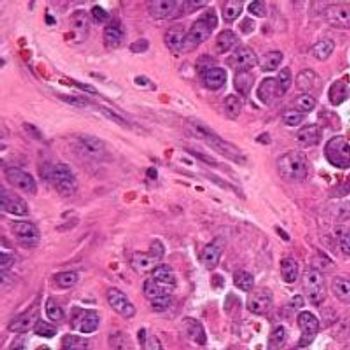
The overall use of chemotherapy in high-risk soft tissue sarcomas has been found to be significantly low.
In a special episode of OncLive® On Air, Shiraj Sen, MD, PhD, and Roman Groisberg, MD, highlight research evaluating combination chemotherapy regimens in the evolving sarcoma treatment paradigm.
Gary K. Schwartz, MD, highlights research that is being done with regard to genomic signatures in sarcoma, challenges faced with immunotherapy, and where the field is headed.
Despite encouraging data shown in some subtypes, there is still a lot of work that still needs to be done with determining the optimal use for immunotherapy in patients with sarcoma, a population that has historically been difficult to treat.
R. Lor Randall, MD, FACS, discusses the evolving management of desmoid fibromatosis, shares advice on the factors that go into deciding when to treat this disease, and stresses the importance of having a multidisciplinary team involved in the care of these patients.
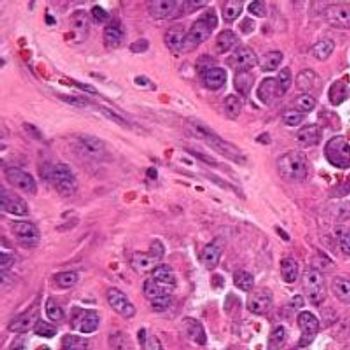
Ripretinib demonstrated promising antitumor activity and was found to be well tolerated in patients with refractory advanced gastrointestinal stromal tumor.

The interim futility review for the phase 2 HopES Sarcoma trial was positive and will continue to evaluate SM-88 for patients with Ewing sarcoma and other high-risk sarcomas.
The FDA has granted a priority review designation to a new drug application for a unique formulation of sodium thiosulfate for the prevention of cisplatin-induced ototoxicity in patients from 1 month to less than 18 years of age with localized, nonmetastatic, solid tumors.
Gary K. Schwartz, MD, discusses the updated design of the phase 2 Alliance A091401 trial for metastatic sarcomas.
Gary K. Schwartz, MD, discusses future research in sarcoma.
Christina L. Roland, MD, PhD, discusses the rationale for a phase 2 study evaluating neoadjuvant checkpoint blockade study in patients with undifferentiated pleomorphic sarcoma and dedifferentiated liposarcoma.
R. Lor Randall, MD, FACS, discusses preoperative radiotherapy and how it has become a standard of care for patients with soft tissue sarcoma of the extremities; however, postoperative radiation still plays a role in the paradigm, especially when wound risks are considered to be precarious.
Christina L. Roland, MD, PhD, discusses the design of a randomized, phase 2 trial with nivolumab and ipilimumab in resectable retroperitoneal dedifferentiated liposarcoma, as well as radiation therapy in extremity/truncal undifferentiated pleomorphic sarcoma.
Gary K. Schwartz, MD, discusses the clinical findings with the combination of nivolumab and ipilimumab in patients with dedifferentiated liposarcoma and undifferentiated pleomorphic sarcoma.
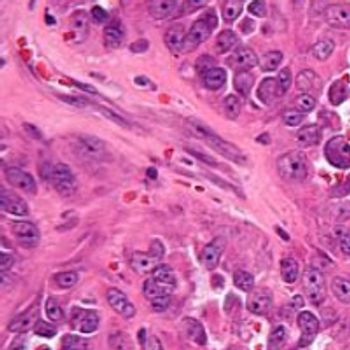
The European Medicines Agency has granted access to the PRIME initiative for the Specific Peptide Enhanced Affinity Receptor T-cell therapy ADP-A2M4 for the treatment of patients with synovial sarcoma.
Advertisement
Advertisement
Trending on OncLive
1
FDA Approves Nogapendekin Alfa Inbakicept Plus BCG for High-Grade, Papillary-Only BCG-Unresponsive NMIBC
2
SurVaxM Cancer Vaccine Shows Clinically Meaningful OS Signal in Newly Diagnosed Glioblastoma
3
VS-7375 Elicits Responses in KRAS G12D–Mutated Pancreatic Cancer
4
FDA Receives NDA Resubmission for Rivoceranib Plus Camrelizumab in Frontline Unresectable or Metastatic HCC
5