




Sarcomas
Latest News

Advertisement
Latest Videos






































































Advertisement
More News
Selinexor resulted in lower rates and slower worsening of pain in patients with advanced unresectable dedifferentiated liposarcoma vs placebo, and may represent a novel option to provide convenience, improved adherence, and reduced caregiver burden vs existing parenteral therapies.
Reattaching the greater trochanter to the proximal femur endoprosthesis did not show an improvement in Trendelburg gait or reliance on an assistive ambulatory device vs a soft tissue–only abductor repair in patients with bone cancers.

Richard Gorlick, MD, highlights methods for identifying immunotherapeutic targets in osteosarcomas.

Vivek Subbiah, MD, discusses outcomes with selpercatinib in patients with RET fusion–positive cancer.

Richard Gorlick, MD, discussed results from a study examining the use of integrative surfaceome profiling to identify immunotherapeutic targets in patients with osteosarcomas.

Jonathan C. Trent, MD, PhD, discusses the role of avapritinib in PDGFRA exon 18–positive gastrointestinal stromal tumor.

Erin Murphy, MD, discusses remaining questions with stereotactic body radiotherapy in pediatric sarcoma.

Encouraging efficacy data for ripretinib as a later-line therapy for patients with advanced gastrointestinal stromal tumor have investigators hypothesizing new approaches to derive even greater benefit with the agent.
Erin Murphy, MD, discusses the clinical implications of pazopanib plus stereotactic body radiotherapy in pediatric sarcoma.

Erin Murphy, MD, discusses future research efforts with pazopanib plus stereotactic body radiation therapy in patients with pediatric sarcoma.

Michael Wagner, MD, discusses the rationale for using immunotherapy in the treatment of patients with angiosarcoma.

The FDA has granted a fast track designation for annamycin as a treatment for patients with soft tissue sarcoma lung metastases.

Jonathan C. Trent, MD, PhD, discusses the utility of circulating tumor DNA to understand primary driver mutations in gastrointestinal stromal tumor.
Most patients with extremity sarcoma are willing to participate in a randomized clinical trial exploring various postoperative cancer surveillance regimens.
Pathogenic germline variants identified among children and young adults with rhabdomyosarcoma suggest that all children with RMS should undergo germline sequencing to utilize available surveillance guidelines and inform potential gene-specific therapy options.

Michael Wagner, MD, discusses the safety profile of nivolumab plus ipilimumab in patients with angiosarcoma.

Jonathan C. Trent, MD, PhD, discusses the need to develop novel combination strategies for the treatment of patients with metastatic gastrointestinal stromal tumors.
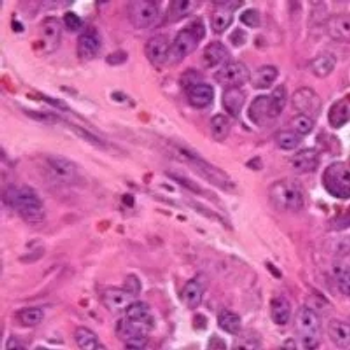
February 18, 2021 — The use of next-generation sequencing demonstrated that 34% of patients with sarcoma had potentially actionable mutations.

Aditi Dhir, MD, discusses ongoing efforts in epithelioid and synovial sarcoma.

NBTXR3, a novel radioenhancer, is showing intriguing response rates in adult patient with soft tissue sarcoma, paving a path for the innovative therapy not just in sarcomas, but other tumor types, as well.
R. Lor Randall, MD, discusses the intriguing risk-stratification–based trial in NSTRS and how the findings can be used to guide treatment decisions in this pediatric population.

Aditi Dhir, MD, discusses risk-based stratification in patients with epithelioid and synovial sarcoma.

Michael Wagner, MD, discusses responses achieved with nivolumab plus ipilimumab in patients with angiosarcoma.

Aditi Dhir, MD, discusses the challenges of diagnosing patients with sarcoma.
Michael Wagner, MD, discusses future research efforts in sarcoma subtypes.
Advertisement
Advertisement
Trending on OncLive
1
FDA Approves Nogapendekin Alfa Inbakicept Plus BCG for High-Grade, Papillary-Only BCG-Unresponsive NMIBC
2
SurVaxM Cancer Vaccine Shows Clinically Meaningful OS Signal in Newly Diagnosed Glioblastoma
3
VS-7375 Elicits Responses in KRAS G12D–Mutated Pancreatic Cancer
4
FDA Receives NDA Resubmission for Rivoceranib Plus Camrelizumab in Frontline Unresectable or Metastatic HCC
5