


Sarcomas
Latest News
Advertisement
Latest Videos































































Advertisement
More News

Aditi Dhir, MD, discusses modifying treatment for adults versus pediatric patients with epithelioid sarcoma.
Germline predisposition variants associated with cancer susceptibility syndromes can underlie the genetic risk for rhabdomyosarcoma, indicating that germline testing should be performed in accordance with RMS subtypes and irrespective of age.
Jonathan C. Trent, MD, PhD, discusses the role of adjuvant imatinib in gastrointestinal stromal tumors.
January 5th, 2021 - Ripretinib is under investigation as a second-line treatment in patients with gastrointestinal stromal tumor versus sunitinib in the phase 3 INTRIGUE trial, which recently completed its target enrollment.
Faculty of a recent Institutional Perspectives in Cancer webinar on sarcoma, hosted by Sylvester Comprehensive Cancer Center, share updates in the management of gastrointestinal stromal tumor, epithelioid and synovial sarcoma, and tenosynovial giant cell tumor.
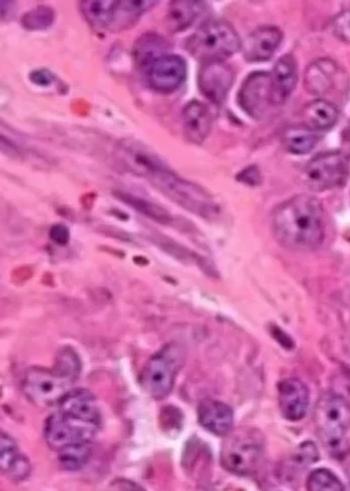
January 4, 2021 — The pivotal phase 2/3 RINGSIDE trial, which is evaluating the potent, selective oral gamma secretase inhibitor AL102, has been permitted to proceed and can potentially be used as a registrational study for adolescent and adult patients with desmoid tumors.
December 29, 2020 - The FDA has granted an orphan drug designation to Annamycin for the treatment of patients with soft tissue sarcomas.

December 23, 2020 - Entrectinib continued to demonstrate clinically meaningful, durable responses with a manageable toxicity profile in patients with NTRK fusion–positive sarcoma.
R. Lor Randall, MD, FACS, discusses the concept and prospect of up-front resection in osteosarcoma from the Osteosarcoma Collaborative.
Filip Janku, MD, PhD highlighted a dose-escalated approach of ripretinib and how it yielded a progression-free survival benefit in patients with gastrointestinal stromal tumor across all lines of treatment in a phase 1 study.
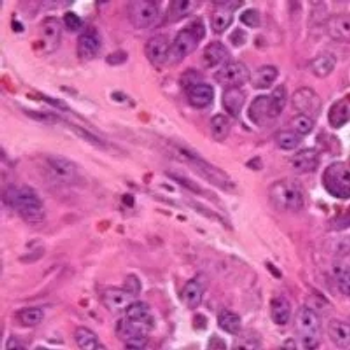
Tumor Growth Rate Associated With Outcomes in Sarcoma Treated With Immunotherapy or Targeted Therapy
December 14, 2020 — A link between tumor growth rate and clinical outcomes was established in patients with sarcoma who received treatment with immunotherapy or targeted therapy.

November 30, 2020 - Dose escalation with ripretinib following disease progression on the 150-mg daily dose led to a clinically meaningful benefit in patients with advanced gastrointestinal stromal tumor.
November 30, 2020 - The FDA has approved the Sonalleve MR-guided high-intensity focused ultrasound (MR-HIFU) system for the treatment of patients with osteoid osteoma in the extremities.

Selinexor demonstrated a statistically significant improvement in progression-free survival compared with matching placebo in patients with advanced unresectable dedifferentiated liposarcoma, following at least 2 prior treatments.
R. Lor Randall, MD, FACS, discusses limb salvage surgeries that have been made possible through 3D printing, and the technological advances that are helping to increase precision and turnaround times.

November 24, 2020 — The FDA has granted an orphan drug designation to devimistat for the treatment of patients with soft tissue sarcoma.
November 24, 2020 - Pexidartinib was found to result in prolonged efficacy with favorable safety in patients with tenosynovial giant cell tumors, according to long-term data from a pooled analysis of 3 cohorts of patients who received the agent.
November 23, 2020 - Ripretinib demonstrated clinically meaningful activity in patients with fourth-line or later advanced gastrointestinal stromal tumor and several, heterogeneous genetic subsets of KIT/PDGFRA mutations.

Jonathan C. Trent, MD, PhD, discusses the potential role of immunotherapy in gastrointestinal stromal tumors.
Marilyn M. Bui, MD, PhD, highlights the importance of pathology in sarcoma and how it is the cornerstone of precision medicine.
November 18, 2020 - The FDA has granted a fast track designation and an orphan drug designation to the orally bioavailable small molecule tubulin-binding agent PTC596 for potential use in patients with leiomyosarcoma; the agent also received a rare pediatric disease designation and an orphan drug designation for potential use in patients with diffuse intrinsic pontine glioma.
R. Lor Randall, MD, FACS, discusses the evolution of orthopedic surgery in sarcoma.
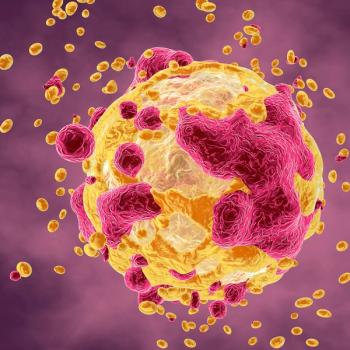
November 13, 2020 - The combination of nivolumab and ipilimumab elicited an objective response rate of 25% and was found to be well tolerated in patients with advanced or unresectable angiosarcoma, according to cohort findings of the phase 2 DART trial.
John Zalcberg, PhD, OAM, discusses the approval of avapritinib in gastrointestinal stromal tumor.

John A. Abraham, MD, FACS, discusses surgical improvements in tenosynovial giant cell tumor.
Advertisement
Advertisement
Trending on OncLive
1
FDA Approves Nogapendekin Alfa Inbakicept Plus BCG for High-Grade, Papillary-Only BCG-Unresponsive NMIBC
2
SurVaxM Cancer Vaccine Shows Clinically Meaningful OS Signal in Newly Diagnosed Glioblastoma
3
VS-7375 Elicits Responses in KRAS G12D–Mutated Pancreatic Cancer
4
FDA Receives NDA Resubmission for Rivoceranib Plus Camrelizumab in Frontline Unresectable or Metastatic HCC
5