

Immunotherapy may finally be taking center stage in breast cancer, although much work remains to be done.
Immunotherapy may finally be taking center stage in breast cancer, although much work remains to be done.
There is an unprecedented array of therapeutic options for patients with triple-negative breast cancer, with more approaches on the horizon.
C. Kent Osborne, MD, discusses the important take home message for physicians treating patients with HER2-positive breast cancer. Osborne says the role of HER2-positivity is complicated.
Hope S. Rugo, MD, discusses the latest advancements in the treatment landscape for patients with TNBC and highlights some data from clinical trials presented at the 2019 ESMO Congress.

Andrea V. Barrio, MD, FACS, discusses how the use of neoadjuvant chemotherapy can help de-escalate axillary node dissection in select patients with breast cancer. Dissection can be a morbid procedure with longterm risks of lymphoma, impacting the quality of life for many patients.
In breast cancer, neoadjuvant endocrine therapy shows promise in a variety of areas, including as an excellent testing platform, Ingrid A. Mayer, MD, MSCI, said in a presentation during the 2019 Lynn Sage Breast Cancer Symposium.
In contemporary breast cancer clinical practice, the correlation between achieving a pathologic complete response after neoadjuvant chemotherapy and significantly improved outcomes after chemotherapy has been well established. However, in a discussion at the 2019 Lynn Sage Breast Cancer Symposium, William J. Gradishar, MD, cautioned colleagues that there is more to the story when one looks at long-term data in these patients.
Monica Morrow, MD, discusses the factors that impact the decision to use nipple sparing mastectomy versus conventional mastectomy in patients with breast cancer. The decision to use a nipple sparing approach in patients is dependent on 2 considerations. These relate to the cancer as well as cosmetic appearance of the breast.
Naoto Tada Ueno, MD, PhD, FACP, discusses the diagnosis and treatment of patients with inflammatory breast cancer and highlights the biggest challenges in both diagnosing and treating this patient population.
Tari King, MD, FACS, chief of Breast Surgery, Dana-Farber Cancer Institute, Brigham Womens Cancer Center, discusses the role of a multidisciplinary team when considering neoadjuvant chemotherapy (NAC) for patients with breast cancer.
Jonathan B. Strauss, MD, MBA, discussed the role of hypofractionated radiotherapy in patients with breast cancer and offered advice on treatment selection.

As more becomes known about the biology of HER2-positive early breast cancer, C. Kent Osborne, MD, says that a multipronged strategy is the best approach regarding de-escalating chemotherapy in this patient population.
Patricia Ganz, MD, discusses the symptoms related to estrogen hormones that can cause more implications for women with breast cancer, including menopausal symptoms such as hot flashes, vaginal dryness, trouble sleeping, and fatigue.

Clinical guidelines have been necessary to help oncologists stay current in the face of rapidly evolving knowledge in HER2-positive breast cancer.
Kimberly Van Zee, MD, discusses the importance of preventing invasive recurrence in patients with breast cancer at the 21st Annual Lynn Sage Breast Cancer Symposium.
Massimo Cristofanilli, MD, discusses a session at the 20th Annual Lynn Sage Breast Cancer Symposium on the roles of a multidisciplinary team.
George Sledge, Jr., MD, discusses the benefit to the cost of genomic sequencing decreasing overtime.

As the cost of sequencing continues to fall, genomic testing will likely become widespread in all types of metastatic cancer, including breast cancer.
William J. Gradishar, MD, discusses how far the breast cancer field has advanced over the last 20 years and the data he is anticipating to read out in the future.
Multiple gene signature assays have been developed that supply prognostic information for decisions on adjuvant chemotherapy and whether therapy should be of extended duration.

Determining the optimal adjuvant therapy in young women with breast cancer remains challenging, but some clarity is beginning to emerge.
Kathryn Ruddy, MD, discusses how genetic testing could impact treatment of patients with breast cancer.

Andrea V. Barrio, MD, discusses the challenges with phyllodes tumors of the breast and how to manage this disease moving forward.
Elizabeth Mittendorf, MD, PhD, discusses the rationale for updating the AJCC staging system in patients with breast cancer. This system was originally developed in the 1970s but is still used today.

All triple-negative breast cancers are not created equal, and clinicians should consider their inherent heterogeneity during diagnosis and treatment planning.
Monica Morrow, MD, addresses how she treats patients with breast cancer who have locoregional recurrence and how therapeutic approaches have evolved over recent years.
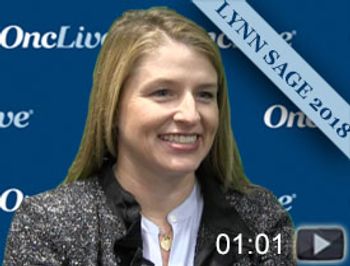
Sara McLaughlin, MD, professor of Surgery, Mayo Clinic, discusses the frequency that lymphedema appears in patients with breast cancer and addresses the complications in identifying this after her presentation at the Lynn Sage Breast Cancer Symposium.
Just as immunotherapies are transforming clinical practice for oncologists, these new therapies are also changing the practice of pathology and offering new ways for oncologists and pathologists to collaborate and improve patient care.
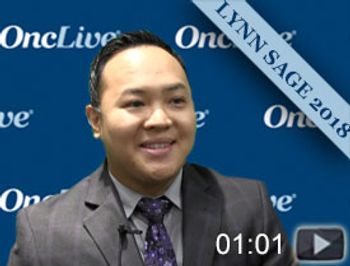
Luis Z. Blanco Jr., MD, assistant professor of Pathology, Northwestern University, discusses the role a pathologist plays in the treatment of a patient with breast cancer during a presentation at the Lynn Sage Breast Cancer Symposium.
Scalp cooling to limit alopecia in patients with cancer who are receiving chemotherapy is edging closer to becoming a widespread patient offering following recent FDA clearances.