
Darovasertib plus crizotinib improved OS to 21.1 months and boosted response rates in first-line metastatic uveal melanoma vs historical approaches.
Darovasertib plus crizotinib improved OS to 21.1 months and boosted response rates in first-line metastatic uveal melanoma vs historical approaches.

With an estimated 5-year survival rate of 50% and an ongoing issue of resistance, next steps with immunotherapy in melanoma will focus on stratifying patients, personalizing therapy, and refining localized regimens.

The addition of anti–PD-1/PD-L1 to combination BRAF and MEK inhibition has been shown to improve progression-free survival and duration of response in patients with BRAF-mutated melanoma, suggesting potential to overcome resistance to targeted approaches.

Jason J. Luke, MD, discusses the recent advancements with BRAF-targeted therapies and PD-1 checkpoint inhibitors in melanoma.

Jason J. Luke, MD, FACP, discusses the importance of BRAF in melanoma.

Jeffrey S. Weber, MD, PhD, discusses the results of the phase 3 COMBI-AD trial with dabrafenib plus trametinib in patients with resected, stage III BRAF V600E/K–mutant melanoma.

A triplet combining the PD-1 inhibitor spartalizumab with dabrafenib and trametinib led to a 12-month overall survival rate of 86.1% for patients with previously untreated advanced BRAF V600–mutant melanoma.

Ryan J. Sullivan, MD, discusses the rationale for BRAF/MEK combinations and immunotherapeutic combinations in melanoma and ongoing research examining triplet regimens.
Georgina V. Long, BSc, PhD, MBBS, FRACP, discusses the findings from a subgroup analyses of the CheckMate-067 trial.

The combination of cobimetinib (Cotellic) and vemurafenib (Zelboraf) maintained an advantage for overall survival and objective response rate in patients with BRAF-positive melanoma versus vemurafenib alone.

Patients with unresectable or metastatic BRAF V600-mutant melanoma who achieve a complete response to dabrafenib (Tafinlar) plus trametinib (Mekinist) are more likely to have improved survival outcomes at 5 years.

Isabella C. Glitza, MD, discusses a single-center phase I/Ib trial of concurrent intravenous and intrathecal nivolumab for patients with metastatic melanoma and leptomeningeal disease.

Grant McArthur, PhD, discusses significant results from the final analysis of the coBRIM trial, which evaluated the 5-year survival data of cobimetinib plus vemurafenib in patients with BRAF V600-mutated advanced melanoma.

Talimogene laherparepvec (T-VEC; Imlygic) prior to surgery was associated with improved recurrence-free survival and overall survival compared with surgery alone in patients with resectable advanced melanoma.

Ryan J. Sullivan, MD, discusses the significance of the BRAF/MEK combination dabrafenib and trametinib, which was the first BRAF/MEK inhibitor regimen to be approved by the FDA for the treatment of patients with BRAF V600E–positive stage III melanoma following complete resection.
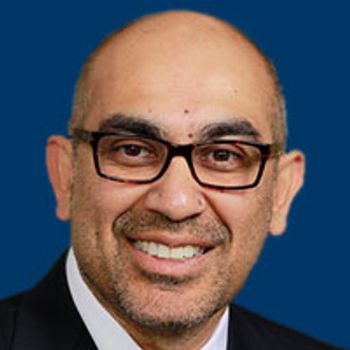
Adil Daud, MD, discusses the role of dabrafenib plus trametinib in patients with advanced melanoma and highlighted other combinations under investigation.
The combination of nivolumab (Opdivo) and ipilimumab (Yervoy) showed a sustained survival benefit compared with nivolumab or ipilimumab alone, according to 5-year follow-up results.

Gaudenz Danuser, PhD, discusses how the activation of RacP29S impacts the treatment of patients with melanoma. His lab has been studying the Rac molecule for around 20 years. The RacP29S mutation most commonly appears in melanoma, but it has since been discovered in a few other cancer types as well.

Combining a BRAF inhibitor with a MEK inhibitor causes endoplasmic reticulum stress in BRAF wild-type, NRAS­-mutated melanoma cells, resulting in significant antitumor activity.
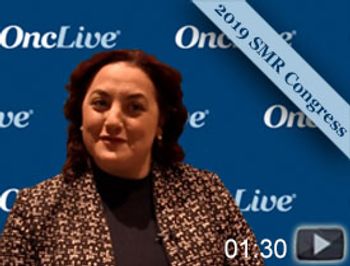
Allison Betof Warner, MD, PhD, discusses the excitement surrounding the findings from the COMBI-i trial that was presented at the 2019 ASCO Annual Meeting. This trial investigated the combination of PD-1 inhibitor spartalizumab with dabrafenib plus trametinib in patients with advanced BRAF V6000mutant melanoma.
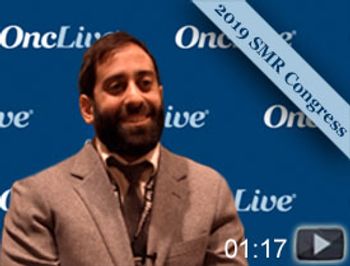
Alexander N. Shoushtari, MD, discusses the significance of the findings from the first-in-human trial evaluating tebentafusp, a TCR–CD3 bispecific, in patients with advanced melanoma.
Glembatumumab vedotin (CDX-011) induced a disease control rate of 61% in patients with metastatic uveal melanoma, despite a low a low objective response rate of 6%.

The combination of adjuvant nivolumab and ipilimumab led to a 3-year relapse-free survival rate of 71% in patients with high-risk resected stage IIIC/IV melanoma.
A doubling in 3-year relapse-free survival rates remained consistent across patient subgroups treated with dabrafenib and trametinib, when compared with placebo, for patients with BRAF-mutant stage III melanoma.
Rodabe N. Amaria, MD, department of Melanoma Oncology, division of Cancer Medicine, The University of Texas MD Anderson Cancer Center, discusses using genetically modified tumor infiltrating lymphocytes (TILs) in patients with advanced melanoma.

Dirk Schadendorf, MD, head of department for Dermatology, Venerology and Allergology, University Hospital Essen, Germany, discusses the efficacy of combining targeted therapy with checkpoint inhibitors for patients with melanoma.

The combination of nivolumab and ipilimumab showed an intracranial response rate of 46% for asymptomatic patients with melanoma brain metastases who had not received prior local therapy to the brain.
Adding the immune stimulator ImmunoPulse IL-12 to pembrolizumab (Keytruda) produced promising activity among patients with melanoma identified as unlikely responders to anti–PD-1 therapies.

The combination of anti–PD-1/PD-L1 immunotherapy with BRAF plus MEK inhibitors is advancing rapidly following early promising phase results for patients with BRAF-mutant advanced melanoma.

Immunotherapy has led a transformation for melanoma care but combinations of anti–PD-1 and CTLA-4 agents are toxic and biomarkers are not available to help personalized treatment, calling for further research into less toxic and more effective options.