
Carfilzomib (Kyprolis) administered once weekly at 70 mg/m2 with dexamethasone resulted in a prolonged PFS compared with the standard twice-weekly schedule in patients with relapsed/refractory multiple myeloma.
Carfilzomib (Kyprolis) administered once weekly at 70 mg/m2 with dexamethasone resulted in a prolonged PFS compared with the standard twice-weekly schedule in patients with relapsed/refractory multiple myeloma.
The addition of atezolizumab (Tecentriq) to frontline carboplatin and nab-paclitaxel (Abraxane) delayed the risk of progression or death by 29% compared with chemotherapy alone for patients with advanced squamous NSCLC.
The highly-selective RET inhibitor LOXO-292 demonstrated robust clinical activity across RET-altered solid tumors, including in patients with brain metastases and the RET V804M gatekeeper mutation.
Adding ibrutinib to rituximab lowered the risk of disease progression or death by 80% versus rituximab alone in patients with Waldenström macroglobulinemia.
bb2121 had a median progression-free survival of 11.8 months and a median duration of response of 10.8 months for patients with relapsed/refractory heavily pretreated multiple myeloma.
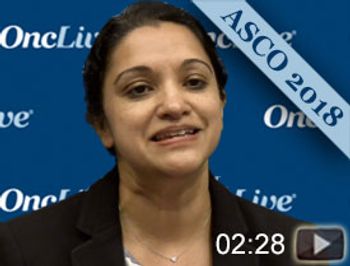
Supriya Gupta Mohile, MD, MS, professor of medicine and surgery, James Wilmot Cancer Institute, director, Geriatric Oncology Clinic, University of Rochester, discusses pooled findings with a geriatric assessment for older patients with cancer in an interview with OncLive during the 2018 ASCO Annual Meeting.
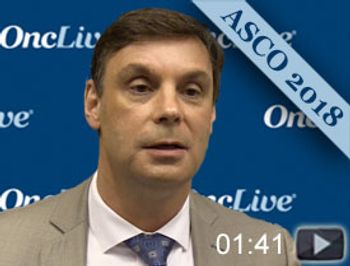
Daniel J. George, MD, professor of medicine, surgery, member, Duke Cancer Institute, discusses the results of the prospective multicenter Abi Race trial, which compared outcomes of African-American and Caucasian patients with metastatic castration-resistant prostate cancer (mCRPC) treated with abiraterone acetate (Zytiga) and prednisone.
Adding pomalidomide (Pomalyst) to bortezomib (Velcade) and low-dose dexamethasone reduced the risk of disease progression or death by 39% in patients with relapsed/refractory multiple myeloma with prior exposure to lenalidomide.
The addition of venetoclax to carfilzomib and dexamethasone demonstrated a 100% objective response rate with a very good partial response or better rate of 86% for patients with relapsed/refractory t(11;14) multiple myeloma.
A study that compared costs of treatment for metastatic colorectal cancer in Western Washington and the province of British Columbia in Canada found that prices were more than twice as high for the US patients than for their Canadian counterparts, with no significant difference in outcomes.
Evaluating health-related concerns as part of routine care for elderly patients with advanced cancer significantly improved doctor-patient communication and patient satisfaction.
Black men with metastatic castration-resistant prostate cancer may experience greater benefits from chemotherapy and hormone-targeting treatment than their white counterparts.
Women with head and neck cancer may be severely undertreated and have higher death rates compared with their male counterparts.
Key opinion leaders spoke with OncLive ahead of the 2018 ASCO Annual Meeting to share the top abstracts they believe could have the greatest impact on clinical practice and patient outcomes across lymphomas, gastrointestinal cancers, genitourinary cancers, and lung cancer.
Next-generation sequencing in metastatic non-small cell lung cancer can save Center for Medicare and Medicaid Services payers $1.4 million to $2.1 million.
Patients who used mobile and sensor technology to track their symptoms demonstrated reduced severity of their symptoms compared with patients who received standard care.
A total 1.9% of more than 7.6 million current and former heavy smokers in the United States underwent lung cancer screening in 2016, suggesting that it remains inadequate despite USPTF recommendations.
A shorter 6-month course of adjuvant trastuzumab (Herceptin) was found to be noninferior for disease-free survival compared with the standard 12-month schedule for patients with HER2-positive early breast cancer.
Adding nelarabine to escalating-dose methotrexate induced a 4-year disease-free survival rate of 91% in a cohort of pediatric and young adult patients with newly diagnosed T-cell cancers.
Both cognitive behavior therapy for insomnia (CBT-I) and acupuncture produced clinically meaningful improvements in insomnia severity scores for cancer survivors, but data from the randomized CHOICE clinical trial showed that CBT-I was more effective overall for reducing the severity of insomnia.
David J. Andorsky, MD, medical oncology/hematology, Rocky Mountain Cancer Centers, discusses the phase IIIb randomized MAGNIFY study of lenalidomide (Revlimid) plus rituximab (Rituxan) followed by maintenance therapy in relapsed/refractory non-Hodgkin lymphoma, focusing on a cohort of patients with follicular lymphoma.
Douglas A. Levine, MD, professor, Department of Obstetrics and Gynecology, director, Division of Gynecologic Oncology, NYU Langone Medical Center, discusses the PARP inhibitor landscape for patients with ovarian cancer.
Randall A. Oyer, MD, oncology program, medical director, Lancaster General Health, treasurer, Association of Community Cancer Centers, discusses some of the tools clinicians could potentially use for their patients with cancer.
Robert Siegel, MD, chair, professor of medicine, director, Division of Hematology/Oncology, George Washington University, discusses the adverse events (AEs) associated with radiation therapy (RT) for patients with oropharyngeal squamous cell carcinomas.
Andrea Apolo, MD, medical oncologist, chief of the bladder cancer section of the Genitourinary Malignancies Branch, National Cancer Institute, discusses the side effects of cabozantinib (Cabometyx) plus immunotherapy agents in bladder cancer.

Preliminary evidence suggests that abemaciclib penetrated brain metastases and had antitumor activity in patients with hormone receptor-positive, HER2-negative metastatic breast cancer.
David J. Pinato, MD, PhD, NIHR Academic Clinical Lecturer in Medical Oncology, resident, Royal Brompton Hospital and Imperial College London, discusses an analysis of intra-tumor heterogeneity in primary and metastatic hepatocellular carcinoma (HCC).
Ann-Lii Cheng, MD, Distinguished Professor, Department of Internal Medicine, National Taiwan University College of Medicine Director, Graduate Institute of Oncology, director, Department of Medical Oncology, National Taiwan University College of Medicine, discusses the phase III trial of lenvatinib (Lenvima) compared with sorafenib (Nexavar) in patients with hepatocellular carcinoma (HCC).
Rami S. Komrokji, MD, clinical director, Hematologic Malignancies, Moffitt Cancer Center, discusses molecular testing for patients with myelodysplastic syndromes (MDS).
Neeraj Agarwal, MD, associate professor, Division of Oncology, Department of Medicine, University of Utah School of Medicine, Huntsman Cancer Institute, discusses the STAMPEDE and LATITUDE trials for patients with prostate cancer.