
Charles S. Fuchs, MD, MPH, director, Yale Cancer Center, physician-in-chief, Smilow Cancer Hospital, 2017 Giant of Cancer Care in Gastrointestinal Cancer, discusses immunotherapy in gastric cancer.
Charles S. Fuchs, MD, MPH, director, Yale Cancer Center, physician-in-chief, Smilow Cancer Hospital, 2017 Giant of Cancer Care in Gastrointestinal Cancer, discusses immunotherapy in gastric cancer.
Robert Ferris, MD, PhD, vice chair for Clinical Operations, associate director for Translational Research, and co-leader of the Cancer Immunology Program at the University of Pittsburgh Cancer Institute discusses the RTOG 3504 study in head and neck cancer.
Results from a phase I/II study demonstrated that enasidenib (AG-221) is well-tolerated and associated with a median overall survival of more than 9 months in patients with IDH2-mutated relapsed/refractory acute myeloid leukemia.
Andrzej Jakubowiak, MD, PhD, professor of medicine, director, Myeloma Program, The University of Chicago Medicine, discusses a phase I study of daratumumab (Darzalex) in combination with carfilzomib (Kyprolis), lenalidomide (Revlimid), and dexamethasone (KRd) in patients with newly diagnosed multiple myeloma.
Paul A. Hamlin, MD, of Memorial Sloan Kettering Cancer Center, discusses a phase I dose-escalation study of buparlisib plus ibrutinib (Imbruvica) in patients with mantle cell lymphoma (MCL), follicular lymphoma (FL), and diffuse large B-cell lymphoma (DLBCL).
Data from phase I pooled expansion cohorts showed that mirvetuximab soravtansine (IMGN853) induced a solid response rate in patients with platinum-resistant ovarian cancer who had received 1 to 3 prior lines of therapy.
Charles A. (Trey) Leath, III, MD, associate professor, UAB School of Medicine, UAB Comprehensive Cancer Center, discusses ongoing trials for patients with endometrial cancer.
Daniel P. Petrylak, MD, professor of Medicine (Medical Oncology) and Urology, co-director, Signal Transduction Research Program, Yale Cancer Center, 2017 Giant of Cancer Care in Genitourinary Cancer, discusses the KEYNOTE-045 trial investigating pembrolizumab (Keytruda) versus physician’s choice of chemotherapy for patients with urothelial carcinoma.
In recognition of the potential for real-world evidence to significantly improve the way patients with cancer are treated, CancerLinQ has formed new partnerships with the US government that are expected to coordinate the sharing of patient data and incorporate that information into the FDA regulatory process.
Patients with ovarian cancer who had a partial response to previous platinum-based therapy had superior progression-free survival with or without germline BRCA mutations after treatment with niraparib (Zejula), according to a posthoc analysis of data from the ENGOT-OV16/NOVA trial presented at the 2017 ASCO Annual Meeting.
Ian W. Flinn, MD, PhD, director, Blood Cancer Research Program, principal investigator, Sarah Cannon Research Institute, discusses 5-year follow-up of the BRIGHT study, which explored the combination of bendamustine and rituximab (BR) versus R-CHOP/R-CVP as a first-line treatment for patients with mantle cell lymphoma (MCL) or indolent non-Hodgkin lymphoma (iNHL).

Patients with T790M-positive non–small cell lung cancer had superior outcomes when treated with osimertinib (Tagrisso) for central nervous system metastases, according to phase III results presented at the 2017 ASCO Annual Meeting.
Paolo A. Ascierto, MD, director at the Unit of Melanoma, Cancer Immunotherapy and Innovative Therapy, National Tumor Institute Fondazione G. Pascale, discusses findings from a phase Ib/II dose-escalation study evaluating the triple combination therapy with encorafenib, binimetinib, and ribociclib (Kisqali) in patients with BRAF V600-mutant solid tumors and melanoma.
In follow-up results to data first presented in December 2016, investigators found that the combination of olaparib (Lynparza) and cediranib maleate continued to show superior progression-free survival compared with olaparib alone for women with BRCA-negative recurrent platinum-sensitive ovarian cancer.
Sundar Jagannath, MD, director of the Multiple Myeloma program and professor of medicine at the Tisch Cancer Institute, Mount Sinai, discusses chimeric antigen receptor (CAR) T-cell therapy for patients with multiple myeloma.
Rebecca C. Arend, MD, assistant professor, UAB School of Medicine, UAB Department of Obstetrics and Gynecology, UAB Comprehensive Cancer Center, discusses personalized medicine for patients with endometrial cancer.
Tanios Bekaii-Saab, MD, professor of Medicine, Mayo Clinic, discusses the results of the phase III IDEA project for patients with stage III colon cancer.
Toni K. Choueiri, MD, clinical director, Lank Center for Genitourinary Oncology, director, Kidney Cancer Center, senior physician, Dana-Farber Cancer Institute, discusses phase I results of axitinib (Inlyta) plus avelumab (Bavencio) for the treatment of patients with metastatic renal cell carcinoma (RCC).
Concurrent treatment with CTL-119 cell therapy and ibrutinib (Imbruvica) led to complete marrow clearance of leukemic cells in 8 of 9 evaluable patients with heavily pretreated or genetically high-risk chronic lymphocytic leukemia, results of a pilot study showed.
Combining the PD-L1 inhibitor avelumab (Bavencio) with the VEGF inhibitor axitinib (Inlyta) as a frontline regimen induced a response rate of 58.2% in patients with advanced renal cell carcinoma, according to findings from the phase Ib JAVELIN Renal 100 trial presented at the 2017 ASCO Annual Meeting.
Marina Chiara Garassino, MD, medical consultant in the Medical Oncology Division, Fondazione IRCCS Istituto Nazionale dei Tumori, Milan, Italy, discusses a subset analysis of the AURA3 trial, which demonstrated significant clinical activity with osimertinib (Tagrisso) for patients with EGFR T790M-mutation positive non–small cell lung cancer (NSCLC) who also harbor brain metastases.
H. Jack West, MD, a thoracic oncologist of Swedish Cancer Institute at Swedish Medical Center, discusses some potential emerging changes coming to the field of EGFR-mutant non–small cell lung cancer (NSCLC), including next-generation EGFR inhibitors such as osimertinib (Tagrisso) that is now being explored in the FLAURA trial as a frontline treatment for these patients.
Ali McBride, PharmD, MS, BCPS, clinical coordinator, Hematology/Oncology, secretary, Association of Community Cancer Centers (ACCC), discusses the importance with and excitement of oral oncolytics.
Gunter von Minckwitz, MD, PhD, president of the German Breast Group in Neu-Isenburg, Germany, discusses the phase III results of the APHINITY trial, which explored the addition of pertuzumab (Perjeta) to standard postoperative trastuzumab (Herceptin) therapy for patients with HER2-positive early breast cancer.
Combining the PD-1­ inhibitor pembrolizumab with the IDO1 inhibitor epacadostat led to an overall response rate of 35% in patients with advanced urothelial carcinoma.
Alice T. Shaw, MD, PhD, associate professor of medicine, Harvard Medical School, attending physician, Thoracic Cancer Program, Massachusetts General Hospital, discusses the phase III results of the international ALEX trial, which compared the alectinib (Alecensa) with crizotinib (Xalkori) in the frontline setting for patients with ALK-positive, metastatic non–small cell lung cancer (NSCLC).

The combination of the IDO inhibitor epacadostat and nivolumab demonstrated promising signs of activity for patients with squamous cell carcinoma of the head and neck and those with melanoma.
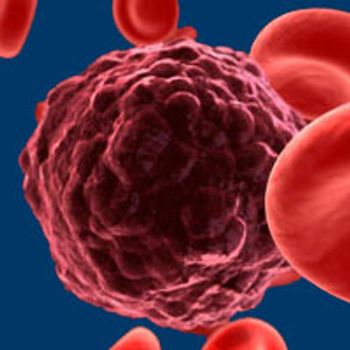
Early results from a Chinese study showed that 33 of 35 patients (94%) with relapsed or refractory multiple myeloma experienced clinical remission after treatment with chimeric antigen receptor T cells targeting B-cell maturation protein.

Dacomitinib, a second-generation EGFR inhibitor, reduced the risk of disease progression by more than 40% and resulted in an average 6.5-month improvement in response duration compared with gefitinib (Iressa) as a first-line treatment for patients with advanced, EGFR-mutant non–small cell lung cancer.
The addition of pertuzumab (Perjeta) to standard postoperative trastuzumab (Herceptin) therapy for patients with HER2-positive early breast cancer slightly improved the rate of recurrence overall but had a greater benefit for individuals with higher-risk disease, particularly as more time elapsed, according to early results from the phase III APHINITY trial.