

Co-inhibition of BRAF and MEK pathways with dabrafenib and trametinib continued to be superior to sole BRAF inhibition with vemurafenib in patients with unresectable metastatic melanoma at 3 years.

Your AI-Trained Oncology Knowledge Connection!
Co-inhibition of BRAF and MEK pathways with dabrafenib and trametinib continued to be superior to sole BRAF inhibition with vemurafenib in patients with unresectable metastatic melanoma at 3 years.
The PARP1/2 inhibitor niraparib significantly improved progression-free survival in patients with platinum-sensitive recurrent ovarian cancer.

An interim analysis of an ongoing study showed potential for reducing time and improving acceptance of testing and counseling for patients with ovarian cancer.
Abemaciclib plus tamoxifen, trastuzumab, or one of many endocrine-based therapies demonstrated significant antitumor activity and clinical benefit in patients with advanced breast cancer.
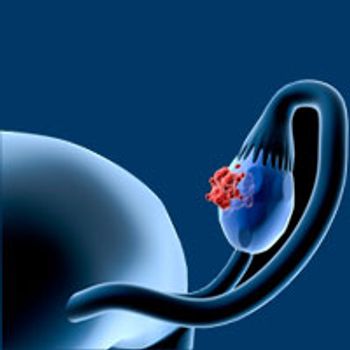
The addition of bevacizumab to neoadjuvant platinum-based chemotherapy led to a significantly increased rate of complete resection at interval debulking in advanced ovarian cancer.

Cabozantinib plus nivolumab demonstrated promising activity in the second-line setting and beyond at all dose levels tested in patients with advanced/refractory genitourinary cancers.
Jasgit Sachdev, MD, clinical associate professor at Translational Genomics Research Institute, discusses a phase I study of PF-06647020, an antibody-drug conjugate targeting protein tyrosine kinase 7 (PTK7) in patients with platinum-resistant ovarian cancer.
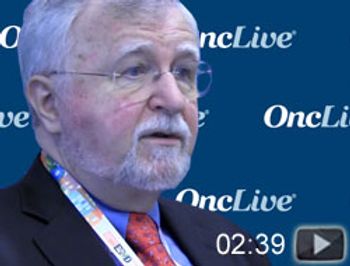
Gabriel N. Hortobagyi, MD, professor of Medicine at The University of Texas MD Anderson Cancer Center, discusses findings from the phase III MONALEESA-2 trial, which looked at the addition of the CDK 4/6 inhibitor ribociclib to endocrine therapy in postmenopausal women with hormone receptor (HR)-positive metastatic breast cancer.

Jean-Yves Blay, MD, PhD, professor of medicine at the Université Claude Bernard, Lyon, France, and the scientific director of the Canceropole Lyon Rhône Alpes, discusses a subgroup analysis of leiomyosarcoma patients from a phase III study of eribulin compared to dacarbazine (DTIC) in patients with advanced liposarcoma or leiomysosarcoma.

Men with bone-metastatic castration-resistant prostate cancer appeared to derive additional benefits from treatment with radium-223 with concomitant bone-targeted therapies, according to data from an extended-access program.
Adding a Toll-like receptor 8 agonist to standard care for patients with recurrent or metastatic squamous cell carcinoma of the head and neck failed to improve progression-free survival.

Richard S. Finn, MD, associate professor of Medicine at the UCLA David Geffen School of Medicine, discusses the phase III PALOMA-2 trial during an interview at the 2016 ESMO Congress.

Giorgio Scagliotti, MD, PhD, professor of Medical Oncology, University of Torino, discusses the design and the results of the phase III ASCEND-5 study during an interview at the 2016 ESMO Congress.

The addition of pembrolizumab (Keytruda) to frontline platinum-based chemotherapy for advanced non–small cell lung cancer almost doubled the response rate compared with chemotherapy alone.

First-line treatment with fulvestrant led to significantly better progression-free survival compared with anastrozole for patients with HR-positive advanced breast cancer.
Cabozantinib (Cabometyx) reduced the risk of progression or death by 31% compared with sunitinib (Sutent) in the frontline setting for patients with metastatic renal cell carcinoma.
Early results from a pre-planned interim analysis in the KEYNOTE-052 phase II trial of first-line pembrolizumab in cisplatin-ineligible patients with metastatic urothelial cancer demonstrated antitumor activity and a favorable response rate.

First-line therapy with nivolumab failed to improve progression-free survival in PD-L1 positive non-small cell lung cancer compared with standard chemotherapy.

A technically negative trial in high-risk adult soft tissue sarcoma nonetheless produced a significant survival benefit for anthracycline-based neoadjuvant chemotherapy.

Adjuvant sunitinib prolonged disease-free survival by 1.2 years compared with placebo following nephrectomy for patients with high-risk clear cell renal cell carcinoma.

Atezolizumab (Tecentriq) reduced the risk of death by 27% compared with docetaxel in patients with advanced non–small cell lung cancer following the failure of platinum-based chemotherapy.

Progression-free survival was more than 3 times longer with ceritinib (Zykadia) than with chemotherapy, the current second-line standard, in patients with advanced ALK-positive non–small cell lung cancer who progressed after first-line crizotinib.

Safety, efficacy, and biomarker results from the phase II CheckMate-275 trial of the PD-1 inhibitor nivolumab (Opdivo) that support FDA and European Medicines Agency applications were reported at the 2016 ESMO Congress.
Mansoor Raza Mirza, MD, chief oncologist, Rigshospitalet, Copenhagen University Hospital, discusses the results of the phase III NOVA trial during an interview at the 2016 ESMO Congress.

Maria Ignez Braghiroli, MD, medical oncologist, Instituto do Câncer do Estado de São Paulo, discusses clinical characteristics and outcomes of patients with NRAS-mutant metastatic colorectal cancer (mCRC) during an interview at the 2016 ESMO Congress.

Single-agent pembrolizumab improved overall and progression-free survival compared with doublet chemotherapy for untreated patients with advanced non–small cell lung cancer who expressed PD-L1 on ≥50% of cells.

A fourth of patients with heavily pretreated advanced ovarian cancer achieved objective responses with novel antibody-drug conjugate targeting protein tyrosine kinase 7.

Caroline Robert, MD, PhD, Head of Dermatology, Institute Gustave-Roussy, discusses the results of the phase III COMBI-v study in BRAF-mutant melanoma during an interview at the ESMO 2016 Congress.

Jordi Bruix, MD, head of the Barcelona Clinic Liver Cancer at University of Barcelona, discusses the results of the phase III RESORCE trial in hepatocellular carcinoma (HCC) during an interview at the 2016 ESMO Congress.

The oral multikinase inhibitor regorafenib (Stivarga) has the potential to become the standard of care as second-line treatment in patients with previously treated hepatocellular carcinoma who are unsuitable for loco-regional therapy and have progressed on sorafenib.