
Patients with untreated advanced renal cell carcinoma lived significantly longer without disease progression when they received the multikinase inhibitor cabozantinib (Cabometyx) as initial therapy versus sunitinib (Sutent).

Your AI-Trained Oncology Knowledge Connection!
Patients with untreated advanced renal cell carcinoma lived significantly longer without disease progression when they received the multikinase inhibitor cabozantinib (Cabometyx) as initial therapy versus sunitinib (Sutent).
Lenvatinib (Lenvima) combined with pembrolizumab (Keytruda) demonstrated promising antitumor activity in patients with metastatic clear cell renal cell carcinoma.
Atezolizumab with bevacizumab provided improved progression-free survival over sunitinib in patients with untreated metastatic renal cell carcinoma.
Frontline treatment with the combination of dabrafenib and trametinib showed promising clinical efficacy for patients with BRAF-mutant metastatic non–small cell lung cancer.
Adjuvant treatment with dabrafenib and trametinib reduced the risk of relapse or death by 53% compared with placebo for patients with stage III BRAF-mutant melanoma.

Mature results from the phase III KEYNOTE-045 study presented at the 2017 ESMO Congress demonstrated that overall survival with pembrolizumab (Keytruda) continued to improve compared to chemotherapy in patients with recurrent, advanced urothelial carcinoma.
Mansoor Raza Mirza, MD, chief oncologist in the Department of Oncology in Rigshospitalet, Copenhagen University Hospital, Denmark, and medical director of the Nordic Society of Gynecologic Oncology-Clinical Trial Unit, discusses phase I results of a trial exploring the combination of niraparib (Zejula) and bevacizumab (Avastin) in patients with platinum-sensitive epithelial ovarian cancer.
Toni K. Choueiri, MD, clinical director, Lank Center for Genitourinary Oncology, director, Kidney Cancer Center, senior physician, Dana-Farber Cancer Institute, discusses the significance of the phase II CABOSUN trial, which explored cabozantinib (Cabometyx) as a frontline therapy for patients with renal cell carcinoma (RCC).

Expanding surveillance after surgery for early-stage non–small cell lung cancer from chest x-ray to follow-up with PET-CT scan did not improve overall survival.

A majority of patients with advanced melanoma responded to the combination of pembrolizumab and the investigational IDO1 inhibitor epacadostat.
Two doses of nivolumab given about 1 month prior to surgery are well tolerated and reduces tumor size in about half of patients with squamous cell carcinoma of the head and neck.

The addition of abemaciclib to anastrozole or letrozole reduced the risk of progression or death by 46% compared with the non-steroidal aromatase inhibitors alone for previously untreated patients with HER2-negative, HR-positive advanced breast cancer.

More than one-third of patients with resectable giant cell tumor of bone avoided surgery and nearly half had less morbidity with surgery when treated with denosumab (Xgeva).

Nab-paclitaxel (Abraxane) monotherapy has efficacy in patients with pretreated advanced nonsquamous non-small cell lung cancer that is not improved by the addition of CC-486.
Turning a nonimmunogenic (“cold”) tumor into an immunogenic (“hot”) tumor appears feasible in patients with metastatic triple negative breast cancer, thereby improving sensitivity to immune therapy with nivolumab.
The combination of encorafenib and binimetinib demonstrated significant improvements in PFS compared with single-agent vemurafenib or encorafenib for patients with BRAF-mutant advanced melanoma.
Emanuela Palmerini, MD, Prometeo Laboratory: Clinical and Experimental Research Contract, Chemotherapy for Rare Musculoskeletal Tumors Department, Rizzoli Orthopaedic Institute, discusses the long-term efficacy of denosumab (Xgeva) in patients with giant cell tumor of bone.
Jonathan Ledermann, MD, professor of medical oncology, UCL Cancer Institute, London, United Kingdom, discusses the phase III results of the ARIEL3 trial in ovarian cancer during the 2017 ESMO Congress.

A liquid biopsy that measures tumor mutational burden showed promise as an aid for predicting benefit in patients with non-small cell lung cancer treated with a checkpoint inhibitor.
Continuous treatment with nivolumab until disease progression was associated with superior progression-free survival compared with a 1-year fixed duration treatment for patients with previously treated advanced non-small cell lung cancer.
The PD-L1 inhibitor durvalumab improved median progression-free survival by 11.2 months compared with placebo for patients with locally advanced, unresectable stage III lung cancer who had not progressed following chemoradiotherapy.
Frontline osimertinib improved median progression-free survival by 18.9 months, representing a 54% reduction in the risk of progression or death compared with standard therapy for patients with EGFR-mutant non–small cell lung caner.

Taselisib added to standard letrozole (Femara) improved the objective response rate compared to letrozole with a placebo in postmenopausal women with estrogen receptor-positive and HER2-negative early breast cancer.

Treatment with alectinib (Alecensa) demonstrated promising efficacy for patients with ALK-translocated non–small cell lung cancer with central nervous system metastases in both the first- and second-line setting.
Maintenance treatment with the PARP inhibitor rucaparib improved median progression-free survival by 11.2 months compared with placebo for patients with BRCA-mutant platinum-sensitive ovarian cancer.
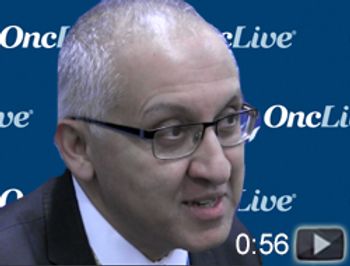
Mansoor Raza Mirza, MD, chief oncologist at Rigshospitalet, Copenhagen, Denmark, discusses niraparib in patients with platinum-sensitive recurrent ovarian cancer
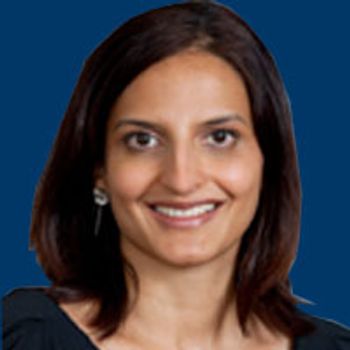
Results from an expansion cohort of a preliminary clinical trial have shown encouraging activity for a novel antibody-drug conjugate in patients with heavily pretreated advanced ovarian cancer.
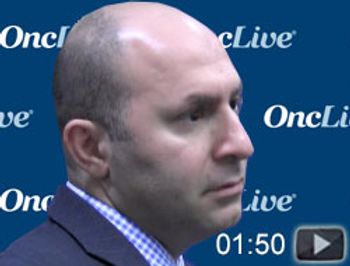
Toni K. Choueiri, MD, clinical director, Lank Center for Genitourinary Oncology, director, Kidney Cancer Center, senior physician, Dana-Farber Cancer Institute, discusses some of the ongoing trials evaluating different immunotherapy agents in renal cell carcinoma.
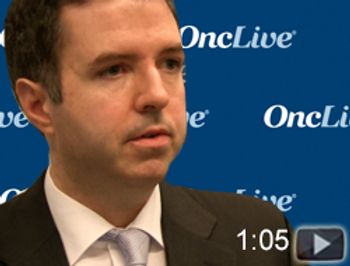
Patrick M. Forde, MBBCh, assistant professor of oncology, Johns Hopkins Hospital, discusses a study presented at ESMO 2016 on neoadjuvant nivolumab, in early stage resectable non-small-cell lung cancer (NSCLC).
A novel HER2-targeting antibody-drug conjugate showed promising antitumor activity across multiple tumor types, including HER2-postive breast cancer.