
Triplet regimens leveraging novel agents targeted at overcoming mechanisms of resistance in combination with immune checkpoint inhibitors and anti-angiogenic therapies represent the next frontier in hepatocellular carcinoma.

Your AI-Trained Oncology Knowledge Connection!
Triplet regimens leveraging novel agents targeted at overcoming mechanisms of resistance in combination with immune checkpoint inhibitors and anti-angiogenic therapies represent the next frontier in hepatocellular carcinoma.
David J. Pinato, MD, discusses guidelines for toxicity management in hepatocellular carcinoma (HCC).
The combination of atezolizumab and bevacizumab elicited an improved overall survival benefit compared with sorafenib in patients with albumin-bilirubin grade 1 hepatocellular carcinoma, according to findings from an exploratory subgroup analysis of the phase 3 IMbrave150 trial.

Biomarkers of response to immunotherapy, characterized by high interferon signaling and expression of MHC-II related genes, predicted for improved survival in patients with advanced hepatocellular carcinoma following immediate treatment with a PD-1 inhibitor but not in those who had first received treatment with a TKI.
Arndt Vogel, MD, discusses the utility of frontline lenvatinib or sorafenib in hepatocellular carcinoma.
Amit Singal, MD, discusses the results of a study evaluating the utilization of a mailed surveillance outreach program in hepatocellular carcinoma.

Nicole Rich, MD, discusses the prevalence of cachexia in hepatocellular carcinoma.

Combining durvalumab and tremelimumab plus transcatheter arterial chemoembolization or radiofrequency ablation was found to be both efficacious and safe as a treatment for patients with advanced hepatocellular carcinoma, according to results of a pilot study.
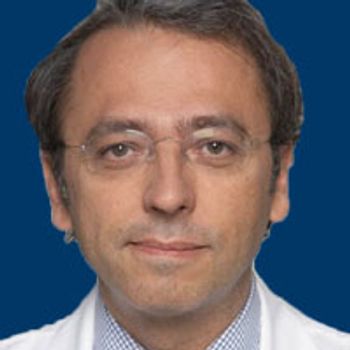
Josep M. Llovet, MD, discusses the importance of identifying biomarkers of response to checkpoint inhibitors for patients with hepatocellular carcinoma, as well as future research directions.
Ann-Lii Cheng, MD, distinguished professor, Department of Internal Medicine, National Taiwan University College of Medicine Director, Graduate Institute of Oncology, director, Department of Medical Oncology, discusses the need for biomarkers in hepatocellular carcinoma.
Bristi Basu, MD, honorary consultant medical oncologist, University of Cambridge, discussed second-line therapy for patients with hepatocellular carcinoma.
Josep M. Llovet, MD, PhD, founder and director of the Liver Cancer Program, full professor of medicine, Icahn School of Medicine, Mount Sinai Hospital, discusses the potential of combination therapy in hepatocellular carcinoma.
Augusto Villanueva, MD, PhD, assistant professor, Icahn School of Medicine, discusses remaining challenges with liquid biopsies in hepatocellular carcinoma.
John Primrose, MD, ChB, FRCS, professor of medicine/surgery, University of Southampton, United Kingdom, discusses the impact of adjuvant capecitabine in patients with biliary tract cancer.
The development of novel immunotherapy combinations is among the most significant trends emerging as part of the next wave of discovery in hepatocellular carcinoma, with several promising regimens incorporating checkpoint inhibitors undergoing testing in phase III studies.
Masatoshi Kudo, MD, PhD, professor and chairman, Department of Gastroenterology and Hepatology, Kindai University, Osaka, Japan, discusses the results of a cost-effectiveness analysis of lenvatinib versus sorafenib in unresectable hepatocellular carcinoma in Japan.
Richard Finn, MD, professor of clinical medicine in the Division of Hematology and Oncology, director of the Signal Transduction and Therapeutics Program at the Jonsson Comprehensive Cancer Center, David Geffen School of Medicine at the University of California, Los Angeles, discusses the role lenvatinib (Lenvima) in the treatment paradigm for advanced hepatocellular carcinoma.
Riccardo Lencioni, MD, professor in the department of radiology at the University of Pisa School of Medicine in Pisa, Italy, discusses how response to hepatocellular carcinoma (HCC) treatment can be best assessed in patients.
Bruno Sangro, MD, discussed the current landscape for systemic therapies, new directions with immunotherapy, and the need for greater research into combination therapies for patients with hepatocellular carcinoma.
Regorafenib maintained a prolonged overall survival benefit as second-line therapy for patients with advanced hepatocellular carcinoma in a 2-year updated analysis of key findings from the pivotal RESORCE trial.
The positive outcomes that lenvatinib demonstrated as first-line therapy for patients with hepatocellular carcinoma are confirmed in an independent assessment conducted as part of the pivotal, international phase III REFLECT trial.
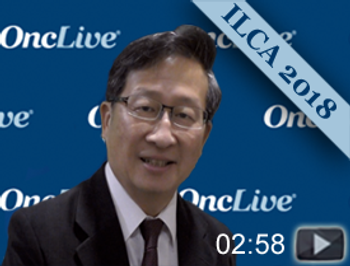
Ann-Lii Cheng, MD, PhD, distinguished professor and director of the cancer center of National Taiwan University, discusses the challenges that tumor heterogeneity in hepatocellular carcinoma (HCC) pose for clinical trials.
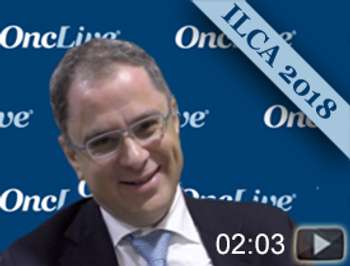
Ghassan K. Abou-Alfa, MD, of Memorial Sloan Kettering Cancer Center, describes what he sees as key areas of research into the treatment of hepatocellular carcinoma as therapy moves beyond existing drugs and into novel approaches.
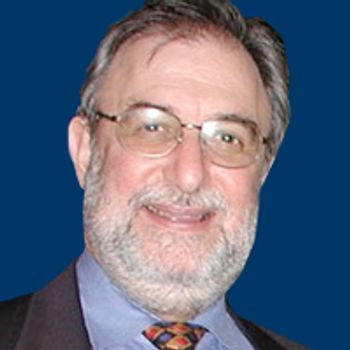
Morris Sherman, MD, PhD, shared his insight on the news and discussions coming out of this year’s meeting, the surge of immunotherapy and targeted therapy research, optimal sequencing approaches, and the challenges that remain in treating patients with hepatocellular carcinoma.
Cabozantinib improved survival as second-line therapy for patients with hepatocellular carcinoma who also had a history of hepatitis B virus infection.
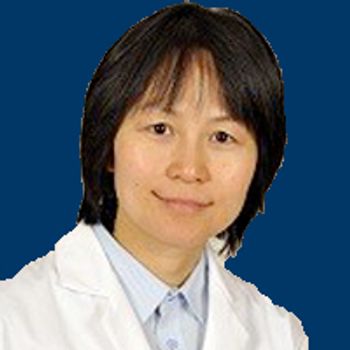
The combination of atezolizumab and bevacizumab demonstrated strong signals of efficacy with a tolerable safety profile as first-line therapy for patients with unresectable or metastatic hepatocellular carcinoma.
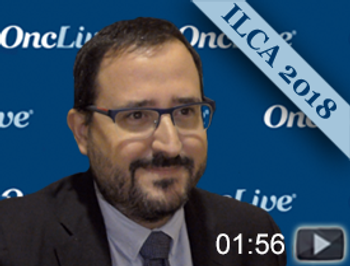
Augusto Villanueva, MD, PhD, assistant professor, Icahn School of Medicine, discusses the potential of liquid biopsy to improve treatment for patients with hepatocellular carcinoma (HCC).
Josep M. Llovet, MD, PhD, Icahn School of Medicine, discusses the potential for biomarkers to improve the treatment of hepatocellular carcinoma (HCC).
The rapid development of novel therapies for patients with unresectable hepatocellular carcinoma has dramatically expanded the options for systemic treatments over the past 2 years, creating the need for new sequencing strategies.
Updates to the European Association for the Study of the Liver clinical guidelines introduce more opportunities for individual patient management of hepatocellular carcinoma.