

Mattia D'Agostino, MD, discusses factors that could lead to unsustained minimal residual disease negativity in patients with newly diagnosed multiple myeloma who are transplant eligible.
Mattia D'Agostino, MD, discusses factors that could lead to unsustained minimal residual disease negativity in patients with newly diagnosed multiple myeloma who are transplant eligible.

Induction and consolidation therapy with a combination comprised of daratumumab, carfilzomib, lenalidomide, and dexamethasone allowed 70% of patients with high-risk, newly diagnosed multiple myeloma to complete a second autologous stem cell transplant.
Isatuximab plus pomalidomide and dexamethasone elicited favorable progression-free survival and proved tolerable in pretreated patients with relapsed/refractory multiple myeloma.

Isatuximab-containing regimens displayed favorable toxicity in patients with relapsed/refractory multiple myeloma in a real-world study.
Patient outcomes across the multiple myeloma landscape have vastly improved with the approval of multiple agents in the treatment armementarium, such as belantamab mafodotin-blmf, selinexor, and ciltacabtagene autoleucel.

The addition of ixazomib to daratumumab, pomalidomide, and dexamethasone has elicited deep and durable response rates with a manageable safety profile as salvage therapy in patients with relapsed/refractory multiple myeloma.
Patients with multiple myeloma can mitigate the common oral and dermatologic toxicities associated with talquetamab with early intervention tactics.

The dual immunotherapy combination comprised of nivolumab given at 1 mg/kg and ipilimumab given at 3 mg/kg provided durable responses and long-term survival benefit in patients with advanced hepatocellular carcinoma following treatment with sorafenib.

Recent data highlight the value of the newly approved indications for nivolumab plus ipilimumab and nivolumab plus chemotherapy for patients with advanced esophageal squamous cell carcinoma.

Pembrolizumab monotherapy continued to demonstrate durable antitumor activity with promising overall survival in patients with advanced hepatocellular carcinoma who received prior treatment with sorafenib, according to updated data from cohort 1 of the phase 2 KEYNOTE-224 trial.

Treatment with frontline panitumumab and mFOLFOX6 led to a significant improvement in overall survival, plus higher response rates and R0 resection rates, compared with bevacizumab and mFOLFOX6 in patients with RAS wild-type metastatic colorectal cancer.

After HER2 was established as an actionable target in gastric cancer, its amplification has become a key biomarker of interest for other gastrointestinal cancers.
Treatment with durvalumab and concurrent radiotherapy provided a significant benefit in progression-free survival in patients with locally advanced non–small cell lung cancer, meeting the primary end point of the phase 2 DOLPHIN trial.

Although frontline treatment with avelumab resulted in a longer overall survival and progression-free survival than that observed with platinum-based chemotherapy in patients with advanced non–small cell lung cancer and high PD-L1 positivity, this difference did not achieve statistical significance.
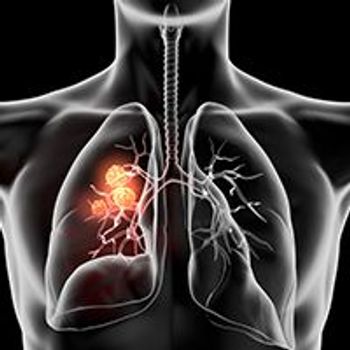
Sunvozertinib monotherapy produced meaningful responses in patients with locally advanced or metastatic non–small cell lung cancer harboring EGFR exon 20 insertion mutations who received prior treatment with platinum-based chemotherapy, according to pooled data from the phase 1 WU-KONG1 and WU-KONG2 trials, plus the phase 2 WU-KONG6 trial.

Brandon S. Sheffield, MD, discusses the economic cost of delaying treatment while conducting biomarker testing in non–small cell lung cancer.

Benjamin Levy, MD, discusses the efficacy findings of the combination of datopotamab deruxtecan and pembrolizumab, with or without chemotherapy, in non–small cell lung cancer.

There is an obvious way to double survival in patients with lung cancer in the next 5 years: remove barriers to screening, especially for high-risk populations.

The combination of datopotamab deruxtecan and pembrolizumab, with or without platinum-based chemotherapy, displayed promising efficacy and a manageable safety profile in patients with advanced/metastatic non–small cell lung cancer.

The combination of pembrolizumab and etoposide maintained benefits in overall survival (OS) and progression-free survival vs etoposide plus placebo in patients with previously untreated extensive-stage small cell lung cancer.
First-line treatment with tremelimumab, durvalumab, and chemotherapy elicited overall survival and progression-free survival benefits in patients with metastatic nonsquamous cell non–small cell lung cancer harboring STK11, KEAP1, and KRAS mutations.

Alexander I. Spira, MD, PhD, FACP, discusses additional studies investigating the use of lazertinib and amivantamab in EGFR-mutated non–small cell lung cancer.
The combination of talazoparib and temozolomide elicited an objective response rate of 39.3% in patients with extensive-stage small cell lung cancer who were relapsed or refractory to a frontline platinum-based chemotherapy regimen, according to data from a phase 2 UCLA/TRIO-US L-07 trial.

Melina Elpi Marmarelis, MD, discusses the efficacy of lazertinib and amivantamab-vmjw plus chemotherapy in patients with EGFR-mutated non–small cell lung cancer.
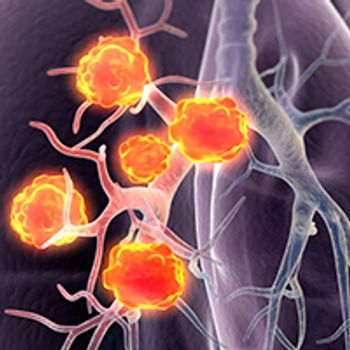
Temozolomide in combination with nivolumab induced a promising overall response rates in patients who previously received chemotherapy for extensive-stage small cell lung cancer.
New combinations and strategies are needed for patients with non–small cell lung cancer who progress after first-line chemoimmunotherapy after results of a retrospective analysis showed modest efficacy with second-line chemotherapy.

EGFR C797X mutations have become a leading mechanism of acquired resistance following treatment with the third-generation EGFR inhibitor osimertinib, outpacing MET amplification.

Amivantamab in combination with lazertinib plus carboplatin and pemetrexed elicited encouraging responses in pretreated patients with EGFR-mutant non–small cell lung cancer, according to findings from the phase 1 CHRYSALIS-2 trial.

An overall survival trend in favor of adjuvant atezolizumab over best supportive care was observed in patients with stage II to IIIA resected non–small cell lung cancer with a PD-L1 tumor cell (TC) expression of at least 1%, with a clinically meaningful OS trend noted in those with a PD-L1 TC expression of 50% or higher.

The addition of nivolumab to chemotherapy provided progression-free survival and overall survival benefits compared with chemotherapy alone in patients with stage IIIA/B non–small cell lung cancer.