
Lyudmila A. Bazhenova, MD, medical oncologist, professor of clinical medicine, University of California, San Diego, discusses new developments in RET-rearranged non–small cell lung cancer.

Your AI-Trained Oncology Knowledge Connection!
Lyudmila A. Bazhenova, MD, medical oncologist, professor of clinical medicine, University of California, San Diego, discusses new developments in RET-rearranged non–small cell lung cancer.
Heather A. Wakelee, MD, professor of medicine (oncology), Stanford University Medical Center, discusses osimertinib and its role in treating patients with EGFR-mutant non–small cell lung cancer.
With the arrival of immunotherapy to the small cell lung cancer armamentarium, combination approaches with targeted therapies are now in the pipeline to stimulate further clinical activity, such as adding PARP or CHK1 inhibitors.

The magnitude of data becoming available on immunotherapy combinations for patients with non–small cell lung cancer has made treatment selection complicated.
The early potential shown with the KRAS inhibitor AMG 510 coupled with several promising ongoing combination studies has ushered in the beginning of an exciting era for the treatment of KRAS-mutant non–small cell lung cancer.
Solange Peters, MD, PhD, of University Hospital Center Vaudois and Lausanne University in Switzerland, discusses the rapid advances in the lung cancer field and the importance of using biomarkers to create personalized immunotherapy treatments for patients.
Hossein Borghaei, DO, MS, chief of the Division of Thoracic Medical Oncology, professor of the Department of Hematology/Oncology, and co-director of the Immune Monitoring Facility at Fox Chase Cancer Center, discusses recent announcements from the CheckMate-227 trial in non–small cell lung cancer.
The frontline standard of care for patients with EGFR-mutant non–small cell lung cancer remains an EGFR TKI, most commonly osimertinib in the United States.

Checkpoint inhibitors in the neoadjuvant setting, as consolidation post-chemoradiation, or in combination with concurrent chemoradiation, are all strategies actively being pursued in the locally advanced non–small cell lung cancer setting.
The future generation of agents in lung cancer should be evaluated in improved predictive biomarker-driven trials to identify patients who are most likely to benefit or have detriment for both TKIs and checkpoint inhibitors.
Roy S. Herbst, MD, PhD, chief of medical oncology, professor of medicine, Yale Cancer Center, Smilow Cancer Hospital, discusses combinations with immunotherapy in lung cancer.
Karen L. Reckamp, MD, MS, discusses pivotal findings with the highly selective MET inhibitors, tepotinib and capmatinib in patients with MET exon 14-altered advanced non–small cell lung cancer.

There is a growing need to share information across research settings and the community, with the rapid introduction of new biomarkers, cancer detection strategies, immunotherapies, and targeted therapies. This synchronization of system biology tool datasets could help create a new digital ecosystem focused on precision medicine.

Paul A. Bunn Jr, MD, highlights the benefits of preoperative window-of-opportunity studies, specifically with immunotherapy in lung cancer.
Optimizing the methods for preclinical research with an emphasis on patient-derived models, may help speed up the translation of new treatment advances from the laboratory to the clinic.

Patients with high-risk relapsed/refractory chronic lymphocytic leukemia who failed or were intolerant of ibrutinib derived more benefit from CD19‐targeted CAR T-cell therapy when the BTK inhibitor was concurrently administered than when it was not.
Tanya Siddiqi, MD, a hematologist/oncologist at City of Hope, discusses the phase I/II TRANSCEND CLL 004 trial, which evaluated the efficacy of anti-CD19 CAR T cells in patients with relapsed/refractory chronic lymphocytic leukemia or small lymphocytic lymphoma.
Nearly three-fourths of patients with relapsed/refractory primary mediastinal large B-cell lymphoma responded to a combination of nivolumab (Opdivo) plus brentuximab vedotin (Adcetris).
The CAR T-cell therapy lisocabtagene maraleucel demonstrated high rates of response, including minimum residual disease in blood and marrow in patients with relapsed/refractory chronic lymphocytic leukemia or small lymphocytic lymphoma.
S. Vincent Rajkumar, MD, discusses the rapidly changing landscape for the treatment of multiple myeloma, the future of immunomodulatory drugs, and whether quadruplet regimens will become more frequent.
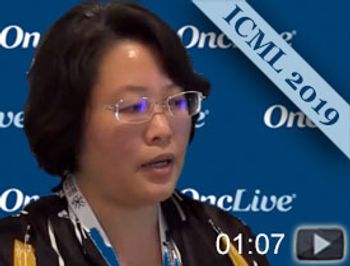
Yuqin Song, MD, PhD, chief physician and deputy director of the Lymphoma Department at Peking University Cancer Hospital, Beijing, China, discusses the updated data from the phase II trial evaluating the efficacy of zanubrutinib (BGB-3111-206) in patients with relapsed/refractory mantle cell lymphoma.
Acalabrutinib elicited high rates of response as well as prolonged survival and was well tolerated in patients with chronic lymphocytic leukemia who demonstrated intolerance to ibrutinib.
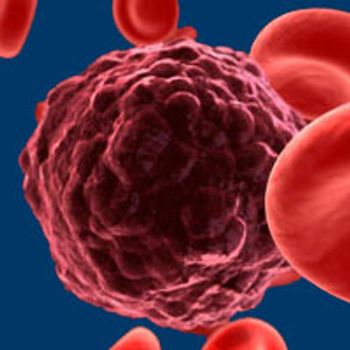
In a careful evaluation of chemotherapy‐free regimens, the combination of obinutuzumab plus venetoclax compared to obinutuzumab plus chlorambucil, objective and complete response rates, as well as progression-free survival were superior with the venetoclax combination in the overall study population and across all genetic subgroups evaluated in patients with chronic lymphocytic lymphoma.

The phase III ASCEND trial is only one of the pivotal trials that have presented data to suggest that acalabrutinib (Calquence) could see an FDA approval for the frontline treatment of patients with chronic lymphocytic leukemia.
Pieternella J. Lugtenburg, MD, PhD, an internist and hematologist at Erasmus Medical Center in Rottenham, Netherlands, discusses the use of rituximab as maintenance therapy in patients with diffuse large B-cell lymphoma.
S. Vincent Rajkumar, a professor of Medicine at the Mayo Clinic, Rochester, Minnesota, discusses the prevalence of quadruplet regimens in treating patients with multiple myeloma.

Jennifer R. Brown, MD, PhD, highlights the new and upcoming research regarding acalabrutinib in the field of chronic lymphocytic leukemia.
Patients with activated B-cell-type diffuse large B-cell lymphoma with a poor prognosis may benefit from frontline treatment with lenalidomide plus standard R-CHOP, according to subgroup data from the phase III ROBUST trial presented at the 2019 International Conference on Malignant Lymphoma.
Matthew S. Davids, MD, MMSc, associate director, Center for Lymphocytic Leukemia, physician, Dana-Farber Cancer Institute, and assistant professor of medicine, Harvard Medical School, discusses the use of the BCL‐2 inhibitor, venetoclax (Venclexta) with dose-adjusted infused etoposide, doxorubicin, and cyclophosphamide with vincristine, prednisone, and rituximab (R-EPOCH) to treat patients with Richter
Julia M. Vose, MD, professor and chief in the Division of Oncology/Hematology at University of Nebraska Medical Center discusses the rationale for the phase I/II trial of acalabrutinib (Calquence) plus pembrolizumab (Keytruda) in relapsed/refractory diffuse large B-cell lymphoma (DLBCL).