
Adults with acute lymphoblastic leukemia had worse outcomes, including lower survival, after myeloablative allogeneic transplantation if they remained positive for minimal residual disease at the time of transplant.

Your AI-Trained Oncology Knowledge Connection!
Adults with acute lymphoblastic leukemia had worse outcomes, including lower survival, after myeloablative allogeneic transplantation if they remained positive for minimal residual disease at the time of transplant.
Gareth Morgan, MD, discusses the TOURMALINE-MM3 findings in multiple myeloma and other clinical trials that are impacting the landscape for this patient population.
Arlene O. Siefker-Radtke, MD, discusses the promising preliminary data with bempegaldesleukin plus nivolumab in patients with metastatic urothelial carcinoma and the next steps for this combination.

Single-agent pembrolizumab (Keytruda) showed encouraging antitumor activity as first-line treatment in patients with non-clear cell renal cell carcinoma, especially in those with papillary or unclassified histology.

Evan Y. Yu, MD, highlights 2 key studies with PARP inhibitors in metastatic castration-resistant prostate cancer and discussed challenges that need to be addressed in this space in order to further progress.
Arlene O. Siefker-Radtke, MD, professor, Department of Genitourinary Medical Oncology, Division of Cancer Medicine, The University of Texas MD Anderson Cancer Center, discusses the promise of bempegaldesleukin plus nivolumab in the treatment of patients with metastatic urothelial carcinoma.
Thomas Powles, MBBS, MRCP, MD, director, Barts Cancer Institute, discusses durvalumab in combination with a MET inhibitor in the treatment of patients with papillary renal cancer.
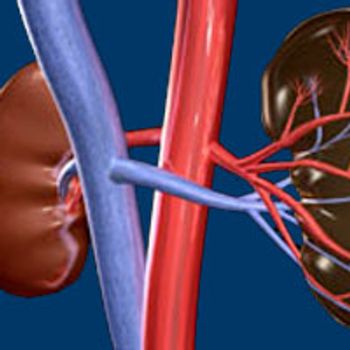
The overall response rate achieved with with the combination of savolitinib and durvalumabin in patients with metastatic papillary renal cell carcinoma in the phase II CALYPSO study did not meet the prespecified criterion for further investigation of the regimen.

The combination of pembrolizumab (Keytruda) and cabozantinib (Cabometyx) has antitumor activity in patients with previously treated metastatic renal cell carcinoma and is tolerated at their separate approved doses for this indication.

Sacituzumab govitecan exhibited significant clinical activity in an open-label, single-arm phase I/II basket study of patients with heavily pretreated, relapsed/refractory metastatic urothelial cancer.

Arpita Desai, MD, medical oncologist, University of California, San Francisco Helen Diller Comprehensive Cancer Center, discusses the rationale for testing MRI functional imaging for bone metastases in men with castration-resistant prostate cancer.
Toni Choueiri, MD, director, Lank Center for Genitourinary Oncology, director, Kidney Cancer Center, Jerome and Nancy Kohlberg Associate Professor of Medicine, Harvard Medical School, Dana-Farber Cancer Institute, discusses avelumab/axitinib data in renal cell carcinoma.

In a real-world setting, patients with metastatic castration-resistant prostate cancer who received radium-223 dichloride with abiraterone acetate in a layered fashion experienced a lower rate of symptomatic skeletal events compared with those who received the treatments concurrently.
The addition of enzalutamide (Xtandi) to androgen deprivation therapy significantly prolonged radiographic progression-free survival compared with ADT alone in men with metastatic hormone-sensitive prostate cancer.
Darolutamide added to androgen deprivation therapy significantly improved metastasis-free survival compared with placebo plus ADT in patients with nonmetastatic castration-resistant prostate cancer enrolled in the phase III ARAMIS trial.
Arjun V. Balar, MD, assistant professor, Department of Medicine, director, Genitourinary Medical Oncology Program, NYU Langone’s Perlmutter Cancer Center, discusses the rationale for the KEYNOTE-057 study in patients with non–muscle invasive bladder cancer.
Scott T. Tagawa, MD, Richard A. Stratton Associate Professor in Hematology and Oncology, associate professor of clinical medicine & urology at Weill Cornell Medicine, associate attending physician, NewYork-Presbyterian–Weill Cornell Medical Center, discusses sacituzumab govitecan in the treatment of patients with urothelial carcinoma.
Nivolumab combined with low-dose ipilimumab continued to demonstrate strong responses and a survival benefit at 30 months’ follow-up as a frontline treatment for patients with intermediate- and poor-risk advanced renal cell carcinoma.

The combination of pembrolizumab (Keytruda) and axitinib (Inlyta) was associated with a significantly longer progression-free and overall survival compared with sunitinib (Sutent) in treatment-naïve patients with clear cell metastatic renal cell carcinoma.

African-American men with metastatic castration-resistant prostate cancer treated with novel hormonal therapies—namely abiraterone acetate or enzalutamide—lived 20% longer than their Caucasian counterparts.

The novel targeted radiation therapy lutetium-177 PSMA-617 showed strong clinical activity and the potential to improve survival in heavily pretreated men with PSMA-positive metastatic castration-resistant prostate cancer.
Until more biomarkers are available, the use of tumor mutational burden with PD-L1 expression could help oncologists further personalize immunotherapy choices for patients with non–small cell lung cancer.

Mark A. Socinski, MD, provides an overview of treatment advances in the lung cancer landscape, and highlights where much-needed work still remains.

Findings from the PACIFIC trial have made a significant impact on the treatment of patients with unresectable stage III non–small cell lung cancer, especially in light of the history of treatment options in this setting.
Roy Decker, MD, PhD, associate professor of Therapeutic Radiology, Yale Cancer Center, discusses the current role of radiation therapy in the treatment of patients with non–small cell lung cancer.

Despite the rapidly expanding therapeutic options available in immunotherapy for patients with non-small cell lung cancer, there are still a number of drawbacks to treatment, explaining why not all patients respond to current treatment options.

Mohammad Jahanzeb, MD, professor of Clinical Medicine, Hematology/Oncology, Sylvester Comprehensive Cancer Center, University of Miami Miller School of Medicine, discusses the eligibility criteria for immunotherapy trials in non–small cell lung cancer.
Data on many new treatment options have come forward over the past year highlighting the potential to treat more emerging oncogenic drivers impacting smaller subsets of patients with non–small cell lung cancer.
Eric Vallieres, MD, highlights the technological advances of lung cancer surgery and how this impacts the outlook for patients who are candidates for it.
Heather Wakelee, MD, associate professor of medicine (oncology), Stanford University Medical Center, discusses the current state of treatment in patients with non–small cell lung cancer.