

Monoclonal antibodies against PD-1 and PD-L1 have demonstrated encouraging signs of antitumor activity for patients with pretreated advanced ovarian cancer.
Monoclonal antibodies against PD-1 and PD-L1 have demonstrated encouraging signs of antitumor activity for patients with pretreated advanced ovarian cancer.

Trabectedin reduced the risk of disease progression by 45% versus dacarbazine in patients with advanced soft tissue sarcoma.
Howard Sandler, MD, MS, FASTRO, chair, Radiation Oncology, Ronald H. Bloom Family Chair in Cancer Therapeutics, discusses results from a phase III study on docetaxel with hormonal and radiation therapy in prostate cancer.
Mark A. Socinski, MD, professor of Medicine and Cardiothoracic Surgery, director, Lung Cancer Section, Division of Hematology/Oncology, clinical associate director, Lung SPORE, co-director, UPMC Lung Cancer Center of Excellence, co-leader, UPCI Lung Cancer Program, discusses a phase III study which examined nivolumab in non-small cell lung cancer (NSCLC).
Jedd Wolchok, MD, PhD, chief, melanoma and immunotherapeutics service and Lloyd J. Old Chair for clinical investigation at Memorial Sloan Kettering Cancer Center, discusses the findings of the Phase III CheckMate-067 trial.

Treatment with neratinib immediately following adjuvant trastuzumab plus chemotherapy modestly improved invasive disease-free survival against placebo at the cost of low-grade diarrhea in almost all patients with HER2-positive early-stage breast cancer.
Alexander Spira, MD, PhD, FACP, medical oncology, hematology, Virginia Cancer Specialists, discusses the POPLAR study for non-small cell lung cancer (NSCLC).

Martin Reck, MD, PhD, Head of Thoracic Oncology, Hospital Grosshansdorf, discusses the maximum severity score (MSS) of baseline patient-reported Lung Cancer Symptom Scale (LCSS) as a prognostic and predictive factor for overall survival (OS) in the phase III SQUIRE study.

A landmark clinical trial that will channel patients into treatment arms based on molecular abnormalities rather than cancer types aims to test the efficacy of more than 20 drugs simultaneously in an ambitious National Cancer Institute plan to further propel oncology drug discovery into the precision medicine era.

At the 2015 ASCO Annual Meeting, the much heralded CancerLinQ big data system for helping oncologists more clearly understand treatment patterns and options was offered for demonstration in advance of its rollout.

Physicians will now have a new option for some patients who have run out of them, but whose tumors have a genomic variation matching a drug target that is FDA-approved for a different cancer.
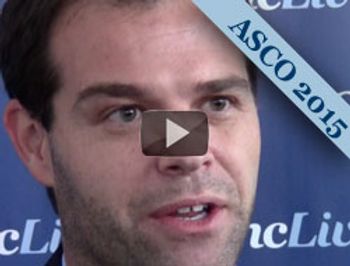
Ben Creelan, MD, medical oncologist with Moffitt Cancer Center, discusses the results from a phase I study of MEDI4736, an anti-PD-L1 antibody in combination with gefitinib, an EGFR inhibitor, in patients with non-small-cell lung cancer (NSCLC).

In the phase III PALOMA-3 trial, adding palbociclib to standard fulvestrant more than doubled progression-free survival in pretreated patients with HR-positive, HER2-negative breast cancer.

Treatment with eribulin (Halaven) improved overall survival by 2 months compared with dacarbazine in patients with advanced leiomyosarcoma and adipocytic sarcoma.

Over the past 30 years, survivors of childhood cancers have become less likely to die of illnesses caused by their treatment, such as new malignancies or cardiac or lung disease.

Elective neck dissection performed at the same time patients have surgery for early-stage, node-negative, oral squamous cell cancer significantly improved overall survival and reduced the risk of death and recurrence when compared with a watchful waiting approach.

Patients with small brain metastases from other tumor types should not routinely receive adjuvant whole brain radiation therapy (WBRT), according to a study that showed the treatment dramatically increases the incidence of cognitive decline without improving survival outcomes.

Novel targeted therapies against ALK, BRAF, and RET have demonstrated promising outcomes in molecularly-defined patients with non-small cell lung cancer.

Frontline nivolumab as monotherapy and in combination with ipilimumab more than doubled progression-free survival versus ipilimumab alone in patients with advanced melanoma.

Patients with melanoma who are found to have micrometastases after an initial positive sentinel node biopsy can safely forgo a complete lymph node dissection, thus avoiding the risk of debilitating adverse events from the surgery.

Treatment with atezolizumab doubled overall survival compared with docetaxel in previously treated patients with PD-L1-positive squamous and non-squamous non-small cell lung cancer.
An immunotherapy combination demonstrated "high levels of clinical activity" in previously treated non-small cell lung cancer across a range of doses.

The first study to compare the efficacy and safety of tamoxifen versus anastrozole in women treated for ductal carcinoma in situ suggests that anastrozole may be the better choice for preventing the escalation of DCIS into invasive cancer.

Jeffrey Jones, MD, MPH, Assistant Professor of Internal Medicine and section head of the Chronic Lymphocytic Leukemia (CLL) research program at Ohio State University, discusses the results of a phase III randomized, controlled study evaluating idelalisib (Zydelig) in combination with ofatumumab (Arzerra) compared to ofatumumab alone for previously treated CLL.

Treatment with an adjuvant combination of docetaxel, androgen deprivation therapy (ADT), and radiation therapy (RT) improved 4-year overall survival rates in patients with high-risk localized prostate cancer, when compared with ADT plus RT alone.

Patients with relapsed indolent non-Hodgkin lymphoma experienced a doubling of progression-free survival when treated with a combination of the anti-CD20 agent obinutuzumab and bendamustine.
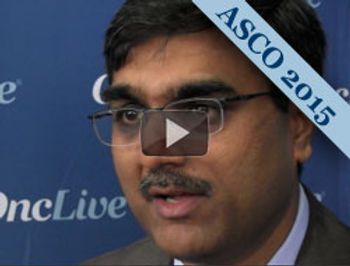
Asher A. Chanan-Khan, MD, chair, Hematology/Oncology, Cancer Center, Mayo Clinic, discusses a recent study that examined ibrutinib combined with bendamustine and ritxuimab (BR) in patients with chronic lymphocytic leukemia (CLL) and small lymphocytic lymphoma (SLL).
Patients with myelofibrosis achieved significantly better outcomes in spleen volume reduction and symptom control with the novel JAK2 inhibitor pacritinib compared with best available therapy.

Daratumumab demonstrated a 65% one-year overall survival rate and a 29.2% objective response rate in patients with double refractory heavily pretreated multiple myeloma.

Adding ibrutinib to standard bendamustine and rituximab (BR) reduced the risk of disease progression by 80% compared with BR plus placebo in patients with pretreated CLL or SLL.